Click here for Amarillo's accreditation statement
TTUHSC in Amarillo
Just north of Palo Duro Canyon, the second largest canyon in the U.S., and only a
few hours from mountain ranges and the Dallas metroplex, the Amarillo campus is the
home of Jerry H. Hodge School of Pharmacy. Here students encounter one of the most
comprehensive Doctor of Pharmacy education and training programs in the U.S., recognized for its training excellence
in clinical, rural, community and administrative pharmacy education.
The School of Nursing at Amarillo delivers unmatched preparation for nursing students
to meet the challenges of today's complex health care environment. With multiple BSN degree paths available, there is an option for everyone.
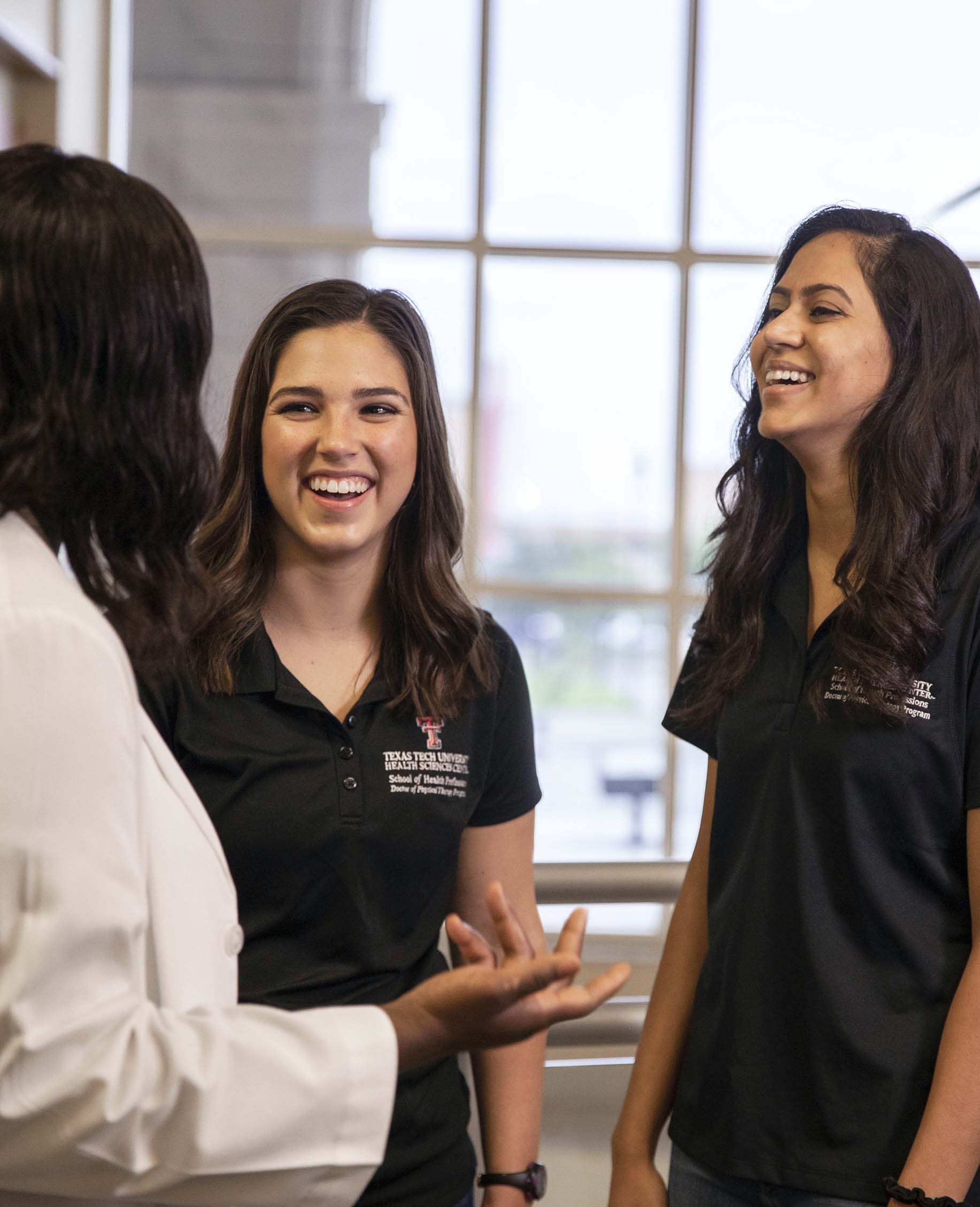
The School of Health Professions offers students a focused path to careers in critical
segments of the health care industry. In particular, Amarillo is home to the Doctor of Physical Therapy program, recently recognized as the #1 DPT program in the U.S. for the third time
based on student satisfaction surveys.
Offered by the Graduate School of Biomedical Sciences, the Pharmaceutical Sciences M.S. and Pharmaceutical Sciences Ph.D. programs prepare students for excellence in pharmaceutical industry careers, academia
and in federal regulatory agencies.
The School of Medicine at Amarillo trains Doctor of Medicine and Doctor of Medicine (FMAT) students and residents with particular emphasis in clinical care. Student and resident
educational experiences are highly rated due to superior bed-side teaching, a high
faculty-to-student ratio, and a wide range of clinical facilities.
Address: 1400 S. Coulter Street Amarillo, TX 79106
Join us on a Red Bag Tour
The Red Bag Tours are specifically created for high school students, these tours will
allow participants the opportunity to see cutting-edge technology and learn more about
how TTUHSC prepares students to impact the world of health care.
Schedule a Tour
Real-World Excellence
With the Texas Tech University School of Veterinary Medicine right next door, and
unparalleled hands-on community collaborations, Amarillo graduates enter their field
with the real-world experience that sets them apart from their colleagues immediately.
A tight-knit campus and supportive community delivers an exceptional student experience.
Your Amarillo Experience
Amarillo offers a warm, community-centered environment with a cost of living that
remains lower than many major Texas cities, making it an attractive choice for students.
Life in Amarillo is easy to navigate, with short commutes, a welcoming atmosphere,
and strong local pride. Students can enjoy a variety of activities, including diverse
local restaurants, museums, outdoor recreation at nearby Palo Duro Canyon, and unique
Panhandle cultural events. With its friendly community, accessible pace, and affordable
lifestyle, Amarillo provides a supportive and comfortable place to study and live.
Explore more about the Amarillo community below.
Whether you want to experience student life, learn about our latest research or stay
up to date on events, there is something for everyone on our social media community.
View our social media directory.


In the event of an emergency, the campus specific page will be updated with information
about the nature of the incident, how to remain safe and, after the event, the point
at which safety has been restored. View the Amarillo emergency preparedness page.
Subscribe to the Daily Dose
Accreditation: The Texas Tech University Health Sciences Center (TTUHSC) is accredited
by the Southern Association of Colleges and Schools Commission on Colleges to award
baccalaureate, masters, doctoral, and professional degrees. TTUHSC also may offer
credentials such as certificates and diplomas at approved degree levels. TTUHSC at
Amarillo is a branch campus of TTUHSC. Therefore, the continued accreditation of this
campus is contingent upon the continued accreditation of TTUHSC. Questions about the
accreditation of Texas Tech University Health Sciences Center may be directed in writing
to the Southern Association of Colleges and Schools Commission on Colleges at 1866
Southern Lane, Decatur, GA 30033-4097, by calling (404) 679-4500, or by using information
available on SACSCOC’s website.