Table of Contents
Transforming Global Health Through Infectious Disease Research and Education
The Center for Tropical Medicine and Infectious Disease is part of the Department of Immunology and Molecular Microbiology at Texas Tech University Health Sciences Center (TTUHSC). Aimed specifically at the pursuit of excellence in research and education in the areas of tropical medicine and infectious disease, we are developing novel rationally designed immunoprophylactics and immunotherapeutics for infectious disease pathogens and training the next generation of basic scientists and clinical researchers. The Center for Tropical Medicine and Infectious Diseases (CTMID) promotes an environment that inspires passion, especially to find novel cures for diseases that recognize no human-made borders.
Afzal A. Siddiqui, M.Phil., Ph.D.
Chair, Immunology and Molecular Microbiology
History, Mission & Vision
History
The founding of CTMID in 2011 was lead by Dr. Afzal Siddiqui. Since its inception, CTMID has grown into a research powerhouse, currently encompassing active grants of over $15 million. The center was established with the intent of creating an environment for enhanced research and training on a wide variety of infectious diseases caused by pathogens. Faculty and staff comprising the CTMID work to expand personal research and collaborations, while simultaneously providing hands-on training of MD, MS/PhD-graduate students and MD-fellows in infectious diseases and tropical medicine of public health importance.
Mission & Vision
Our focus at the Center for Tropical Medicine and Infectious Diseases (CTMID) is to contribute to the improvement of health worldwide through the pursuit of excellence in research and hands-on training of MD, MS/PhD-graduate students, and MD-fellows in infectious diseases and tropical medicine of public health importance.
We strive to apply the world’s best science to the world’s worst diseases, and do so through collaborations and teamwork with the eventual aim to:
- develop novel, advanced products for the diagnosis, prevention and treatment of important infectious diseases, and
- produce outstanding students who strive to make a positive impact in our community.
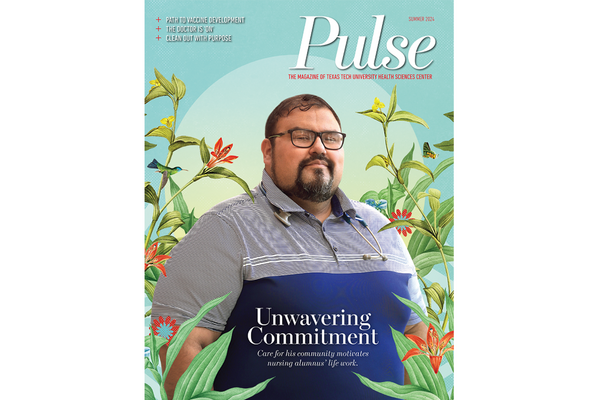
Family Footsteps Put Siddiqui on Path to Vaccine Development
"For most, preparing for a midnight-to-4 a.m. meeting is not part of the job description. To Afzal A. Siddiqui, PhD, such meetings are simply another stop along the decades-long path to deliver treatment — and hope — to approximately one billion people currently infected with or exposed to schistosomiasis."
Pulse magazine feature, summer 2024
CTMID Members
| Gul Ahmad, Ph.D. | Peru State College, Nebraska |
| Abdul Hamood, Ph.D | Texas Tech University Health Science Center |
| Kendra P. Rumbaugh, Ph.D. | Texas Tech University Health Science Center |
| Afzal A. Siddiqui, Ph.D. | Texas Tech University Health Science Center |
| Kai Zhang, Ph.D. | Texas Tech University |
| Sharilyn Almodovar, Ph.D. | Texas Tech University Health Science Center |
| Aravindan Kalyanasundaram, Ph.D. | Texas Tech University Health Science Center |
CTMID Publications
- Cowan, M.M, Kasbohm, N.A. & Ahmad, G. (2019). Gastrointestinal helminths of raccoons (Procyon lotor) from Southeast Nebraska. Veterinary World (In Press).
- Saifullah, M.K, Ahmad, G. Abidi, S.M.A. and Ahmad S. (2019). Isolation and partial characterization of excretory/secretory (E/S) antigens of a biliary amphistome, Gigantocotyle explanatum . Veterinary World (Under review).
- Asif A, Iftikhar A, Hamood A, Colmer-Hamood JA, Qaisar U. 2019. Isonitrile-functionalized tyrosine modulates swarming motility and quorum sensing in Pseudomonas aeruginosa. Microbial Pathogenies. 127:288-295
- Lenzmeier TD, Mudaliar NS, Stanbro JA, Watters C, Ahmad A, Simons MP, Ventolini G, Zak JC, Colmer-Hamood JA, Hamood AN. 2019. Application of Lactobacillus gasseri 63 AM supernatant to Pseudomonas aeruginosa-infected wounds prevents sepsis in murine models of thermal injury and dorsal excision. J Med Microbiol. 68(10):1560-1572
- Elmassry MM, Mudaliar NS, Kottapalli KR, Dissanaike S, Griswold JA, San Francisco MJ, Colmer-Hamood JA, Hamood AN. 2019. Pseudomonas aeruginosa Alters Its Transcriptome Related to Carbon Metabolism and Virulence as a Possible Survival Strategy in Blood from Trauma Patients. mSystems.7;4(4). pii: e00312-18.
- Hossain MA, Sattenapally N, Parikh HI, Li W, Rumbaugh KP, German NA. Design, synthesis, and evaluation of compounds capable of reducing Pseudomonas aeruginosa virulence. Eur J Med Chem. 2019 Oct 22:111800. PMID: 31706639
- Tipton CD, Sanford NE, Everett JA, Gabrilska RA, Wolcott RD, Rumbaugh KP, Phillips CD. Chronic wound microbiome colonization on mouse model following cryogenic preservation. PLoS One. 2019 Aug 23;14(8):e0221565. PMID: 31442275
- Zhao-Fleming HH, Wilkinson JE, Larumbe E, Dissanaike S, Rumbaugh K. Obligate anaerobes are abundant in human necrotizing soft tissue infection samples - a metagenomics analysis. APMIS. 2019 Aug;127(8):577-587. PMID: 31127652
- Castro-Gonzalez, S., Shi Y., Colomer-Lluch, M., Mowery, K., Almodovar, S., Bansal, A., Sparrer, K., Liang, C., and Serra-Moreno, R. 2019. HIV-1 Nef counteracts autophagy restriction by enhancing the association between BECN1 and its inhibitor BCL2 in a Parkin-dependent manner. Contribution: 70%. Citations: n/a. Revise and resubmit in the Autophagy journal on 8/20/2019. Impact factor: 11.1
- Colomer-Lluch, M., Gonzalez-Castro, S., and Serra-Moreno, R. 2019. SUMOylation and Ubiquitination in HIV infection. Invited book chapter part of “SUMOylation and Ubiquitylation: current and emerging concepts”. Caister Academic Publishing group. Contribution 70%. Accepted for publication.
- Saddler K, Castro-Lainez MT, Deliz-Aguirre R, Munoz J, Aguilar-Espinal JA, Sierra-Hoffman M, Chandna H, Howell A, Midturi J, Winn RE. Nontyphoidal Salmonella purulent pericarditis presenting with pericardial tamponade in a patient on infliximab therapy. ID Cases, 15:1-4, 2019.
- Winn RE. Tuberculosis- Host Defenses relative to Mucosal Immunity- Prospects for Vaccine Reappraisal and Review of Current Strategies. Submitted Southwest Respiratory and Critical Care Chronicles
- McKenzie P, Winn RE. Port Infection secondary to Mycobacterium fortuitum with Review of the Literature. Submitted Southwest Respiratory and Critical Care Chronicles.
- Winn RE, Taddy C, Hatfield T. Tenosynovitis due to Mycobacterium avium-intracellulare in a cardiac transplant recipient.
- Mukherjee, S., Xu, W., Hsu, F. F., Patel, J., Huang, J., and Zhang, K*. (2019) Sterol methyltransferase is required for optimal mitochondrial function and virulence in Leishmania major. Mol. Microbiol. 111(1):65-81. PMCID: PMC6351164. Journal IF: 3.816. (40%)
- Mukherjee, S., Basu, S., and Zhang, K*. (2019) Farnesyl pyrophosphate synthase is essential for the promastigote and amastigote stages in Leishmania major. Mol Biochem Parasitol. 230:8-15. PubMed PMID: 30926449; NIHMSID:NIHMS1525447. Journal IF: 1.744. (40%)
- Moitra, S., Pawlowic, M. C., Hsu, F.F., and Zhang, K*. (2019) Phosphatidylcholine synthesis through choline phosphate cytidylyltransferase is dispensable in Leishmania major. Sci. Rep. 9(1):7602. PubMed PMID: 31110206. Journal IF: 4.122. (40%)
- Zhang, K., and Beverley, S. M. (2019) Mannogen-ing central carbon metabolism by Leishmania. Trends in Parasitology. pii: S1471-4922(19)30243-0. doi: 10.1016/j.pt.2019.10.001. PMID: 31662278.