

Table of Contents
Welcome to CPMB
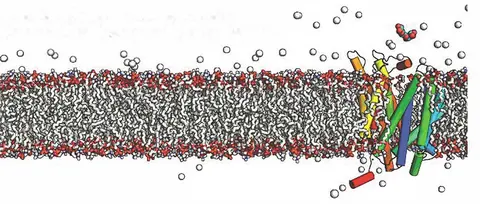
Welcome to the Lubbock Academic Department of Cell Physiology and Molecular Biophysics. We are a collaborative group of outstanding scientists, trainees, and students with a long-running intellectual focus on the function, structure and fundamental properties of membrane proteins (with related efforts in structural biology and material science). We utilize multiple biological, biochemical, biophysical and computational approaches to gain insight into these amazing proteins which transport ions and substrates with exquisite specificity, transmit signals from the outside world into the cell, carry out essential chemical reactions in or near the membrane and, importantly, serve as targets for the majority of current and future drugs. I am honored to have been chosen to lead this group above and beyond its current level of excellence, and to grow our science in both basic and translational directions. If you have the interest and ambition to work with world-renowned scientists in small-lab settings, in a supportive and inclusive environment of collegiality and academic rigor, please do not hesitate to contact me!
Explore Our Ph.D. Concentration
Begin with the program overview below, or jump to the Biochemistry, Cellular & Molecular Biology Concentration.
Department Chair
Department Chairperson
-
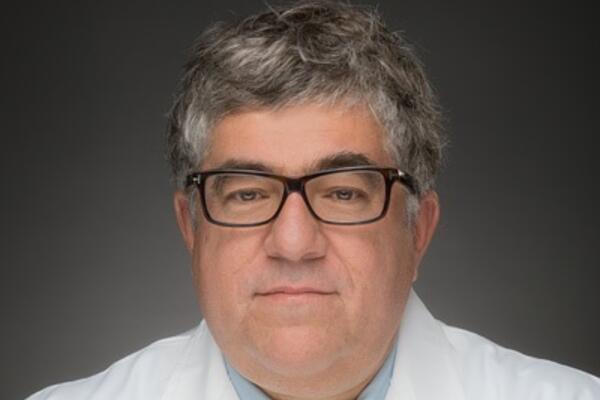
I welcome you to the CPMB website and to our Department! We are a collaborative group of outstanding scientists, trainees, and students with a long-running intellectual focus on the function, structure and fundamental properties of membrane proteins (with related efforts in structural biology and material science). We utilize multiple biological, biochemical, biophysical and computational approaches to gain insight into these amazing proteins which transport ions and substrates with exquisite specificity, transmit signals from the outside world into the cell, carry out essential chemical reactions in or near the membrane and, importantly, serve as targets for the majority of current and future drugs. I am honored to have been chosen to lead this group above and beyond its current level of excellence, and to grow our science in both basic and translational directions. If you have the interest and ambition to work with world-renowned scientists in small-lab settings, in a supportive and inclusive environment of collegiality and academic rigor, please do not hesitate to contact me!
Sincerely,
Michael C. Wiener, Ph.D.
Research & Seminars
-
- September 17, 2026 at 3:00 pm
Dr. Sergio Regot
Johns Hopkins
“Unlocking New Biochemical Parameters in Live Single Cells”
- October 8, 2026 at 3:00 pm
Dr. Josep Rizo
UTSW
“How is neurotransmitter release triggered in microseconds”
- October 15, 2026 at 3:00 pm
Dr. Nikolay Alaksashin
TTUHSC-CBB
TBD
- October 22, 2026 at 3:00 pm
Dr. Ruyma Syeda
UTSW
TBD
- October 29, 2026 at 3:00 pm
Dr. Navid Bavi
UCLA
TBD
- November 5, 2026 at 3:00 pm
Dr. Gabriela Popescu
Buffalo, NY
TBD
- November 12, 2026 at 3:00 pm
Dr. Claudio Grosman
University of Illinois Urbana-Champagne
“Mechanisms of binding–gating coupling in Cys-loop receptor channels”
- December 3, 2026
Dr. Michael Marty
UT Austin
TBD
- September 17, 2026 at 3:00 pm
-
Mission: The long-term goal of the Center is to advance our knowledge of the structure and function of membrane proteins in health and disease. The Center brings together a group of TTUHSC and TTU investigators interested in the broad field of membrane-protein research.
Rationale: After completion of the human genome sequence, biomedical research has evolved into a combination of genomics, proteomics, and functional genomics. To a great extent, biomedical research will focus on prototypical proteins and protein families, including the determination of their structures, functions, and their roles in human disease. From this, novel knowledge will emanate rational design of new pharmacological agents that will open novel therapeutic approaches
-
Center for Membrane Protein Research
17th Annual Research Symposium
Monday, April 27, 2026Information on the next symposium will be updated as information becomes available.
-
The Membrane Protein Laboratory Core (MPLC), a shared facility of the Department of Cell Physiology and Molecular Biophysics (CPMB), houses equipment that is primarily accessible to the CPMB Faculty and their laboratory personnel, but is also available to Faculty throughout TTUHSC and TTU at no cost. The MPLC is equipped for the over-expression, purification and characterization of membrane proteins. Some of the equipment available includes an infrared gel-imaging system, spectrophotometers, fluorescence/absorbance microplate reader, microplate washer, luminometer, spectrofluorometers, refrigerated shaker incubators, centrifuges and ultracentrifuges, probe sonicator, small and large volume microfluidizers, FPLC systems, phosphorescence lifetime spectrometers for luminescence resonance energy transfer measurements, rapid-mixing stop-flow system for absorbance, fluorescence and light-scattering determinations, CD and ATR/FTIR spectrometers for secondary structure determination, a picosecond lifetime system, dynamic light scattering instruments, crystallization incubators, mosquito and NT8 Formulatrix crystallization robots, automatic UV microscopy system for crystal analysis, Rigaku ScreenMachine for X-ray crystal screening and data collection, high-throughput automatic frog-oocyte injector, automatic Nanion port-a-patch and Orbit Mini patch-clamp systems, liquid scintillation counter, ITC and DSC microcalorimenters, electron paramagnetic resonance spectrometer, and a Xenocs SAXS system.
-
Location
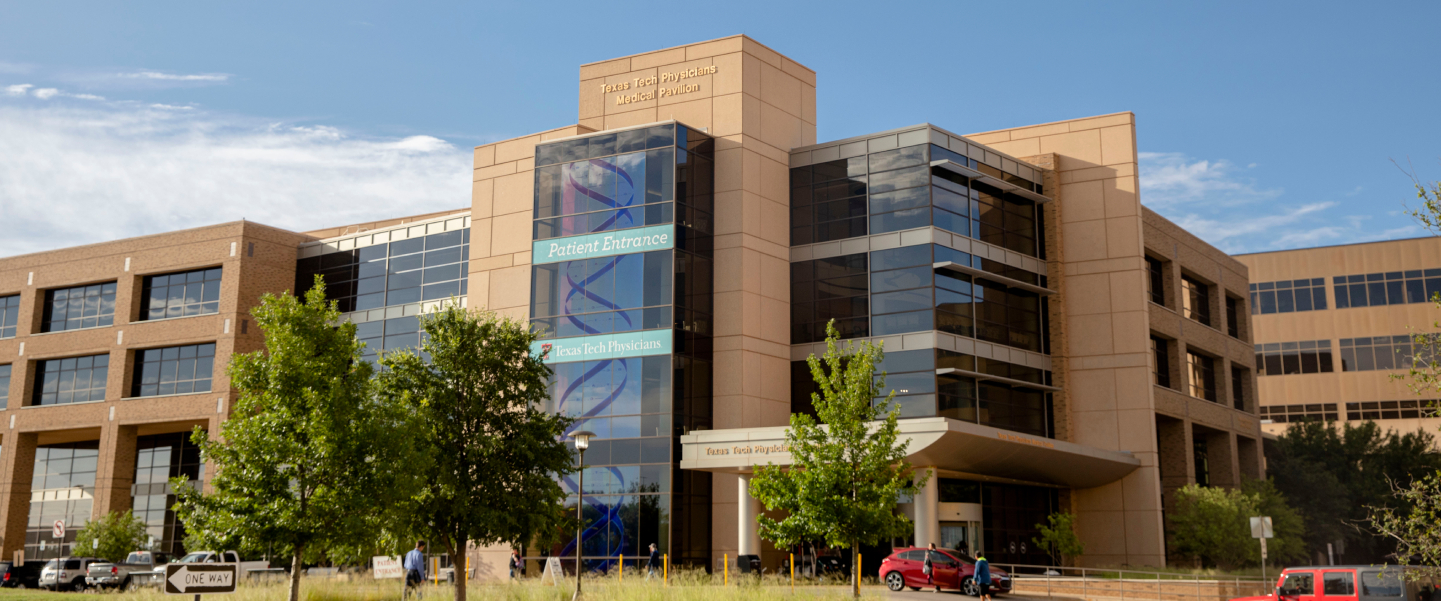
3601 4th Street
Lubbock, Texas 79430
- Phone (806) 743-6464
-
Hours
8 a.m. - 5 p.m. | M - F