

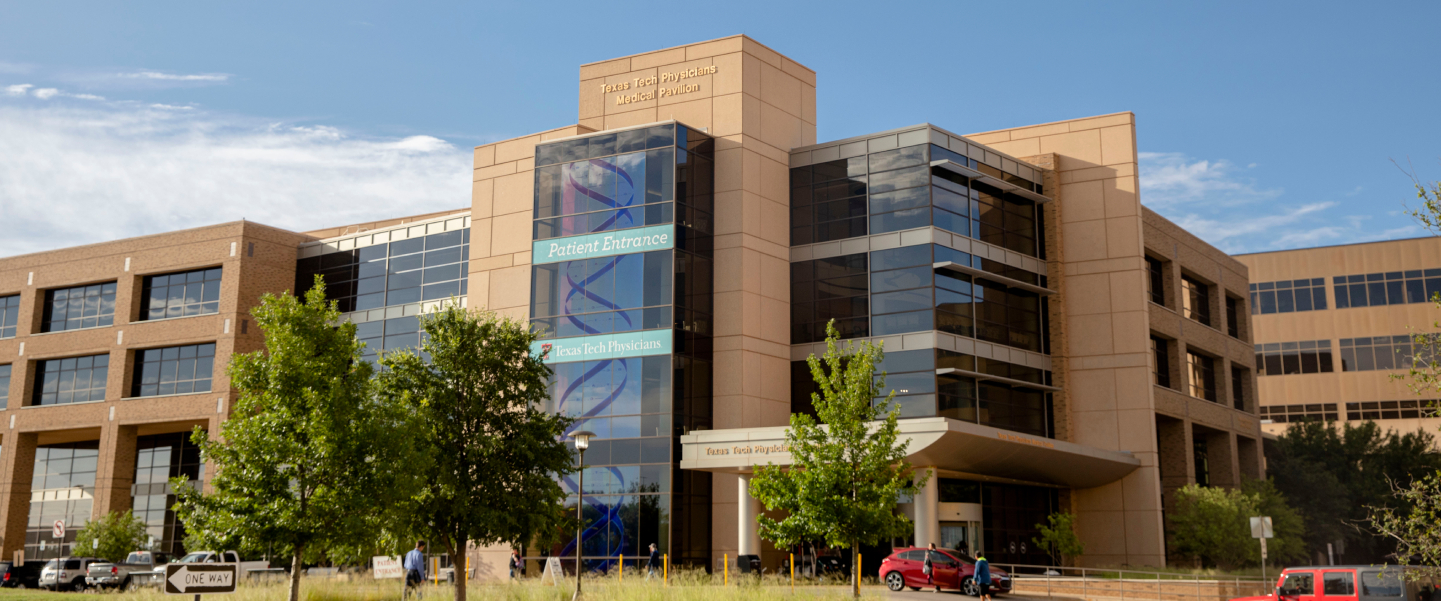
Contact Information
Graduate School of Biomedical Sciences
-
Address
3601 4th Street
Lubbock, TX 79430
United States -
Location
(Mail Stop 6206)
- Phone (806) 743-2556
- Email graduate.school@ttuhsc.edu
About TTUHSC
-
With a growing shortage of physicians in West Texas, the state legislature authorized the Texas Tech University School of Medicine in 1969. The school charter was expanded a decade later to the Texas Tech University Health Sciences Center (TTUHSC), and the institution began preparing future healthcare professionals and researchers in multiple disciplines. In 2020, Dr. Lori Rice-Spearman was appointed the university's ninth president and became the first female president in the Texas Tech University System. Today, TTUHSC offers undergraduate, graduate, and professional academic programs across six schools: (1) Graduate School of Biomedical Sciences, (2) Jerry H. Hodge School of Pharmacy, (3) Julia Jones Matthews School of Population and Public Health, (4) School of Health Professions, (5) School of Medicine, and (6) School of Nursing. These academic programs are delivered across multiple campuses-Amarillo, Abilene, Dallas, Lubbock, and Odessa-as well as formal sites at Covenant Health System-Lubbock, Mansfield, and Midland. In addition, TTUHSC enrolls a significant population of students in distance education programs.
Vision
Our vision is a healthier future with access to quality care for every Texan.
Mission
As a comprehensive health sciences center, our mission is to enrich the lives of others by educating students to become collaborative health care professionals, providing excellent patient care, and advancing knowledge through innovative research.
Values
Through our values-based culture, TTUHSC is committed to cultivating an exceptional community for all constituents- faculty, staff, students, patients, and community members. These core values are integral to our purpose and describe how we seek to live our vision and mission on a daily basis.
- One Team: Unite and include diverse perspectives to achieve our mission.
- Kindhearted: Exceed expectations with a kind heart, helping hands and a positive attitude.
- Integrity: Be honorable and accountable even when no one is looking.
- Visionary: Nurture innovative ideas, bold explorations and a pioneering spirit.
- Beyond Service: Create and deliver positive defining moments.
Accreditation
Texas Tech University Health Sciences Center is accredited by the Southern Association of Colleges and Schools Commission on Colleges (SACSCOC) to award baccalaureate, masters, doctoral, and professional degrees. Texas Tech University Health Sciences Center also may offer credentials such as certificates and diplomas at approved degree levels. Questions about the accreditation of Texas Tech University Health Sciences Center may be directed in writing to the Southern Association of Colleges and Schools Commission on Colleges at 1866 Southern Lane, Decatur, GA 30033-4097, by calling (404) 679-4500, or by using information available on SACSCOC's website (www.sacscoc.org).
A member of the Texas Tech University System, TTUHSC has been accredited by the Southern Association of Colleges and Schools Commission on Colleges (SACSCOC) as a separate institution from Texas Tech University since 2004. TTUHSC was last reaffirmed by SACSCOC in 2019.
Programs
The Graduate School of Biomedical Sciences (GSBS) is one of six schools within the Texas Tech University Health Sciences Center (TTUHSC). The school offers the following graduate degree programs:
About Graduate School of Biomedical Sciences
GSBS Vision
To create a collaborative and innovative academic environment that inspires and lays the foundation for new generations of biomedical scientists to realize their potential, commit to success and make discoveries that have major impact on treatment of diseases worldwide.
GSBS Mission
In support of the institutional mission, the Graduate School of Biomedical Sciences strives to provide superior graduate education as well as leadership in increasing knowledge and understanding through scholarship and research. The mission of the Graduate School of Biomedical Sciences is to educate the next generation of scientists and health-related professionals in a dynamic and productive research environment that fosters creativity and discovery. In order to accomplish the mission, the faculty and staff of the Graduate School of Biomedical Sciences are committed to:
- Providing the larger academic community, as well as future employers, with graduates who are highly competent, independent, and ethical researchers and teachers;
- Demonstrating in all pursuits honesty, integrity, trustworthiness, and commitment to academic freedom;
- Ensuring that GSBS faculty, staff, and students are supported in their efforts with state-of-the-art resources, facilities, and training opportunities;
- Serving as leaders in the community for the advancement of knowledge related to the basic biomedical and related health sciences; and
- Ensuring an environment that values a diversity of people and ideas.
Oath
I acknowledge that the mission of scientific research is a true and noble calling to discover truths that are hidden and to reveal wisdom yet unknown, always for the greater good. I welcome the privilege and opportunity to join in this mission, and to dedicate the talents that I have and the education I have gained in this higher purpose. Moreover, I pledge to use this knowledge and wisdom I have achieved only for the improvement of life. In this journey of discovery, I promise to always be honest, accurate, and fair, in all things and in all matters, and to always conduct my affairs with excellence and ambition.
Symbol
The shield of the GSBS represents our dedication to protect life through scientific advancements in research. The double helix divides the shield into four quadrants and connects all forms of life. At the top left, the tree symbolizes the scientific process, where knowledge has deep roots and a strong base, and the thin branches of solitary ideas give rise to seeds, which leave the tree and start new lines of thought. The star at the right represents the direction a scientist must follow as new avenues of research are revealed to us. At the bottom left, a microscope shows the scientist's commitment to look for deeper explanations. The double T at the bottom right represents Texas Tech University Health Sciences Center, the institution that has taught us these lessons.
The Graduate School of Biomedical Sciences (GSBS) at Texas Tech University Health Sciences Center educates the next generation of researchers, educators, and healthcare leaders through rigorous academic training, innovative laboratory discovery, and interdisciplinary collaboration across our Lubbock, Amarillo, and Abilene campuses.
GSBS Mission, Oath & Symbol
The GSBS Oath: "I acknowledge that the mission of scientific research is a true and noble calling to discover truths that are hidden and to reveal wisdom yet unknown, always for the greater good. I welcome the privilege and opportunity to join in this mission, and to dedicate the talents that I have and the education I have gained in this higher purpose. Moreover, I pledge to use this knowledge and wisdom I have achieved only for the improvement of life. In this journey of discovery, I promise to always be honest, accurate, and fair, in all things and in all matters, and to always conduct my affairs with excellence and ambition."
The GSBS Seal: The shield represents our dedication to protecting life through scientific advancement. The double helix divides the shield into four quadrants connecting all forms of life: the Tree represents the rooted scientific process branching into new seeds of thought; the Star represents guidance toward new avenues of inquiry; the Microscope symbolizes commitment to deeper explanations; and the Double T honors the Texas Tech University Health Sciences Center.
GSBS Academic Catalog
Table of Contents
-
Degrees Offered
- Doctor of Philosophy (Ph.D.):
- Biomedical Sciences (Lubbock) — Concentrations: Biochemistry, Cellular & Molecular Biology (BCMB); Immunology & Infectious Diseases (IID); Molecular Biophysics (MB); Translational Neuroscience & Pharmacology (TNP).
- Pharmaceutical Sciences (Amarillo, Abilene)
- Master of Science (M.S.):
- Biotechnology (Lubbock, Abilene) — 21-Month Research Track and 1-Year Abbreviated Track.
- Graduate Medical Education Sciences (GMES) (Lubbock) — 2-Year Non-Thesis Teaching Track.
- Pharmaceutical Sciences (Amarillo, Abilene)
- Biomedical Sciences (Lubbock) — Note: Direct admission is not available; awarded under specific criteria for eligible continuing doctoral candidates.
Collaborative & Dual Degree Programs
Collaborative & Dual Degree Programs Program Classification GSBS Program Collaborating Partner Internal Dual Degree M.D. / Ph.D. in Biomedical Sciences TTUHSC School of Medicine Integrated Academic Agreement M.S. in Graduate Medical Education Sciences (GMES) TTUHSC School of Medicine M.D./Ph.D. Dual Degree: Targets prospective students seeking careers as physician-scientists. Graduates pursue clinical practice, medical education, and biomedical research. Applicants must apply to both the TTUHSC School of Medicine and the GSBS separately.
GMES Program: Tailored for students preparing for healthcare professional schools or academic teaching careers in the anatomical sciences. Students take anatomical, biochemical, and physiological courses alongside first-year medical students. Students completing Year 1 in good standing receive one guaranteed interview with the TTUHSC School of Medicine for the M.D. program.
- Doctor of Philosophy (Ph.D.):
-
The GSBS is led by the Dean in collaboration with faculty leadership and administrative staff. The GSBS Graduate Council acts as an elected governing body representing faculty and advising the Dean, with student representation from elected Graduate Student Association presidents in Lubbock, Amarillo, and Abilene.
GSBS Graduate Council
GSBS Graduate Council Leadership / Staff Member Administrative Role Campus Lance R. McMahon, M.S., Ph.D. Dean & Executive Vice President for Research & Innovation Lubbock Kendra Rumbaugh, Ph.D. Vice Dean Lubbock Michael Blanton, Ph.D. Senior Associate Dean & M.D./Ph.D. Program Director Lubbock Thomas Abbruscato, Ph.D. Senior Associate Dean & Department Chair (Pharmaceutical Sciences) Amarillo Pamela Johnson, MBA Assistant Dean & Managing Director Lubbock Terri Lloyd Director of Admissions (Student Affairs Advocate: Undeclared Ph.D.) Lubbock Ashlee Rigsby Associate Director of Outreach & Engagement Lubbock Tres Boren, MBA Senior IT Support Technician Lubbock Debbie Martinez Senior Administrative Assistant Lubbock Jerri Jones, MBA Program Manager (Student Affairs Advocate: Biotechnology, Pharm Sci - Abilene) Abilene Teresa Carlisle Unit Manager (Student Affairs Advocate: Pharm Sci - Amarillo) Amarillo Katherine Jones Business Manager (Student Affairs Advocate: GMES) Lubbock Lindsay Williams Program Manager (Student Affairs Advocate: Ph.D. Programs) Lubbock -
Admission is granted by the GSBS Dean upon recommendation by program admissions committees and the GSBS Admissions Committee. Applicants are evaluated holistically across three dimensions: Academic Records, Standardized Examination Scores (when applicable), and Individual Profiles (research background, recommendations, publications, and interviews).
Required Application Components
- Online Application: Submitted via BioRaider.com.
- Application Fee: $50 non-refundable fee (waivers available for qualifying military, McNair scholars, summer interns, open house attendees, and designated events).
- Official Transcripts: Bachelor's degree (or 120 U.S. equivalent SCH) from an accredited institution. International transcripts must be submitted as course-by-course foreign credential evaluations (ECE, WES, SpanTran, etc.).
- Letters of Recommendation: 2 to 4 electronic recommendations submitted via the application portal.
- Statement of Purpose & Oath of Residency: Required of all applicants.
- Standardized Tests: GRE is optional for Biomedical Sciences Ph.D., Biotechnology M.S., and Pharmaceutical Sciences M.S./Ph.D. The MCAT or GRE is required for GMES M.S. (Institution Code: 6851).
English Language Proficiency Requirements
International applicants from non-exempt countries must submit official scores meeting the following minimum standards (valid for 2 years):
- TOEFL iBT: Minimum 79 (or 4 on revised scoring after Jan 21, 2026); Essentials: 8.5 (Code: 6851).
- IELTS Academic: Minimum overall band score of 6.5 (General Training is not accepted).
- Duolingo English Test: Minimum score of 100.
- PTE Academic: Minimum score of 60.
- Cambridge CPE / CAE: Grade C or Grade B, respectively (valid for life).
English Proficiency Country Exemptions
American Samoa, Anguilla, Antigua and Barbuda, Australia, Bahamas, Barbados, Belize, Bermuda, Canada (except Quebec), Cayman Islands, Dominica, Falkland Islands, Ghana, Gibraltar, Grenada, Guam, Guyana, Ireland, Jamaica, Kenya, Liberia, Micronesia, Montserrat, New Zealand, Nigeria, Philippines, Saint Helena, Saint Kitts and Nevis, Saint Lucia, South Africa, St. Vincent and the Grenadines, Trinidad and Tobago, Turks and Caicos, United Kingdom (England, Northern Ireland, Scotland, Wales), U.S. Virgin Islands, Zimbabwe.
-
Full-Time Status & Credit Loads
- Fall / Spring Long Terms: Minimum 9 SCH (Typical: 9–13 SCH for doctoral, 9–16 SCH for master’s). Maximum limit is 1 SCH per week of instruction (typically 15 SCH).
- Summer Terms: Minimum 6 SCH for full-time graduate status.
- Graduation Term: Doctoral students may register for 1 SCH in their final semester of graduation.
Doctoral Residency & Excessive Hours (130 SCH Rule)
Doctoral students must complete at least 3 years of full-time graduate study beyond the baccalaureate (with at least one continuous academic residency year on a TTUHSC campus). Under Texas Education Code §61.059(l) and §54.012, state funding is limited to 130 SCH for health-related doctoral students. Students exceeding 130 SCH or 5 years in the program may be assessed out-of-state tuition rates, and state-funded research assistantships will forfeit to the faculty mentor's direct grant support.
-
Grading Scale & Symbols
Grading Scale & Symbols Grade Description Grade Points per SCH A Excellent 4.0 B Good 3.0 C Average (Graduate credit granted; repeating core courses may be required) 2.0 D Fair (No graduate credit) 1.0 F Poor / Failure 0.0 CR / PR Credit / In Progress (Used for thesis, dissertation, and research hours) N/A I Incomplete (Requires official form; must be resolved within 1 calendar year) N/A W / WF Withdrew Passing / Withdrew Failing 0.0 (WF only)
Academic Probation, Dismissal & Appeals
- Probation: Students must maintain a semester GPA of 3.0+. A semester GPA below 3.0 results in immediate academic probation and forfeiture of GSBS tuition and fee scholarships. Scholarships are reinstated once a 3.0+ semester GPA is achieved.
- Dismissal: Failure to maintain a 3.0 GPA while on probation, receiving grades of C or below in two or more core courses, or failing qualifying exams constitutes grounds for dismissal.
- Dismissal Appeal Process: Written appeal submitted to the Assistant Dean within 5 business days of notice. A 3-member Dismissal Appeal Committee reviews written documentation within 3 business days and submits recommendations to the Dean. The Dean's decision is final.
- Grade Appeals: Students must meet with the course director within 3 days of grade posting. Formal appeals must be filed with the Assistant Dean within 5 business days using the Grade Appeal Form.
Doctoral Milestones
- Qualifying Examination: Comprises written and public oral seminar components (followed by closed committee examination). Supervised by an examination committee; the student's research mentor may not chair the qualifying exam committee.
- Admission to Candidacy: Must occur at least 4 months prior to graduation following completion of core curriculum and successful qualifying exams.
- Mandatory First-Author Publication: All Ph.D. candidates must have at least one original, peer-reviewed first-author (or co-first author) research manuscript accepted, in press, or published in a PubMed/Web of Science indexed journal prior to scheduling the dissertation defense.
- Dissertation Defense & ETD: Defenses are open public meetings. Final manuscripts must be formatted per TTU guidelines and submitted electronically (ETD) with the required archiving document fee.
-
Doctoral students and eligible master's students are appointed as benefits-eligible Research Assistants (RAs) requiring 20 hours per week of laboratory service (with additional hours dedicated to credit-bearing research/dissertation hours).
Fee Assistance & Waivers
- Graduate Student Fee Assistance Program: Institutional coverage of tuition and mandatory academic fees for appointed RAs employed at least one-half time (4.5 months per semester).
- Non-Resident State Tuition Exemption: Under Texas Education Code §54.212, non-resident RAs, their spouses, and dependents are eligible to pay Texas in-state resident tuition rates.
- Medical Services Fee Waiver: Waives basic campus clinical medical fees (RAs may opt in if utilizing campus clinics).
Leave & Extended Flex Time Policies
Under Texas Government Code §661.152 and §661.201, student employees do not accrue formal state vacation or sick leave. Short-term personal absences must be coordinated with the research mentor. Extended Flex Time (10 or more consecutive business days) requires written approval from the research mentor and Assistant Dean at least 2 weeks in advance. The first 10 days are paid; extended flex time beyond 10 business days within a 12-month period is unpaid and must occur between official academic semesters.
-
Offered in Lubbock and Abilene. Prepares students for careers in biotechnology enterprises, industrial/academic research, or doctoral progression.
- Program Leadership: Dr. Irene La-Beck (Abilene Director), Dr. Sharilyn Almodovar (Lubbock Director), Dr. Jeremy Bailoo (Graduate Advisor), Jerri Jones (Abilene SAA).
21-Month Research Track Curriculum (50–51 SCH)
21-Month Research Track Curriculum (50–51 SCH) Term Course # Course Title SCH Year 1 Fall GSBS 5471 Core I: Molecules 4 Year 1 Fall GSBS 5372 Core II: Cells 3 Year 1 Fall GSBS 5373 Core III: Genes 3 Year 1 Fall GSBS 5174 Core IV: Biomedical Seminar 1 Year 1 Fall GBTC 5020 Biotechnology Laboratory Methods 2 Year 1 Spring GBTC 6101/6201 Biotechnology Seminar 1–2 Year 1 Spring GBTC 5337 Techniques in Biotechnology Research (Rotations) 3 Year 1 Spring GBTC 6301 Introduction to Biotechnology 3 Year 1 Spring GBTC 6202 Biomedical Informatics 2 Year 1 Spring GSBS 5101 Responsible Conduct of Research 1 Year 1 Spring Elective Approved Graduate Elective 3 Year 1 Summer GBTC 7000/6001 Research or Industry Internship 6 Year 2 Fall GBTC 7000/6001 Research or Industry Internship 7 Year 2 Fall GBTC 5298 Biotechnology Project Report 2 Year 2 Spring GBTC 7000/6001 Research or Industry Internship 7 Year 2 Spring GBTC 5299 Biotechnology Final Report 2
1-Year Abbreviated Track Curriculum (30 SCH)
Non-thesis track focused on didactic core competencies with an integrated learning project:
- Fall (13 SCH): GSBS 5471 (4), GSBS 5372 (3), GSBS 5373 (3), GSBS 5174 (1), GBTC 5020 (2).
- Spring (10–11 SCH): GBTC 6101/6201 (1–2), GBTC 5337 (3), GBTC 6301 (3), GBTC 6202 (2), GSBS 5101 (1).
- Summer (6–7 SCH): GBTC 5025 Biotechnology Integrated Learning Experience (6–7).
Biotechnology Course Descriptions (GBTC)
- GBTC 5020 - Biotechnology Laboratory Methods (V1-3:0:3-9): Fundamental laboratory techniques used in biotechnology research.
- GBTC 5025 - Biotechnology Integrated Learning Experience (V1-9:1-9:0): Capstone synthesis via lab project, clinical project, systematic literature review, or internship.
- GBTC 5210 - The Microbiome: Role in Health and Disease (2:2:0): Exploration of microorganisms in physiology and pathogenesis.
- GBTC 5211 - Biotechnology Innovation & Commercialization (2:2:0): Patent law, intellectual property, product prototyping, and business development.
- GBTC 5212 - Fundamentals of Bacteriology (2:2:0): Bacterial structure, virulence mechanisms, and antimicrobial control.
- GBTC 5213 - Fundamentals of Virology & Parasitology (2:2:0): Viral and parasitic pathogenesis, epidemiology, and therapeutics.
- GBTC 5214 - Fundamentals of Immunology (2:2:0): Cellular/molecular immunology, host defense, and immune pathology.
- GBTC 5250 - Introduction to Python Programming (2:2:0): Practical coding, algorithm design, and data analysis in biomedical research.
- GBTC 5298 / 5299 - Project Report & Final Report (2:2:0): Written reports and committee presentations of Year 2 independent research.
- GBTC 5337 - Techniques in Biotechnology Research (3:0:9): Two structured faculty laboratory rotations.
- GBTC 5340 - Biology of Cancer (3:3:0): Molecular mechanisms of oncogenesis, metastasis, and targeted therapeutics.
- GBTC 6202 - Biomedical Informatics (2:2:0): Computational bioinformatics, databases, and genomic sequence analysis.
- GBTC 6301 - Introduction to Biotechnology (3:3:0): Applied technologies and commercial workflows in the biotech industry.
- GBTC 6001 - Biotechnology Internship (V1-9:0:3-27): Experiential training in private or governmental biotechnology facilities.
- GBTC 7000 - Research in Biotechnology (V1-9:0:3-27): Supervised laboratory research.
-
A 2-year non-thesis program on the Lubbock campus preparing students for healthcare professional programs or academic anatomy teaching careers.
- Program Leadership: Dr. Dan Webster (Program Director), Dr. Gurvinder Kaur (Graduate Advisor), Katherine Jones (SAA).
GMES Curriculum (43–46 SCH)
GMES Curriculum (43–46 SCH) Term Course # Course Title SCH Year 1 Fall GSBS 5000 Interprofessional Collaborative Practice 0 Year 1 Fall GMDS 5001 Graduate Anatomy, Histology & Embryology (AHE) 6 Year 1 Fall GMDS 5021 Graduate General Principles (GPX) 6 Year 1 Spring GMDS 5020 Graduate Organ Systems 1 (OS-1) 10 Year 1 Spring GMDS 5110 / 5006 Surgical Gross Anatomy (1) and/or Advanced Dissection (3) 1–4 Year 2 Fall GMDS 5023 Advanced Training in Anatomy, Histology & Embryology (TA) 3 Year 2 Fall GMDS 5024 Advanced Training in Biochemistry & Infectious Disease (TA) 3 Year 2 Fall GMDS 7000 Research / Education Project Proposal 3 Year 2 Spring GMDS 5022 Adv. Training in Immunology, Hematology & Cardiovascular (TA) 3 Year 2 Spring GMDS 5310 Education Project in Biomedical Sciences 3 Year 2 Spring GMDS 5121 Pedagogical Concepts in Medical Education 1 Year 2 Spring GMDS 7000 Research / Final Project Completion 3 Year 2 Spring GSBS 5101 Responsible Conduct of Research 1
GMES Course Descriptions (GMDS)
- GMDS 5001 - Graduate Anatomy, Histology & Embryology (V1-10:1-10:0): Cadaver-based gross dissection, embryology, histology, and medical imaging.
- GMDS 5006 - Advanced Dissection Skills (V1-9:0:0): Specialized anatomical prosections and educational specimen preparation.
- GMDS 5007 - Advanced Ultrasound Skills (V1-3:0:3-9): Point-of-care ultrasound imaging in anatomical and physiological instruction.
- GMDS 5020 - Graduate Organ Systems 1 (V1-12:1-12:0): Physiology, histology, and pathology of immune, hematopoietic, and cardiovascular systems.
- GMDS 5021 - Graduate General Principles (V1-12:1-12:0): Integrated biochemistry, cell biology, genetics, pharmacology, and microbiology.
- GMDS 5022 / 5023 / 5024 - Advanced Teaching Practicums (V1-6:1-6:0): Teaching assistantships in medical gross anatomy, histology, biochemistry, and organ systems.
- GMDS 5110 - Surgical Gross Anatomy (1:1:0): Clinical cadaveric dissections alongside surgical faculty.
- GMDS 5121 - Pedagogical Concepts in Medical Education (1:1:0): Theoretical foundations, active learning paradigms, and curriculum evaluation in medical training.
- GMDS 5310 - Education Project in Biomedical Sciences (3:0:0): Design and implementation of an educational innovation in medical sciences.
-
A 2-year thesis master's program (40 SCH) based on the Amarillo campus with limited availability in Abilene, preparing students for pharmaceutical industries or doctoral studies.
- Leadership: Dr. Thomas Abbruscato (Chair), Dr. Mahmoud Ahmed (Amarillo Director), Teresa Carlisle (Amarillo SAA), Jerri Jones (Abilene SAA).
Curriculum (40 SCH)
- Year 1 Fall (9 SCH): GSBS 5000 (0), GSBS 5101 (1), GPSC 5098 (3), GPSC 5410 General Biochemistry (4), GPSC 7101 Seminar (1).
- Year 1 Spring (10 SCH): GPSC 5250 Applied Medicinal Chemistry (2), GPSC 5404 Principles of Drug Structure & Action (4), GPSC 5349 Pharmaceutics (3), GPSC 7101 Seminar (1).
- Year 2 Fall (10 SCH): GPSC 5230 Experimental Design & Biostatistics (2), GPSC 7000 Research (7), GPSC 7101 Seminar (1).
- Year 2 Spring (11 SCH): GPSC 5429 Basic Pharmacokinetics (4), GPSC 6000 Master's Thesis (6), GPSC 7101 Seminar (1).
-
The Biomedical Sciences Ph.D. program (Lubbock) admits all students under an undeclared concentration. During the initial fall semester, students complete interdisciplinary core courses and rotate through at least two faculty laboratories before declaring a mentor and concentration.
Core Curriculum (Fall, Year 1)
- GSBS 5000 - Interprofessional Collaborative Practice (0:0:0)
- GSBS 5471 - Core I: Molecules (4:4:0): Macromolecular structure, intermediary metabolism, and bioenergetics.
- GSBS 5372 - Core II: Cells (3:3:0): Cell structure, motility, membrane trafficking, cell division, and signaling.
- GSBS 5373 - Core III: Genes (3:3:0): Molecular genetics, transcriptional control, chromatin, and genomics.
- GSBS 5174 - Core IV: Biomedical Seminar (1:1:0): Critical analysis of scientific literature and presentation skills.
- GSBS 5275 - Core V: Introduction to Biomedical Research (2:2:0): Faculty laboratory rotations and research methods.
General Interdisciplinary Courses
- GSBS 5098 - Techniques in Biomedical Research (V1-9:0:3-27): Laboratory rotations and research fundamentals.
- GSBS 5101 - Responsible Conduct of Research (1:1:0): Scientific ethics, data management, rigor, and reproducibility.
- GSBS 5210 - Biomedical Statistics (2:2:0): Experimental design, statistical modeling, sample power, and data interpretation.
-
Focuses on gene regulation, neurodevelopment, protein folding, amyloidogenesis, and cancer microenvironments.
- Leadership: Dr. Jannette Dufour (Chair), Dr. Jeffrey Thomas (Graduate Advisor), Lindsay Williams (SAA).
Required Concentration Courses & Descriptions
- GBCM 5130 - Research Presentation Skills (1:0:0): Delivery of scientific presentations for conferences and symposia.
- GBCM 6320 - Advanced Cell Biology (3:3:0): Cell cycle regulation, metazoan development, stem cells, and oncogenesis.
- GBCM 6333 - Advanced Protein Biochemistry (3:3:0): Protein biosynthesis, structural folding, spectroscopy, and purification.
- GBCM 7101 - Seminar (1:1:0) | GBCM 7000 - Research | GBCM 8000 - Dissertation
-
Interdisciplinary training in host-pathogen interactions, bacterial virulence, viral replication, parasitology, and tumor immunology.
- Leadership: Dr. Afzal Siddiqui (Chair), Dr. Abdul Hamood (Graduate Advisor), Lindsay Williams (SAA).
Required Concentration Courses & Descriptions
- GBTC 5212 - Fundamentals of Bacteriology (2:2:0): Bacterial structure, virulence mechanisms, and control.
- GBTC 5214 - Fundamentals of Immunology (2:2:0): Cellular/molecular immunology and disease pathogenesis.
- GIID 6324 - Molecular Biology of Pathogenic Bacteria (3:3:0): Bacterial virulence gene regulation and NIH grant proposal writing.
- GIID 6325 - Advances in Virology (3:3:0): Viral pathogenesis, viral-host interactions, and antivirals.
- GIID 6340 - Mucosal Immunology (3:3:0): Intestinal and respiratory mucosal immune systems.
- GIID 7101 - Seminar (1:1:0) | GIID 7000 - Research | GIID 8000 - Dissertation
-
Aligned with the Center for Membrane Protein Research, investigating ion channels, nutrient transporters, X-ray crystallography, Cryo-EM, and electrophysiology.
- Leadership: Dr. Michael Wiener (Chair), Dr. Luis Cuello (Graduate Advisor), Lindsay Williams (SAA).
Required Concentration Courses & Descriptions
- GMBP 5221 - Experimental Biochemistry & Biophysics of Membranes (2:0:6): Hands-on laboratory experiments in membrane protein isolation and analysis.
- GMBP 5321 - Biochemistry & Biophysics of Membranes (3:3:0): Physical-chemical properties of lipid bilayers, ion channel kinetics, and membrane transporters.
- GMBP 7102 - Readings in Biophysics (1:1:0): Critical analysis of high-impact biophysical literature.
- GMBP 7101 - Seminar (1:1:0) | GMBP 7000 - Research | GMBP 8000 - Dissertation
-
Basic and translational investigations in chronic pain pathways, neurodegenerative disorders (Alzheimer's), substance use disorders, and neuroprotection.
- Leadership: Dr. Volker Neugebauer (Chair), Dr. Josee Guindon (Graduate Advisor), Lindsay Williams (SAA).
Required Concentration Courses & Descriptions
- GTNP 5303 - Principles of Translational Neuroscience (3:3:0): Neuroanatomy, synaptic plasticity, neuroimmune interactions, and neural diseases.
- GTNP 5312 - Medical Pharmacology (3:3:0): Pharmacodynamics, autonomic, cardiovascular, neuro-, and chemotherapeutic agents.
- GTNP 5410 - Integrated Neurosciences (4:4:0): Comprehensive microscopic and gross functional neuroanatomy and neuropathology.
- GTNP 7102 - Readings in TNP (1:1:0): Dedicated literature analysis.
- GTNP 7101 - Seminar (1:1:0) | GTNP 7000 - Research | GTNP 8000 - Dissertation
-
Offered in Amarillo and Abilene. Comprehensive research training across drug discovery, medicinal chemistry, formulation pharmaceutics, pharmacokinetics, and biotherapeutics/ADCs.
- Leadership: Dr. Thomas Abbruscato (Chair), Dr. Mahmoud Ahmed (Amarillo Director), Dr. Laurence Wood (Abilene Director), Teresa Carlisle (Amarillo SAA), Jerri Jones (Abilene SAA).
Curriculum Requirements (72+ SCH)
Requires approximately 32 SCH of core coursework, 16 SCH of graduate electives, 12 SCH of research, and 12 SCH of doctoral dissertation.
Pharmaceutical Sciences Course Descriptions (GPSC)
- GPSC 5098 - Research Methods (V1-9:0:3-27): Laboratory rotations and mentor selection.
- GPSC 5105 - Immunology Journal Club (1:1:0): Critical literature review in tumor and molecular immunology.
- GPSC 5110 - Grant Writing (1:1:0): Principles of fellowship and predoctoral grant applications.
- GPSC 5112 - Structure Determination of Bioactive Molecules (1:1:0): Mass spectrometry, chromatography, UV, and IR spectroscopy.
- GPSC 5113 - Structure Determination by NMR Spectroscopy (1:1:0): 1D, 2D, and 3D heteronuclear NMR techniques.
- GPSC 5215 - Advanced Neurosciences (2:2:0): Neurophysiology, neuroimaging, and CNS disease pharmacology.
- GPSC 5230 - Experimental Design & Biostatistics (2:2:0): Applied biomedical statistics and experimental modeling.
- GPSC 5250 - Applied Medicinal Chemistry (2:2:0): Chemical structure-activity relationships (SAR) and drug metabolism.
- GPSC 5311 - Drug Development & Discovery (3:3:0): Preclinical pipeline processes from target validation to clinical trials.
- GPSC 5326 - Cancer Biology & Therapeutics (3:3:0): Molecular oncology, drug resistance, and targeted biotherapies.
- GPSC 5349 - Pharmaceutics (3:3:0): Physical chemistry of dosage forms, drug delivery nanotechnology, and stability.
- GPSC 5375 - Immunology (3:3:0): Host defense, immunotherapeutics, and immune pathologies.
- GPSC 5404 - Principles of Drug Structure & Action (4:4:0): Fundamental pharmacology, toxicology, and pharmacogenomics.
- GPSC 5410 - General Biochemistry (4:4:0): Enzymology, metabolic pathways, and molecular biology.
- GPSC 5429 - Basic Pharmacokinetics (4:4:0): Compartmental modeling, drug clearance, bioavailability, and dosage design.
- GPSC 5435 - Physiology-Based Pharmacology (4:4:0): Integrated systemic organ physiology and pharmacology.
- GPSC 6000 - Master's Thesis | GPSC 7000 - Research | GPSC 7101 - Seminar | GPSC 8000 - Doctoral Dissertation