

Throughout the history of the Texas Panhandle Poison Center (TPPC), the center has managed more than 25,000 cases of poisoning at home and prevented the unnecessary utilization of critical and costly healthcare services. However, people do not have to suffer a poisoning to utilize the services of the poison center. Anyone can, and should, call for answers to any poison-related questions.
Need Help With a Possible Poisoning?
Get free, confidential guidance from poison specialists 24 hours a day.
Call Poison Help: 1-800-222-1222
Dispose of Unwanted Medications
Find information about Medication Cleanout events and safe disposal options.
Medication Cleanout
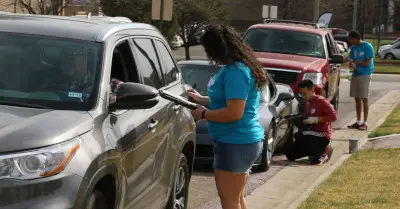
In 2009, TPPC and the Jerry H. Hodge School of Pharmacy began organizing Medication Cleanout, a drive-through program that allows people to bring in unwanted, unneeded and expired medications for proper disposal. The mission of MCO is to prevent poisonings, misuse, and abuse while protecting the environment through medication take-back events and drop-boxes. The first Medication Cleanout event occurred in Amarillo, TX on September 12, 2009. In the program’s first few years, collections were organized in Amarillo, Lubbock and a few smaller West Texas communities like Borger, Canyon, Pampa, Shamrock and Sweetwater. Since 2012, TPPC has conducted spring and fall Medication Cleanout events in Amarillo, Abilene and Lubbock. To date, TPPC has collected thousands of pounds of medications and and sharps for proper disposal.
For any questions about Medication Cleanout, call: 806-414-9495
TPPC Call Center
The TPPC undergoes annual compliance reviews and is required to go through the AAPCC re-accreditation process every seven years to ensure it provides quality services and to secure federal funding. Re-accreditation requires TPPC and all other poison centers to undergo an extensive peer-review process that includes a review of policies, procedures and call management efforts to educate the public and health care providers, all in the context of nationally recognized standards for poison control centers.
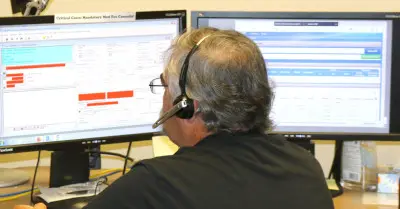
Re-accreditation is important to TPPC’s service area because poison centers do not just provide information regarding traditional poisoning scenarios; they also answer questions and concerns about medications, overdoses and the use of household products like cleaners, pesticides and herbicides.
Any questions about poison, or a posoning event, can be answered by calling: 1-800-222-1222.
Serving the Texas Panhandle Since 1993
1993. The Texas Panhandle Poison Center (TPPC) was created in 1993 by State Bill 773, which established and financed the Texas Poison Center Network. To ensure every resident in Texas had access to poison information, centers were opened in Galveston, Dallas, San Antonio, El Paso, Temple, and Amarillo. TPPC is homed in Amarillo and its service area includes the Texas Panhandle, the South Plains region and a portion of Central Texas. It encompasses 71 counties - a geographical area equivalent to roughly 25 percent of the state and a population of more than 1.3 million. The area is mostly rural, but also includes four urban areas: Amarillo, Lubbock, Abilene and Wichita Falls.
1193. Legislators in 1993 also appointed the Texas Department of Health - now known as the Texas Department of State Health Services (DSHS) - and the Advisory Commission on State Emergency Communications as the joint rule-making authorities for the network.
1994. From 1994 until 2003 the Amarillo Hospital District sub-contracted with Northwest Texas Hospital (NWTH) to be TPPC’s host institution. Construction of TPPC’s original NWTH location was funded by a grant from Children’s Miracle Network. The location was renovated in 1996 through funding provided by DSHS.
2003. On September 1, 2003, TTUHSC began managing TPPC through its Jerry H. Hodge School of Pharmacy.