


Program Overview
We offer a five year ACGME accredited General Surgery Residency Program graduating five Chief Residents per year and our educational philosophy can best be summarized in the Residency Program’s Mission Statement.
Our Mission is to assure that at the completion of their five year training our Graduates are equipped with the knowledge, experience, and technical skills to succeed professionally whether they choose academic or private practice, with or without further fellowship training. Our graduates will be expected to have the maturity, personal skills and ethical standards to become respected and productive members of the surgical profession.
Mission
To achieve these goals, we have established a comprehensive five year educational experience with broad exposure to all major areas of the surgical specialty. Currently, most rotations are within TTUHSC/University Medical Center, or at nearby Covenant Medical Center, therefore requiring very minimal travel for our residents in order to complete their education. All of us in the Department of Surgery, both faculty and residents have a common mission to strive for excellence in patient care and encourage an environment that emphasizes maximum benefits from all educational opportunities. To achieve success, the faculty and residents work together to gain knowledge, experience and to implement plans for improvement from all clinical experiences. The basic and clinical lecture series, clinical conferences and other educational activities are structured to strike a balance between theoretic and practical knowledge.
The strength of this program is the broad exposure to various aspects of General Surgery, early operative experience and congeniality among the residents and faculty. We are continually looking for ways to improve the residency by steadfastly exploring and developing new innovations in medical education. The leadership of the Department of Surgery has made excellence in resident education their number one goal and their aim is to make this program a leader in surgical education.
We also would like to give you an insight into the Surgery Resident’s life in and out of the hospital, specifically emphasizing the resident’s collegiality and the strong personal relationships between faculty and residents view Residents' Perspective video.
Curriculum & Coursework
Our general surgery residency program, in addition to the clinical opportunities, provides significant support for those interested in research. All of our residents are encouraged to participate in at least one research project during their residency experience. Thus, the main goal of the five-year clinical residency program is broad training with appropriate supervision, teaching and operative experience.
First Residency Year
During the first year the residents are introduced to a comprehensive general surgery curriculum providing the necessary prerequisite for early “hands on” operative training resulting in most interns completing the year with 100-150 defined category cases as primary surgeon and more than 200 cases total.
Second Residency Year
During the second year, responsibilities increase both operatively and perioperatively. The residents acquire the necessary knowledge and skills to become team leaders and competent first responders in the case of severely injured or ill patients. In addition, they are introduced to Pediatric Surgery and Breast.
Third Residency Year
During this year, the residents are team leaders on some of their services and their surgical skills, knowledge and experience make them qualified to perform complex surgery under direct supervision. This is a challenging year as the residents ascend significantly in operative and perioperative responsibilities. Learning supervision of more junior members of the team, delegating tasks and monitoring their completion become key focal points during this crucial year. Since third year residents perform most of the operations, there is heavy emphasis on operative judgement and clinical skills. In addition, residents complete their endoscopy rotation during this year.
Fourth Residency Year
At this level, the residents are very comfortable and competent performing most major surgeries within our specialties under direct supervision, leading a team and being the highest-level resident on call. In addition, residents will do a cardiothoracic surgery rotation.
Fifth Residency Year
During the cumulative fifth year, the chief residents rotate through the General Surgery services running the team, attending to administrative duties, teaching, performing on the average 200-250 major cases and preparing to pass the American Board of Surgery written and oral exams.
-
The Basic Science and Clinical Lecture Series is held every Friday between 1000 - 1200. Each lecture is given by residents and mentored by faculty. Each lecture will cover topics from basic science and clinical points of view. Although each lecture is independent, the relevant topics on the subject are assigned through SCORE so the residents can adequately prepare for the lecture. All major topics within general surgery will be covered over a period of one academic year.
The Booklet of Information – Surgery is published by the American Board of Surgery (ABS) to outline the requirements for certification in surgery. Applicants are expected to be familiar with these requirements and bear ultimate responsibility for ensuring that their training complies with ABS requirements, as well as for acting in accordance with the ABS policies governing each stage of the certification process.
-
Attendance at all rotation specific conferences is mandatory of all residents. Below is a complete list of the educational conferences:
- Patient Care Conference (Check-Out Conference) every morning at 0645-0715.
- Multidisciplinary ICU Team Meeting (for SICU residents) everyday 0830 – 0900.
- Multidisciplinary BICU Team Meeting (for BICU residents) every Friday 1200-1300.
- Morbidity and Mortality Conference Friday 0800-0900
- Trauma and Burn M&M Conference 2nd Friday of month 0800-1000.
- Resident Education every Friday 1000-1200.
- Clinical Competency Conference session every Wednesday 1200-1300.
- Individualized Remediation Study Sessions.
- Breast Conference every Thursday 1200-1300.
- Multidisciplinary Cancer Conference Every other Tuesday 1200-1300.
- Journal Club quarterly at 1800.
- Mock Orals (as scheduled)
- Technical Skills Practice Laboratory (as scheduled).
- Surgery Grand Rounds (as scheduled) Friday 0900-1000.
-
The increasing adoption of the robotic approach to minimally invasive surgery in multiple surgical sub-specialties has been associated with improved patient outcomes. There are several benefits of the robotic platform to the surgeon such as improved ergonomics, 3D visualization, motion filtration, articulation, among others. This means that robotic surgery will become the preferred approach to performing surgical procedures in the near- and long-term future.
At the Texas Tech University General Surgery Residency program, we recognize that acquisition of robotic surgical skills is critical for the future surgeon. We, therefore; provide our surgical trainees with the resources and training to acquire these robotic surgical skills.
Since 2020, we have instituted a structured resident robotic surgical skills training curriculum. This involves online modules, robotic dry-lab skills training, easily accessible SimNow advanced robotic simulator for 24/7 resident practice, biannual (spring and fall) robotic animal lab training workshops, TASSL robotic surgical skills training courses, required robotic bedside-assist training AND required robotic surgeon’s console training.
The goal of our structured curriculum is to provide our surgical trainees with the necessary robotic skills and increasing autonomy in robotic surgery throughout their training until they can independently utilize the robotic platform to perform general surgical cases. On their graduation, the chief residents will be certified in robotic surgery and receive an equivalency certificate and a TTUHSC program letter of completion of the robotic training curriculum.
-
Grand Rounds are held the first Friday of the month at 9:00 a.m. in the Academic Classroom Building.
The TTUHSC Department of Surgery hosts local faculty and outstanding regional or national speakers, who present on a range of general, cardiothoracic, vascular, pediatric, and plastic surgery topics in weekly grand rounds. Health professionals from other departments and from other institutions are welcome to attend.
The purpose of Grand Rounds and M&M Conference is to provide surgeons, residents and other attendees with up-to-date knowledge of surgical issues encountered in academic practice. It is expected that by promoting awareness of current advances in surgery, patient care will improve and mortality and morbidity will be reduced.
In addition, visiting professors also administer mock oral scenarios to upper level residents and provide feedback to better prepare them for their oral boards.
Objectives
- Improve patient care by keeping abreast of current and new treatment modalities in diagnosing and management of common Surgery related diseases.
- Cite current research findings in Surgery and critically analyze research issues.
- Identify and discuss newer surgical techniques/therapeutic options in the treatment of selected diseases.
- List radiological and pathological features of selected entities encountered by Surgeons.
-
To be eligible to take the American Board of Surgery qualifying examination residents must perform procedures in the minimum required number of cases in each surgical category. The table below shows required procedures, the minimum number of cases required and the average number of procedures in each category performed by our graduating chief residents.
Required Procedures Minimum
Required
Number of
major casesGeneral Surg
2022 Chiefs
Avg NumberGeneral Surg
2023 Chiefs
Avg NumberGeneral Surg
2024 Chiefs
Avg NumberGeneral Surg
2025 Chiefs
Avg NumberGeneral Surg
2026 Chiefs
Avg NumberSkin, soft tissue, and breast surgery (SS&B) 65 97 104 112 121 129 Head and neck surgery (H&N) 25 45 44 45 40 37 Alimentary tract surgery (ALTR) 180 334 336 309 397 377 Abdominal surgery (AB) 250 363 370 381 437 422 Liver surgery (LV) 5 11 14 14 12 11 Pancreatic surgery (PANC) 5 9 9 8 10 12 Vascular surgery (VASC) 50 114 127 113 108 127 Endocrine surgery (ENDO) 15 17 20 20 20 19 Trauma surgery (TRAU) 50 149 124 132 124 105 Operative 10 59 52 62 66 48 Non-operative 40 90 72 70 58 57 Thoracic surgery (THOR) 20 43 31 41 38 28 Pediatric surgery 20 34 25 24 28 30 Plastic surgery 10 46 58 62 75 59 Basic laparoscopic surgery (LAP-B) 100 248 237 257 306 307 Endoscopy 85 156 119 131 115 117 Complex laparoscopic surgery (LAP-C) 75 95 123 122 113 120 TTL Major 850 1094 1113 1117 1276 1238 TTL Chief 200 321 246 284 286 335 TTL TA 25 40 48 39 66 42
How to Apply
Admissions Requirements
View our SOM House Staff Policies and Procedures, SOM Administrative Policies, as well as a sample contract.
All applicant documentation must be uploaded through ERAS (Electronic Residency Application Service) from the AAMC (Association of American Medical Colleges) as this is the only means that we use to accept applications. For additional information about ERAS, students and graduates of US Medical Schools should contact the Student Affairs Office at their Medical Schools or the ERAS website.
We do accept foreign medical graduates from accredited medical schools. The graduate must have received their ECFMG certification prior to interviewing. Please note that US clinical experience is not required but is preferred. Students and graduates of foreign medical schools should contact the Educational Commission for Foreign Medical Graduates (ECFMG).
Please have your application with supporting documents submitted to ERAS by November 1st of each year. The following documents are required for interview:
- Completed ERAS Application
- Current CV
- Personal Statement
- Dean’s Letter (MSPE)
- 3 Letters of Recommendation
- Medical School Transcript
- USMLE Scores
- ABSITE Scores (if applicable)
After your application and supporting documents are received, the Department of Surgery Review Committee will screen them and if indicated, you will be contacted via email with an invitation to interview. Every year, our virtual interviews at TTUHSC Department of Surgery will take place between November and January.
TTUHSC Department of Surgery participates in the NRMP (National Residency Matching Program). We fill five (5) categorical positions and five (5) preliminary positions from our PGY 1 applicants. Those of you applying for first year positions should obtain information on the match from your Dean or from the NRMP.
Salaries
| Salaries for 2026-2027 (These amounts are for the Lubbock Campus only) | |||||||
|---|---|---|---|---|---|---|---|
| PGY-1 | PGY-2 | PGY-3 | PGY-4 | PGY-5 | PGY-6 | PGY-7 | PGY-8 |
| $67,474 | $68,999 | $71,178 | $74,419 | $76,628 | $78,840 | $81,052 | $83,483 |
| Previous Years' Salaries | |||||||
|---|---|---|---|---|---|---|---|
| Year | PGY-1 | PGY-2 | PGY-3 | PGY-4 | PGY-5 | PGY-6 | PGY-7 |
| 2025-2026 | $65,764.23 | $67,250.96 | $69,374.62 | $72,532.92 | $74,685.79 | $76,841.81 | $78,997.84 |
| 2024-2025 | $63,725.03 | $65,165.66 | $67,223.47 | $70,283.84 | $72,369.95 | $74,459.12 | $76,548.30 |
| 2023-2024 | $61,570.07 | $62,961.99 | $64,950.21 | $66,936.99 | $68,923.76 | $70,913.45 | $72,903.14 |
| 2022-2023 | $58,918.73 | $60,250.71 | $62,153.31 | $64,054.53 | $65,955.76 | $67,859.76 | $69,763.77 |
| 2021-2022 | $57,202.65 | $58,495.83 | $60,343.02 | $62,188.87 | $64,034.71 | $65,883.26 | $67,731.82 |
| 2020-2021 | $55,536.56 | $56,792.07 | $58,585.46 | $60,377.54 | $62,169.63 | $63,964.33 | $65,759.05 |
Benefits
Malpractice Insurance
Aggregates are $100,000 per incident and $300,000 annual aggregate. Professional Liability Division website or call (806) 743-9921
Health Insurance
Group Health/Dental/Vision insurance for residents and eligible dependents.
Workers' Compensation
Workers' Compensation website
Vacation
Vacation is approved for not more than 15 working days for PGY 1 and 2 and not more than 20 working days for PGY-3 and above. Leave policies vary by program and may not apply to all programs. Program-specific leave details, including the number of days available, may be listed below.*
Leave Policies
Leave policies vary by program and may not apply to all programs. Program-specific leave details, including the number of days available, may be listed below.
- Sick leave for up to 12 working days per year. Leave policies vary by program and may not apply to all programs. Program-specific leave details, including the number of days available, may be listed below.*
- Family and parental leaves of absence (see also US Department of Labor Employment Standards Administrative - FMLA)
- Educational leave
- Military leave not to exceed 15 work days per year.
Retirement & Savings
Residents and fellows are not eligible for TTU System's 401K plan but can participate in the Optional Retirement Program (ORP) or the Tax-Deferred Account Program (TDA). More information will be provided upon starting your program.
For GME Salary and Benefits questions, please contact:
Lubbock Graduate Medical Education
Phone: (806) 743-2978
Fax: (806) 743-1599
Email: LubbockGME@ttuhsc.edu
*Each program sets their own vacation and sick guidelines, not to exceed the maximum.
General Surgery Residency Lubbock Specific Benefits
Vacation is approved for no more than 15 working days for PGY 1-3 and no more than 20 for PGY 4 and 5.
Military/Veteran
Explore financial resources, benefits and support available to military members and veterans.
Additional Resources
-
The TTUHSC General Surgery Wellness Program is an employee-focused program that offers education, fitness, nutrition and work stress management.
Image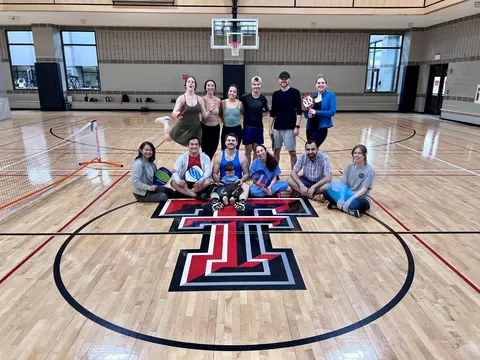
Regular educational lessons include topics such as:
- Goal Setting
- Stress Reduction Techniques and Resources
- Fatigue Mitigation and Management
- Team Building
- Work Life Integration
- Mindfulness for the Surgeon
- Posture and Ergonomics
- Strategic Diet, Exercise and Sleep
- Goals/Visions
A formal mentoring program is also a part of the wellness program. Each resident is assigned a faculty mentor as they enter the program. This program is to encourage and foster growth of each resident as they progress through the program and prepare for life after graduation.
Image
Don’t forget to check out the healthy and nutritious snacks we provide in the resident breakroom. This, in addition to the monthly meal card allowance, is to keep our residents full during their busy days.
-
The Surgical Simulation and Skills Laboratory at the Texas Tech University Health Sciences Center is an integral part of the Department of Surgery’s residency program. Here we follow the ACS/APDS Surgery Resident Skills Curriculum. This allows our General Surgery residents to master essential surgical skills early in their training.
The Skills Curriculum utilizes a basic lab, a laparoscopic lab, a state of the art Simulation Center, as well as a newly constructed Institute of Anatomical Sciences Cadaver Lab. These different venues provide optimal learning environments for certain skill acquisition.
Image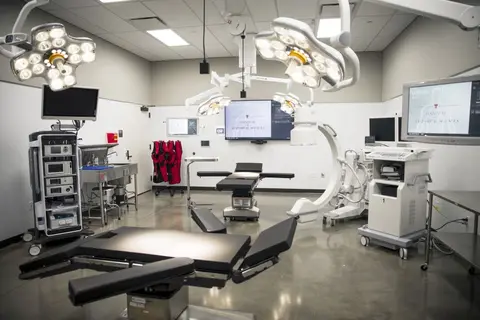
- In our basic lab, residents are taught the fundamentals of knot tying, suturing, skin flaps, hand-sewn bowel anastomosis, and arterial anastomosis.
- In our laparoscopic lab, residents are taught the techniques of minimally invasive surgery and are individually prepared for the Fundamentals of Laparoscopic surgery (FLS) exam.
- In the simulation center, residents are individually prepared for the Fundamentals of Endoscopic Surgery (FES) by use of the colonoscopy/esophagogastroduodenoscopy simulator. Residents are also taught proper cricothyroidotomy and tracheostomy techniques in our simulation center
- In the Institute of Anatomical Sciences, residents participate in 4-6 cadaver labs per year. Each Cadaver lab focuses on teaching surgical maneuvers for certain pillars of General Surgery. These labs include Advanced Surgical Skills for Exposure in Trauma (ASSET), Colorectal Surgery, Vascular Surgery, Hepatobiliary Surgery, and Thoracic Surgery to name a few.
- In addition, the residents participate in 4 live tissue labs per year. Each lab helps further development in a particular skill set. These live tissue labs include Robotic surgery, Laparoscopic surgery, and Trauma/Hemostasis.
Here at Texas Tech, we enjoy great support from vendors, who help provide for our educational activities with knot trying boards, suture boards, personal laparoscopic trainers, and extra programs in laparoscopic skills and live tissue labs.
The Texas Tech Department of Surgery is also a member of the Texas Association of Surgical Skills Labs (TASSL). TASSL’s mission is to enhance education using simulation based training for surgery residents and other learners by fostering collaboration and research.
-
Do residents take 24-hour call?
No, our residents take 12-hour call
Do residents get educational materials?
Residents receive subscriptions to TrueLearn, SCORE, and ABSITE Quest. Interns get a Sabiston textbook and upon chief year, gain access to Behind the Knife (post ABSITE).
What other benefits does the program offer?
Monthly meal card stipend ($125), free parking, and a dedicated resident lounge for a space to work.
What is there to do in Lubbock?
The city has much to offer with food, sports, and activities. Discover your future in Lubbock.
-
2027 Tommy Wright, D.O. GI MIS/Bariatric Fellowship, University of Texas at McGovern, Houston, TX 2027 Mark Torres, M.D. 2027 Baylor Schexnayder, M.D. GI MIS/Bariatric Fellowship, University of Texas at McGovern, Houston, TX 2027 Bailey Nelson, M.D. CT Surgery Program, Baylor Scott and White, Plano, TX 2027 Erfan Farno, M.D. 2026 Allison Vaughan, M.D. Surgical Critical Care Fellowship, TTUHSC, Lubbock, TX 2026 Shawn Senter, M.D. SWAT Surgical Assistants, Covenant Lubbock, TX 2026 Ali Elsaadi, M.D. Complex Gastrointestinal Surgery Fellowship, Sarasota Memorial Hospital, Sarasota, FL 2026 Shannon Corbitt, M.D. Burn/Critical Care Fellowship, UC Davis Sacramento, CA 2026 Osaid Alser, M.D. Plastic Surgery Fellowship, Ohio State University, Columbus, OH 2025 Thomas Wyatt, D.O. General Thoracic Surgery Fellowship, Swedish Medical Center, Seattle, WA 2025 Sean Simpson, M.D. Group practice, Methodist Hospital Hill Country, Fredericksburg, TX 2025 Theophilus Pham, M.D. Burn Critical Care Fellowship, UC Davis, Sacramento, CA 2025 John Mistrot, M.D. Group practice, Carolinas Center for Surgery, Morehead City, NC 2025 Erin Burton, M.D. Trauma & Surgical Critical Care Fellowship, Univ of Alabama Birmingham, Birmingham, AL 2024 Atli Valgardsson, M.D. Cardiothoracic Surgery Fellowship, Univ of Minnesota, Minneapolis, MN 2024 Jonathan Huynh, M.D. Minimally Invasive Surgery Fellowship, Alta Bates Summit Medical Center, Oakland, CA 2024 Natalie Hodges, M.D. Acute Care Surgery Fellowship, USC + LA General Hospital, LA, CA 2024 Cody Clapp, M.D. Naval Hospital Camp Pendleton, Pendleton, CA 2023 Marshall Logan Warren, D.O. Vascular Fellowship, OUHSC, Tulsa, OK 2023 Vitaliy Natkha, D.O. Critical Care Fellowship, Washington University, St. Louis, MO 2023 Tina Chung, M.D. Group practice, Memorial Hermann in Houston, TX 2023 Adan Castrodad, M.D. Colon & rectal surgery fellowship, Mayo Clinic, Pheonix, AZ 2023 Lisa Anderson, M.D. Brest Surgical Oncology Fellowship, OSU Wexner Medical Center, Columbus, OH 2022 Mohanad Elshiekh, M.D. Cardiothoracic Fellowship, MD Anderson, Houston, TX 2022 Linda Luong, D.O. Covenant Plainview Hospital, Plainview, TX 2022 Audrey Hand, M.D. Robotic Fellowship, Florida Surgical Specialist, Bradenton, FL 2022 Anceslo Idicula, M.D. Hand Surgery Fellowship, Ascension St. John Hospital, Grosse Pointe Woods, MI 2021 Virginia Tran, M.D. Private Practice, Cleburne, TX 2021 Michelle McGill, M.D. Plastic Surgery Fellowship, UTSA, San Antonio, TX 2021 Mary Scheerer, M.D. Locum Tenens/Private Practice 2021 Karla Daniele, M.D. Breast Surgery Fellowship, Allegheny General Hospital, Pittsburgh, PA (Breast) 2021 Babak Abbassi, M.D. Private Practice 2020 Rushabh Dev, M.D. Trauma, Critical Care, Acute Care Surgery Fellowship at UT Houston 2020 Robert Polak, M.D Advanced GI/Bariatric Fellowship at BMI of Texas in San Antonio 2020 Mustafa Amani, M.D. Breast Oncology Surgery Fellowship at TTUHSC Lubbock 2020 Dayton Wong, M.D. Private Practice in Plainview, Texas 2020 Abbie Schuster, M.D. Private Practice in Odessa, Texas 2019 Yana Puckett, M.D. Breast Surgical Oncology, Orlando health, Clermont, FL 2019 Jayne McCauley, M.D. Trauma, Critical Care and Acute Care Surgery Fellowship at UTHealth Memorial Hermann, Houston, TX 2019 Edward Daniele, M.D. Plastic & Reconstructive Surgery Fellowship 2019 Anand Tarpara, M.D. Vascular Surgery Fellowship @ Thomas Jefferson University, Philadelphia, PA 2018 Senan Abdul-hamed, M.D. Research 2018 Prerna Ladha, M.D Fellowship in Trauma Surgery & Surgical Critical Care @ Rutgers, Newark 2018 Andres Leal, M.D. Fellowship in Thoracic Surgery @ Baylor University Medical Center, Dallas 2017 Milad Mohammadi, MD Fellowship in Vascular Surgery @ UT San Antonio 2017 Michael Hanna, MD Fellowship in Cardiothoracic Surgery @ Allegheny Hospital, Pittsburgh, PA 2017 Hassan Ahmed, MD Fellowship in Advanced GI and MIS @ Swedish Medical Center, Seattle WA 2017 Ashley Mekala, DO Private Practice in Dallas, TX 2016 Wudneh Temesgen, MD Fellowship in MIS @ Brown University, Rhode Island (Johns Hopkins)(Private Practice in Providence, RI) 2016 Sarah Cazorla, MD Fellowship in Plastic Surgery @ University of Virginia 2016 Sarah Ahmad, MD Fellowship in Cardiothoracic Surgery @ University of Iowa 2016 Erin Woller, MD Private Practice @ Hendrick Health, Abilene, TX 2016 Alan Coleman, MD Private Practice in Wichita Falls, TX 2016 Adam Purtell, MD Fellowship in MIS @ UT Houston 2016 Abe Mata, MD Fellowship in Vascular Surgery @ University of West Virginia 2015 Paul Del Prado, MD Minimally invasive Surgery Fellowship at Virginia Commonwealth University, Richmond (Private Practice Phoenix, AZ) 2015 Onur Kutlu, MD Hepatobiliary Surgery Fellowship at Medical University of South Carolina, Charleston (Academic Practice @ UT Houston) 2015 LeRone Simpson, MD Surgical Critical Care/Acute Care Surgery at Washington University, St. Louis (Private Practice McAllen, TX) 2015 Jon Nathan, MD Plastic Surgery Fellowship at Loyola University, Chicago 2015 Jesse Flores, MD Fellowship in Colorectal Surgery @ Cleveland Clinic (Private Practice Dallas, TX) 2015 Caleb Sallee, MD Private Practice at SWAT Surgical Associates in Lubbock Texas 2013 Tropha Wright, MD Private Practice in Raton, New Mexico 2013 Steven Garcia, MD Fellowship in Minimally Invasive and Bariatric Surgery @ UT Southwestern (Bariatric Surgery) 2013 LaJohn Quigley, MD Fellowship in Minimally Invasive and Bariatric Surgery at University of South Carolina (Amarillo - Minimally Invasive Surgery) 2013 Diana Burgueno, MD Private Practice in Lakeland, Florida 2013 Ben Hirsch, MD Fellowship in Cardiothoracic Surgery at University of Virginia (Cardiothoracic Surgery) 2012 John Fitzwater, MD Pediatric Surgery Fellowship @ University of Miami, Miami, FL 2012 Jared Bratvold, MD McKay-Dee Hospital, Ogden, UT 2011 Steven Brooks, MD Surgical Critical Care Fellowship at Vanderbilt University Medical Center, Nashville, TN 2011 Jenna Wishnew, MD Private Practice in Frisco, TX – General Surgery 2010 Stavan Parmar, MD Private Practice in Hunstville, TX - General Surgery 2010 Mark Markarian, MD Private Practice in Boston, MA – Plastic Surgery 2010 Delphine Engel, MD Private Practice in Portland, OR – Critical Care 2009 Ronny Ford, MD Private Practice in Burleson, TX – General Surgery 2009 Danny Owens, MD Private Practice in Waco, TX – General Surgery 2009 Candy Arentz, MD Private Practice in Houston, TX - Oncologic Breast Surgery 2008 Matt Couch, MD Private Practice in St. Petersburg, FL – General Surgery 2007 Rick Wirges, MD Private Practice in Little Rock, AR – Hand Surgery 2007 Matt Robinson, MD Private Practice in Hopkinsville, KY – General Surgery (Jennie Stuart Medical Group) 2006 Sharmila Dissanaike, MD Surgical Critical Care Fellowship at University of Washington, Seattle, WA 2006 David Stapenhorst, MD Private Practice in Sugar Land, TX – Plastic Surgery 2006 Barnard Barragan, MD Private Practice in Lubbock, TX – Hand Surgery 2005 Richard Helmer, MD Private Practice in Waco, TX – Cardiothoracic Surgery 2004 Thomas Howe, MD Private Practice, Lubbock, TX – Wound Care 2004 Esteban Henao, MD Private Practice in Albuquerque, NM – Vascular Surgery 2004 C. Lance Love, MD Private Practice in Fredericksburg, TX – General Surgery 2003 Michael Seger, MD Private Practice in San Antonio, TX – MIS/Bariatric Surgery 2003 Melinda Banister, MD Private Practice in Alpine, TX – General Surgery 2002 Robert Noll, MD Faculty at UC Davis 2002 Richard Wilkerson, MD Private Practice in Grapevine, TX – Vascular Surgery 2001 Trent Proffitt, MD Private Practice in Rowlett, TX – Vascular Surgery 2001 Russ Birdwell, MD Private Practice in Garland, TX – General Surgery 2001 Don Dilworth, MD Private Practice in San Antonio, TX – General Surgery 2000 Delma Jara, MD Private Practice in Houston, TX – General Surgery 2000 C. Coleman Brown, MD Private Practice in Chevy Chase, MD – Plastic Surgery 1999 Sammy Rivas, MD Private Practice, Lubbock, TX 1999 John Millard, MD Private Practice in Lone Tree, CO – Plastic Surgery 1999 Derek Haggard, MD Private Practice in Lubbock, TX -
Welcome to the Department of Surgery at Texas Tech University Health Sciences Center in Lubbock. We are an academic surgery program with several hallmarks. First and foremost, we train the best of the next generation of independent, confident surgeons ready for general surgery practice or to pursue advanced fellowship training upon graduation. We do this by providing early autonomy in diagnosis and clinical decision making, perioperative care, and in the operating room itself. We believe that in order to practice surgery well, you must actually be in the operating room from the start of your surgical training. We value the collegiality and support we provide each other and ensure that camaraderie remains a defining characteristic of this program. Diversity in race, gender, educational background and interests have been an active focus of our resident and faculty recruitment over the past several years, and we see the result in an enriched work environment each day.
We have well established Centers of Excellence in the John A. Griswold Level 1 Trauma Center (see trauma center video) and the Timothy J. Harner Regional Burn Center (see burn center video), both of which have over 20 years of continuous verification by the American College of Surgeons. We are unique in being the most geographically isolated Level 1 trauma center and burn center as judged by distance from competing centers; thus we maintain a large referral base from a widespread rural population. We also provide acute care general surgery services at the only Level 2 center in the region, and surgical services at the TDCJ Montford Prison Hospital, which received surgical referrals from half of Texas. In combination, these referral bases ensure that our faculty and trainees are caring for the sickest, most complex surgical patients in the entire West Texas Eastern New Mexico region, providing an unparalleled training experience.
Against this backdrop of acute surgical care, we are rapidly expanding the quantity, complexity and quality of elective surgery. We have Centers of Excellence in Bariatric Surgery and Breast Surgery and are developing similar centers in Pediatric Surgery, Foregut Surgery/Endoscopic Procedures, and Oncology, along with the recent addition of providing surgical services at the largest private hospital in the region. To help trainees develop advanced technical skills in the relatively short duration of training, we have not only a robust case volume but a strong FLS accredited simulation center with dedicated faculty and personnel, and formal programs in endoscopic and robotic training.
Since a key purpose of an academic surgical department is to continually advance the science of surgery, we have a vigorous clinical, basic science and outcomes research program, centered on the Burn Center for Research Excellence (BCORE), TTUHSC Clinical Research Institute (CRI) and the School for Public Health. Through alliances with the Southwest Cancer Center and TTU departments of engineering, we have developed translational research programs in cancer genetics, molecular biology and biomedical technologic innovations; the list of research projects with department of surgery involvement seems to grow daily.
A big strength of the program is our close-knit structure; nearly the entire residency gathers in one room with faculty for check-out conference each morning, in addition to weekly academic conferences. There is a team structure in place that pairs junior residents with senior colleagues and faculty to afford mentoring and guidance from day one.Close working relationships are quickly developed and grow over the years so nobody feels isolated or without support. We are a family, and that is what makes Texas Tech in Lubbock the best place to work and train. Thank you, and welcome.
Ariel Santos, MD, MPH, FRSCS, FACS
Peter C. Canizaro Chair, Department of Surgery
Contact Us
General Surgery Residency Lubbock
We're here to help. Contact us if you have questions.
-
Address
3601 4th Street
Lubbock, TX 79430
United States
- Phone (806) 743-2332
- Email danielle.shears@ttuhsc.edu
-
Hours
8 a.m. - 5 p.m. Monday to Friday