


Smarter Together
The way scientists conduct research is evolving. As scientific problems grow more complex and interdisciplinary, the need for effective, collaborative and context-sensitive research teams has never been greater, according to “The Science and Practice of Team Science,” an evidence-based consensus report from the National Academies of Sciences, Engineering, and Medicine.
Team science is a philosophy shared by Clifton David Fuller, M.D., Ph.D., from the University of Texas MD Anderson Cancer Center.
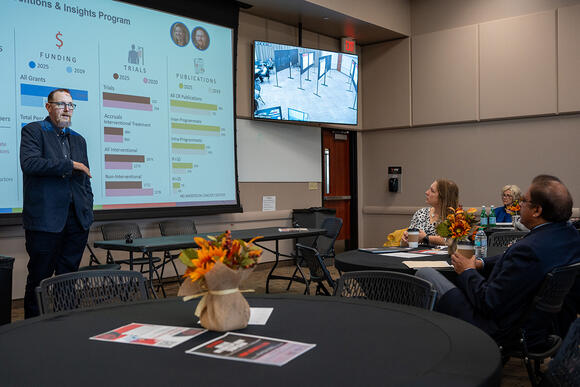
“There is a massive transition in the way that we do science where distributed expertise has become the norm,” Fuller said. “It’s very uncommon for a single scientist to have all the technical, scientific or even resource capacity to answer hard scientific questions. So that means fundamentally, team science is a norm.”
Fuller discussed the change during his keynote address at the Ninth Annual Abilene Research Symposium held at the Texas Tech University Health Sciences Center (TTUHSC) Julia Jones Matthews School of Population and Public Health.
Fuller explained that the deluge of new data means scientists are processing information from multiple different sources, so it’s transforming the traditional research model.
“It’s a very different game than it was,” Fuller said. “The idea of a single, lone wolf scientist with a pipette making discoveries is far less common than we see nowadays of that scientist working in concert with a colleague at another institute.”
His speech resonated with those attending the Abilene symposium. The event came together with collaboration top of mind.
“We wanted to have an event that included everybody,” Pearl Merritt, Ed.D., senior director of community engagement for the Laura Bush Women’s Health Institute and event co-chair, said. “Each university has amazing research going on, but we weren’t really sharing that."
The symposium began as an initiative by the Abilene Research Coalition. The group formed in 2017 and included members from TTUHSC, Abilene Christian University, McMurry University, Hardin-Simmons University, Cisco College and Hendrick Health System. Their goal was to provide innovative research and education opportunities for undergraduates and graduate students from each of Abilene’s local colleges and universities.
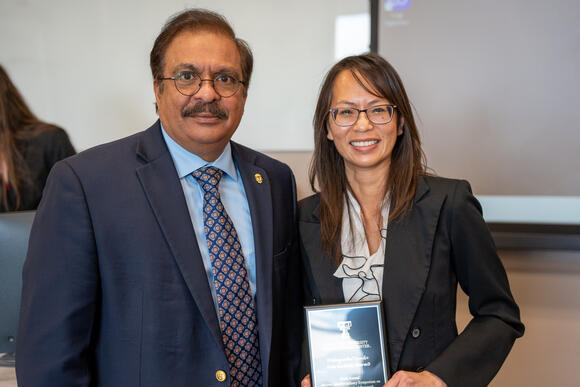
“The intent was to not let those bright minds go out of the city of Abilene,” Sanjay Srivastava, Ph.D., professor at the TTUHSC Jerry H. Hodge School of Pharmacy and event co-chair, said. “When I moved here as the department chair in 2017, we did not have a Ph.D. program at TTUHSC Abilene. With everybody’s effort, we were able to establish a Ph.D. program in pharmaceutical sciences on the Abilene campus.”
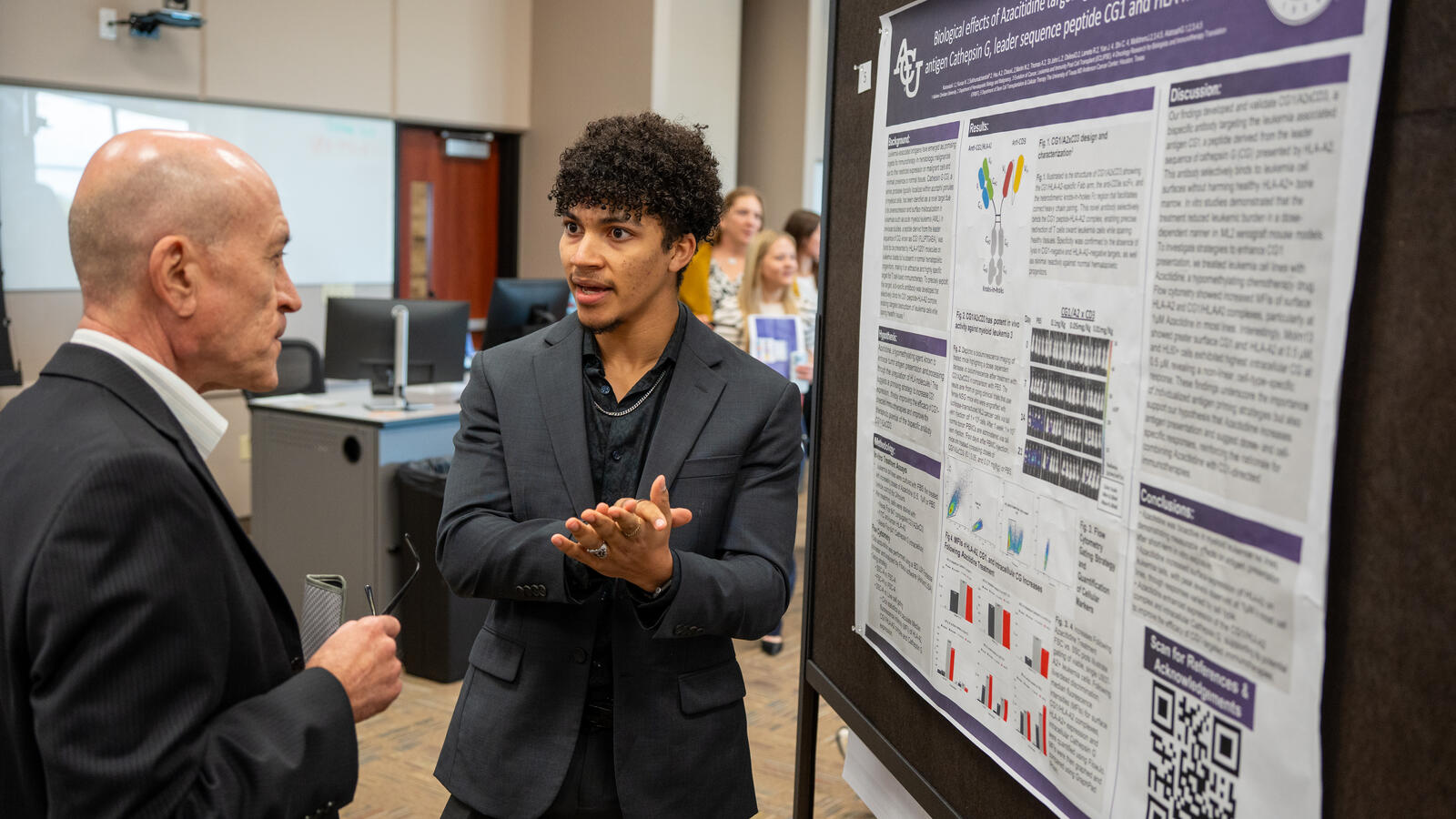
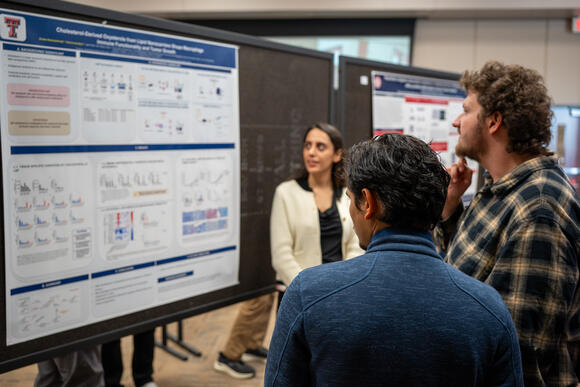
The Abilene Research Coalition chaired by Srivastava and Merritt helped build and expand research opportunities in Abilene. The group hosted the inaugural Abilene Interdisciplinary Symposium on Cancer & Biomedical Research in April 2018, and the symposium continues to connect local resources, fostering collaboration among researchers while helping students grow their research skills. This year, it included both poster and podium presentations from area students to showcase their projects and receive feedback.
“That’s huge for those students to have that opportunity,” Merritt said. “The students get to interact with the researchers that are here. They can learn from our local researchers, and it’s just impressive.”
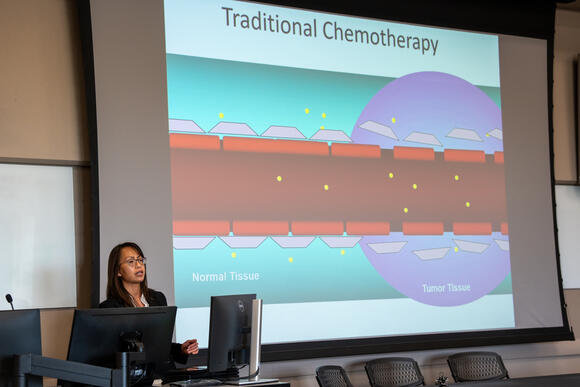
Irene La-Beck, Pharm.D., School of Pharmacy Department of Immunotherapeutics and Biotechnology chair and professor, shared her work with attendees. The presentation, “Tiny Particles, Big Impact: Harnessing Nanotechnology Against Cancer,” highlighted her research into how nanoparticles interact with the immune system and cancer so that new drug delivery systems can be developed.
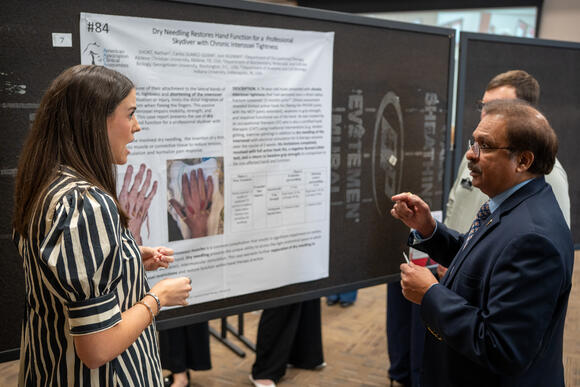
Additional speakers included Todd Triplett, Ph.D., assistant professor at the School of Pharmacy; Janet Donaldson, Ph.D., vice president for research at Abilene Christian University and Timothy Head, Ph.D., assistant director of the Nuclear Energy eXperimental Testing (NEXT) Lab at Abilene Christian University.
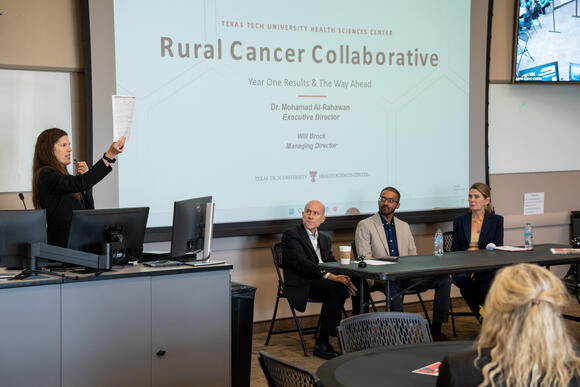
The symposium also included a rural cancer panel consisting of Connie Tyne, executive director for the Laura W. Bush Institute for Women's Health; Julie St. John, Dr.P.H., professor at the TTUHSC School of Health Professions; Maciej Markiewski, M.D., Ph.D., professor at the School of Pharmacy and Justin Thomas, M.D., a radiation oncologist with Hendrick Health.
“I spoke about a rural health initiative that was founded by the Laura Bush Institute called Access to Breast Health for Texans,” Tyne said. “It’s a program that’s addressing a crisis that we have here in Texas, that rural women have higher rates of advanced breast cancer than urban woman because their mammogram rate is so low.”
To help address this concern, the Laura Bush Institute used new technology called a Bexa exam. It’s an FDA-cleared, non-invasive breast screening method which uses high-resolution elastography (pressure mapping) and targeted portable ultrasound instead of radiation or compression.
“It’s very portable, and many people here in the Abilene area have experienced a Bexa exam in the last two years,” Tyne said. “We’ve done almost 5,000 free breast cancer exams for women here in the Big Country. It’s a mission that we are very excited about, and we know we are saving lives.”
By sharing this type of work and the innovative research and technologies making it possible, Tyne hopes to inspire the younger generation to make the next big scientific discoveries.
“The great scientists start in elementary school, middle school, high school, undergraduate,” Tyne said. “We need to inspire them at as young an age as possible to see themselves as part of a medical community, of a research system. We want to bring them along so that they’re the future.”
That future includes a collaborative spirit which has been fostered in Abilene for nearly a decade.
“It’s important to understand that your goal is not to know everything,” Fuller said. “Seeing yourself in a collaborative space really facilitates the growth of your own career because it also means that you get to interface with disciplines or strategies you wouldn’t ever think of on your own. We’re always smarter together than we are by ourselves.”