


Rewriting Radiation Recovery
Deoxyribonucleic acid, better known as DNA, stores the genetic code needed to build, grow and reproduce living things. Think of it like instructions. Most people need instructions to build ready-to-assemble furniture. A mistake in the instructions can cause problems putting the furniture together. A mistake in DNA, or DNA damage, can cause problems building or operating the body, leading to health problems.
Some DNA damage happens through normal body processes, while some is caused by outside factors such as radiation. Radiation exposure from accidents, warfare or cancer treatment can cause a serious type of DNA damage called double-stranded breaks. This would be like ripping the instruction manual in half. One piece does not make sense without the other.
The body works to repair double-stranded breaks in two ways: non-homologous end joining (NHEJ) and homologous recombination (HR). NHEJ is fast. It’s like quickly taping the pieces of the instruction manual back together. The instructions could make sense, but some pieces might be missing. HR is slower. It’s like downloading a copy of the instruction manual from the furniture manufacturer. It’s an exact copy, so no information is lost.
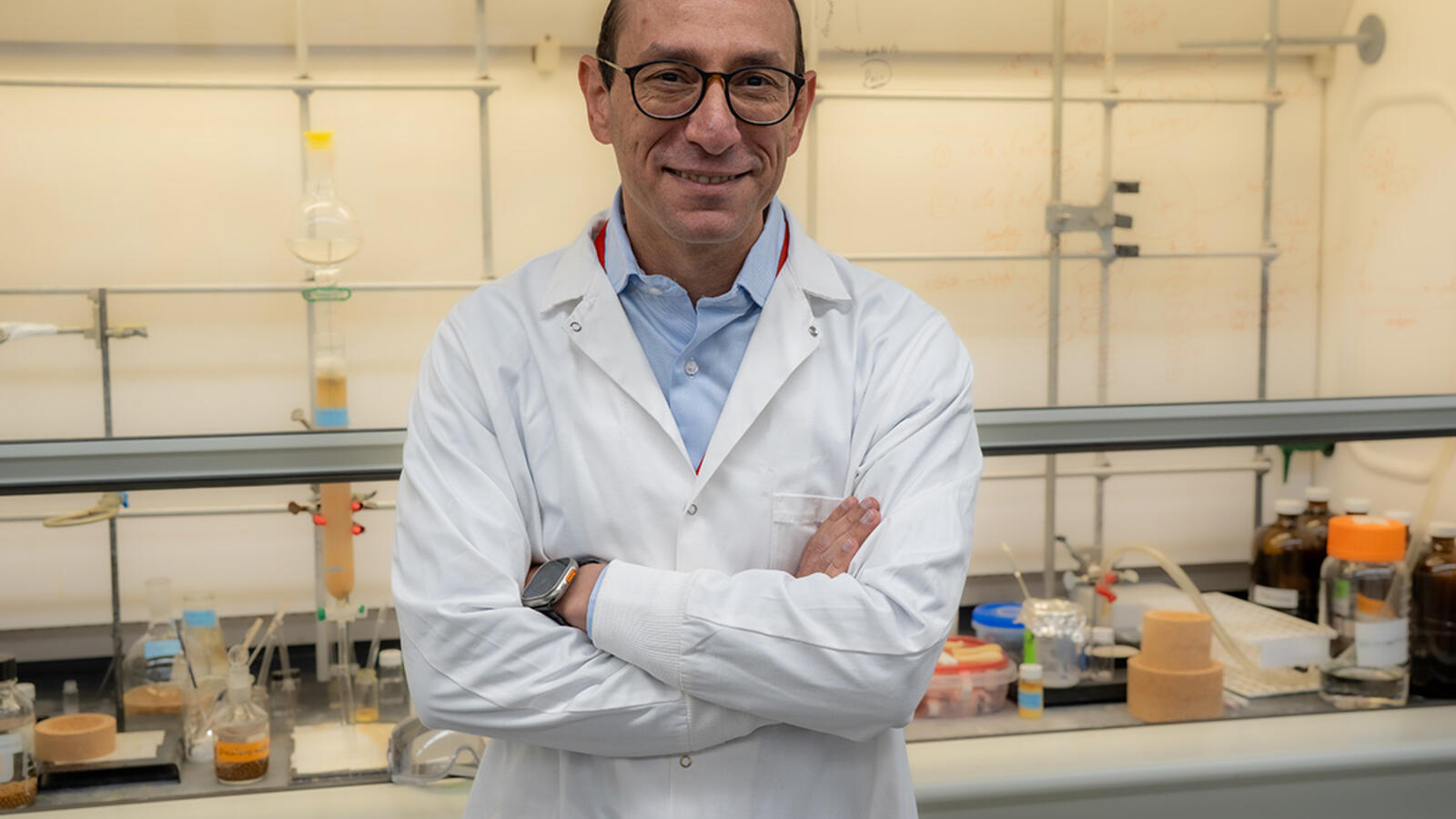
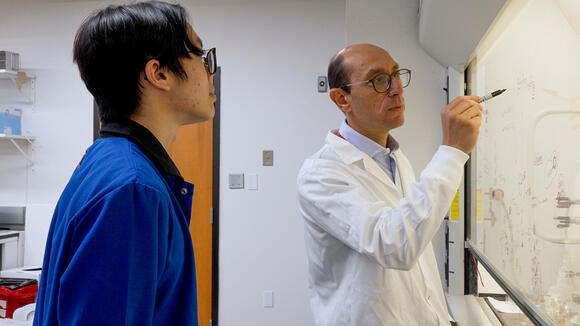
Mahmoud Ahmed, Ph.D., assistant professor at the Texas Tech University Health Sciences Center (TTUHSC) Jerry H. Hodge School of Pharmacy and faculty member in the Graduate School of Biomedical Sciences, is focused on HR. Specifically, his lab is targeting two proteins called RAD51 and BRCA2. They work together to repair damaged DNA.
“We want to make them bind to each other,” Ahmed said. “So, we can move forward with a better strategy for DNA repair.”
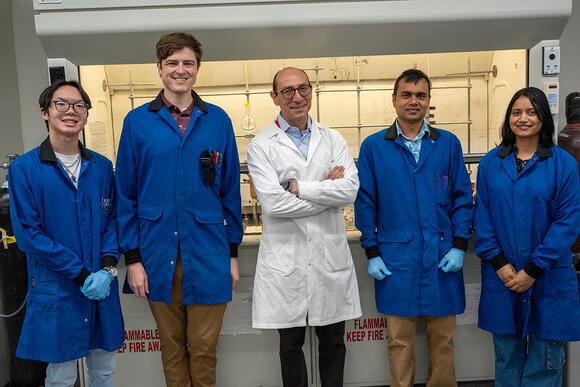
The Ahmed Lab for Drug Discovery at TTUHSC in Amarillo is working to bring the RAD51 and BRCA2 proteins together more often and for longer periods of time.
“We want to bring in a small molecule, so a drug, to help facilitate that,” Simon Sy, a student in the TTUHSC Graduate School of Biomedical Sciences, said. “We call them small-molecule protein-ligand interface stabilizers. They promote this complex formation so that we can have more of this error-free repair.”
The project is funded by the National Institutes of Health (NIH) through a U01 grant titled, “A Novel RAD51-BRCA2 Complex Stabilizing Drug: A Medical Countermeasure for Mitigating Accidental Radiation Exposure.” It is a multi-principal-investigator initiative from the University of Arizona and Texas Tech University Health Sciences Center.
“We are trying to specify when we can administer our small molecules after the exposure,” Ahmed said. “We are testing different timelines, doses and even different routes of administration for the best potency, efficacy as well as safety.”
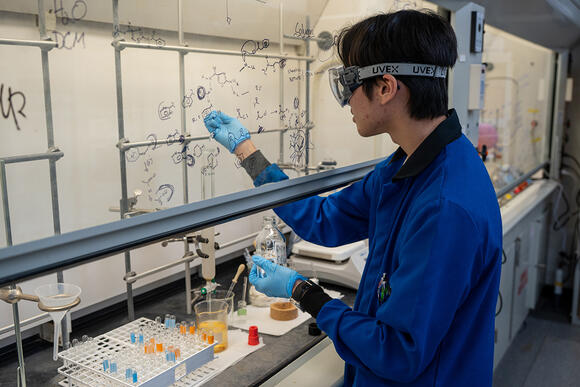
Sy called the work fulfilling. He said he’s wanted to be involved in the drug discovery process since middle school when a biology teacher piqued his interest.
“Shoutout to Ms. Harrison,” Sy said. “She showed us a video on superviruses, and at first, I just wanted to beat them. Eventually it evolved into doing chemical work. I did some chemical research in undergrad, and this is just my passion.”
Ahmed understands following one’s passion. He trained as a medicinal chemist, but during his time at UT Southwestern, he decided to get out of his comfort zone.
“I was focused on research related to cancer,” Ahmed said. “I decided to go into the cardiac field.”
Ahmed’s journey into the cardiac field led to his current radiation research.
“Cardiac toxicity is highly associated with radiation exposure,” Ahmed said. “Once the radiation would induce their deaths, these cardiac cells would be fibrotic cells. They’ve lost their identity; they cannot regenerate and the heart is not functioning properly.”
Ahmed explained that the RAD51-BRCA2 theory began with the idea of regenerating the heart.
“This project was born at UT Southwestern at Sadek Lab with Hesham Sadek, M.D., Ph.D., and Asaithamby Aroumougame, Ph.D.,” Ahmed said. “Both of them moved to the University of Arizona. This is how we got our efforts together, and we started to address a question that we initiated eight years ago. How can we mitigate DNA damage?”
Significant DNA damage can impair tissue regeneration and trigger death. But the research team discovered that irradiated mice given a specific drug lived longer than those that did not receive the drug.
“We wanted to figure out the mechanism,” Ahmed said. “We started with the heart, the small intestine, bone marrow, every single organ we started to investigate to elucidate the mechanism. This is how we generated our running hypothesis right now for targeting RAD51-BRCA2. Those are the key molecular pathways for the DNA repair mechanism.”
“We started with heart regeneration, and we ended up with post-radiation exposure,” Ahmed continued. “The key part about that, the whole connection, is about how can we repair the DNA damage?”
Sy said he’s grateful for the opportunity to work on the project and grow his research skills.
“I just hope it helps people,” Sy said. “The things I do here and wherever else I do lab work, I hope the findings I make just help people.”
Ahmed said he’s happy to support curiosity, understanding and collaboration as driving forces to help others.
“Chemistry is a tool,” Ahmed said. “You can recruit chemistry to address biological questions. This is our lab vision, reimagining small molecules to identify different molecular pathways, receptors, enzymes or proteins toward clinical solutions.”
This research was, in part, funded by the National Institutes of Health (NIH) Agreement 5U01AI187043-02. The views and conclusions contained in this document are those of the authors and should not be interpreted as representing the official policies, either expressed or implied, of the NIH.