All of Life Should Be Studied
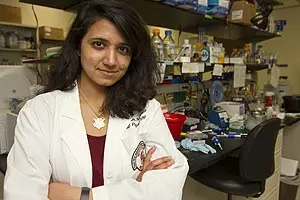
Nishtala, a fourth-year Ph.D. student, works alongside Michaela Jansen, Ph.D., in the Jansen Laboratory.
Little did Nirupama Nishtala know growing up that her love of a good fiction book would lead her to a love of research.
“I’ve always enjoyed reading fiction one of the reasons is because you never know how the story ends, that’s what makes it so exciting,” Nishtala said. “The idea and practice of research is very similar to this and the best part is that you’re writing the story, a story that will hopefully make a difference to a few lives in the future.”
Nishtala is a fourth-year Ph.D. student and currently a Ph.D. candidate. She works in the Jansen Laboratory with Michaela Jansen, Ph.D.
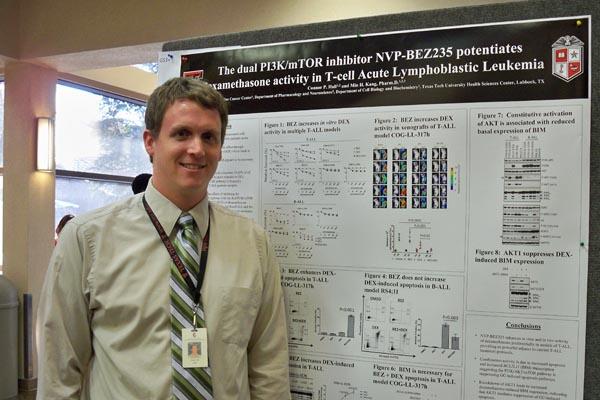
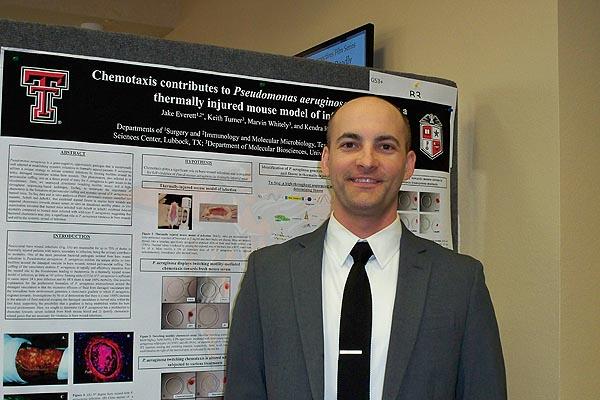
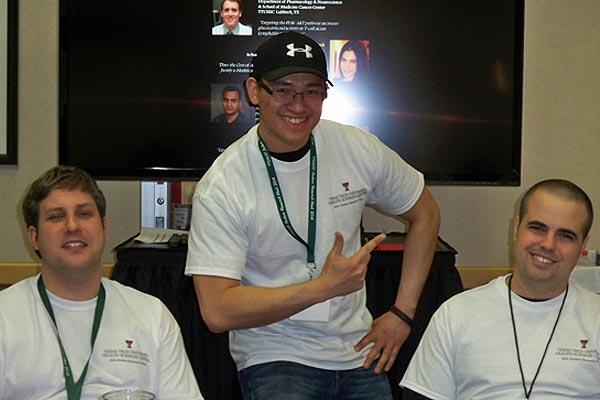
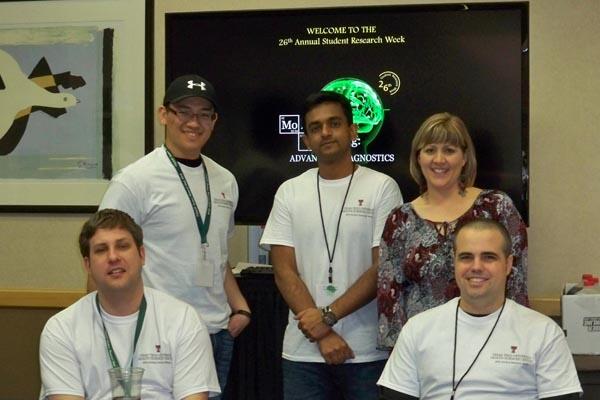
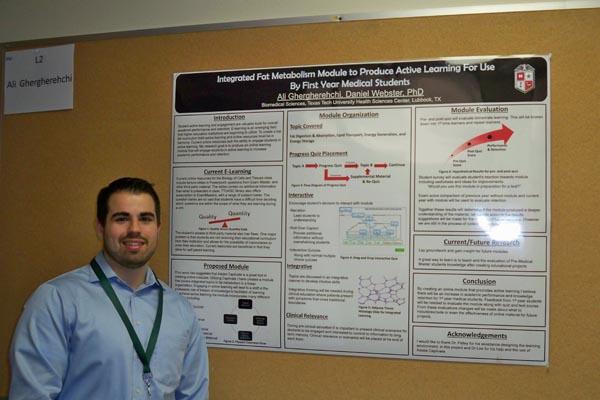
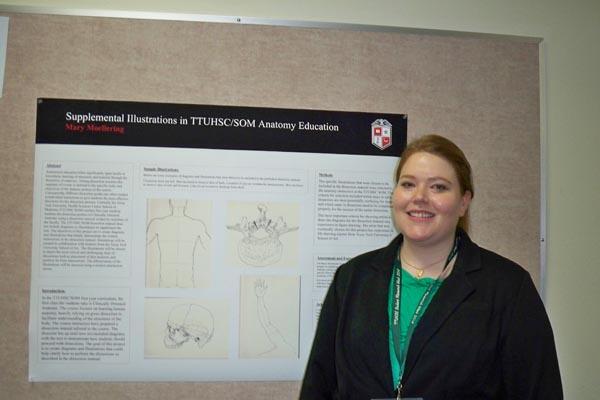
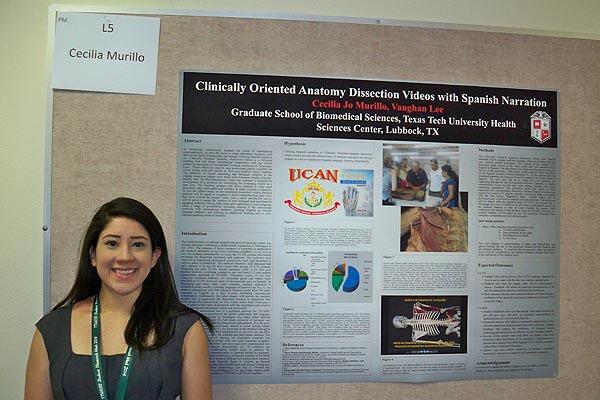
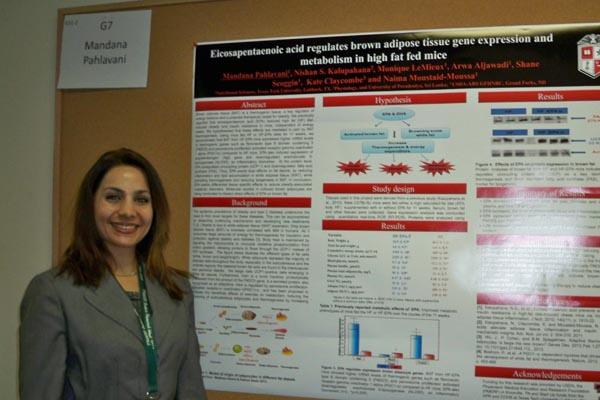
The Graduate School of Biomedical Sciences (GSBS) hosted the 26th Annual Student Research Week. Every year GSBS students organize Student Research Week to showcase the next generation of biomedical researchers like Nishtala, and their work.
The theme for this year’s Student Research Week was Molecular Imaging: Advancing Diagnostics. Along with distinguished seminar presentations, students from different disciplines participated in a poster competition. Students presented research projects to faculty and peers.
“Our theme this year highlighted the progress in field of imaging,” said Nishtala, who also served as the event vice director of judging. “Molecular imaging helps to better understand the biological processes at the molecular and cellular levels in humans and other living systems.”
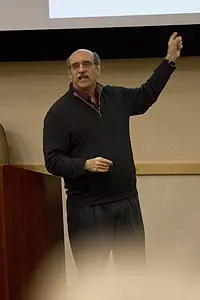
Chalfie, a Nobel Prize Laureate, spoke on the trials and tribulations of research and what it has taught him.
Try and Try Again
Keynote speakers were Martin Chalfie, Ph.D., Nobel Prize Laureate in Chemistry 2008 and professor of biological sciences at Columbia University; and Lee Josephson, Ph.D., with the Center for Advanced Medical Imaging Sciences at the Massachusetts General Hospital Martinos Center for Biomedical Imaging and Harvard Medical School.
Chalfie spoke to the students about his research that earned him his Nobel Prize but also about how most research does not always work the first time around noting well-known researchers who tried and failed numerous times. He also left students with a list of what research taught him:
- Scientific success comes via many routes.
- Many (most) scientific discoveries are accidental.
- Scientific progress is cumulative.
- University and grant support was essential.
- Students and post docs are the lab innovators.
- All life should be studied, not just model organisms.
- Basic research is essential.
“His humility and his exhilaration in everyday science both of which spoke volumes about his success,” Nishtala said. “He is wonderfully down-to-earth, funny and like a run-of-the-mill scientist; except that he completely knows what he wants from his life and his research.”
Nishtala’s research focuses on neurotransmitter receptors that form the targets for drugs against Alzheimer’s disease, Parkinson’s’ disease, schizophrenia, anti-smoking drugs and others.
“I have personally known victims of such diseases,” Nishtala said. “They are a nightmare to live with and I wanted to be able to assist with at least understanding the pathology of such diseases, which could pave the path for future drug development. In addition to my personal involvement, it helps that I have a very supportive, kind mentor who always challenges me to look at the scientific aspect of such diseases as well.”
In the Jansen Lab, the research focus is on structure-function studies of neurotransmitter receptors in the brain and spinal cord that form the targets for a number of drugs such as antipsychotics, anti-epileptics, smoking cessation drugs and drugs used to treat Alzheimer’s disease and schizophrenia. These specific receptors contain extracellular, trans-membrane and cytoplasmic domains. Nishtala said structural as well as functional information is available about the first two domains, but little is known about the cytoplasmic domain.
“We want to understand and explore the relationship between the structural and functional aspects of this domain in order to identify potential drug targets within this domain. Congenital myasthenic syndrome is associated with mutations in this domain; it used to be previously misdiagnosed as myasthenia gravis, which led to large delays in treatment. Only recent research on the cytoplasmic domain has identified the two diseases are disparate, thus highlighting the importance of more research on this domain.”
Brandt Schneider, Ph.D., dean of the GSBS, said Student Research Week was a great success.
“Student Research Week provided our colleagues at TTUHSC and the community a glimpse into the quality of TTUHSC student researchers,” Schneider said. “This year we had 260 research abstracts which is 40 percent more than last year. We were super impressed at the students’ hard work and great science.”
Student Research Week award winners included:
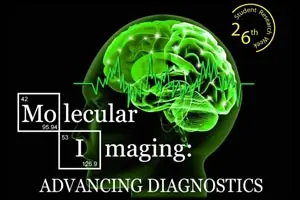
More than 260 research abstracts were submitted for Student Research Week.
- Undergraduate Researchers Basic Science Seniors
First: Dalia Martinez-Marin
Second: Jessica Stilwell - First and Second Year Graduate Students
First: Michael Song
Second: Sukanyalakshmi Chebrolu
Third: Steven Rains
Third: Mandana Pahlavani - Pre Medical Sciences
First: Cecilia Murillo - First and Second Year Medical Students
First: Gabriel Scott
- Residents and Fellows
First: Brandon Trojan
Second: Sarah Cazorla
Third: Rishikesh Kulkarni
Third: Johnny Hickson - Post Doctoral Fellows
First: Amit Rawat - Best Practices
First: Nathan Jarman
Second: Kris Brock - Third and Fourth Year Medical Students
First: Jaden Evans
Second: Katy Britten
Third: Rahul Chhana
Third: Coby Ray - Third and Fourth Year Graduate Students
First: Jill Wright
Second: Monish Makena
Third: S. Mohammad Abedi - Interprofessional Teamwork (QEP)
First: Amanda Rodriguez, Barakha Yadav and Michael Song
Image Gallery