

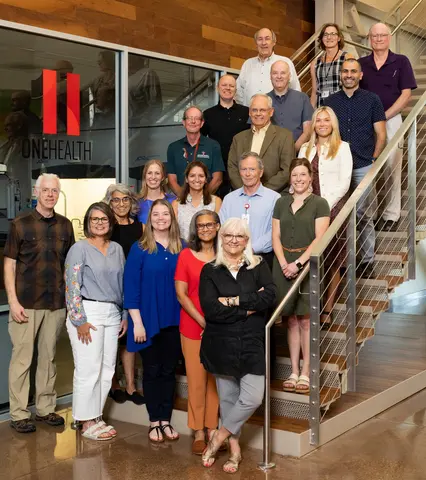
Welcome to the DOME
The Lubbock Department of Medical Education was established in 2013 as the academic home for faculty with primary responsibility for the first- and second-year curriculum and the Family Medicine Accelerated Track in the TTUHSC School of Medicine. All current Block Directors and Co-Directors have a primary or joint appointment in the department. The DOME also includes the academic home for the Center for Ethics, Humanities and Spirituality and the Certificate Program in Medical Humanities.The Department and its faculty members work closely with the Office of Academic Affairs and the Office of Student Affairs within the School of Medicine Academic Affairs and Faculty Affairs and Development, with many members serving on the Educational Policy Committee, the Educational Operating Committee, the Student Affairs Committee, and the Student Promotions and Professional Conduct Committee.
In addition, the Department of Medical Education includes both Educational Media Services and a close relationship with the Institute of Anatomical Sciences, which further includes the Willed Body Program. Both of these offices and groups of faculty and staff transitioned to the Department from their previous home in the Department of Cell Biology and Biochemistry.
Since the Department's creation, it has acquired the nickname "The DOME," as a fond reference to the acronym formed by its name, Department of Medical Education. As the DOME grows and matures, we anticipate living up to our nickname by providing a refuge, a support, a source of inspiration, and an example of aspiration for excellence in medical education, just as do the beloved architectural domes throughout the world.
Our Mission Statement
The Department of Medical Education at Texas Tech University Health Sciences Center School of Medicine provides leadership and innovation in medical school teaching and scholarship, supporting students on their journey toward becoming principled and capable physicians.
Explore Our Programs
We provide leadership and innovation in medical school teaching and scholarship, supporting students on their journey toward becoming principled and capable physicians.
Department Chair
Betsy Goebel Jones, ED, University Distinguished Professor
-
Image
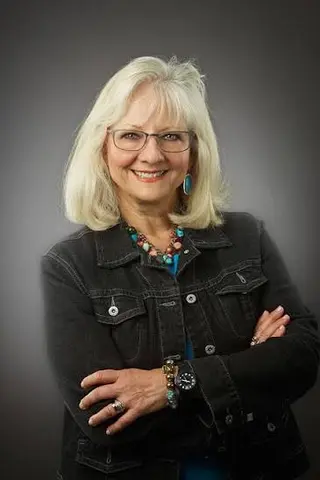
Greetings from the Department of Medical Education at the Texas Tech University Health Sciences Center School of Medicine.
The Department of Medical Education— affectionately known as the DOME— was created in 2013 to bring together faculty who are focused on teaching in Phase I of our medical school’s curriculum.The department includes basic scientists, medical educators, and clinicians, whose activities are focused on the education of pre-clinical students. The DOME brings synergy, collaboration, and a shared mission for education, as well as innovation and expanded communication across courses and educational experiences. Among our many ongoing efforts, I point to three special areas within the DOME:
Commitment to Student Growth in
Preparation for Board Exams & Clinical Clerkships
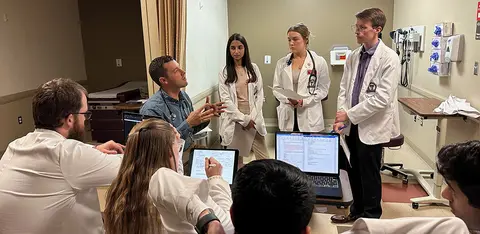
Our faculty are responsible for first and second your coursework across the continuum of the MS1 and MS2 years. Departmental faculty collaborate internally and with our colleagues in other basic sciences and clinical departments to develop and implement best practices for large and small group teaching sessions, simulation, and self-directed and individualized learning. Department also includes the academic home for the Center for Ethics, Humanities and Spirituality and the Certificate Program in Medical Humanities. Faculty participate in the nationally recognized Family Medicine Accelerated Track (FMAT), team teaching with our colleagues in the Department of Family and Community Medicine. We also coordinate a number of electives including those for ultrasound, anatomy, rural health, and arts in medicine. Our school’s learning communities, or small groups, are also developed and coordinated from the DOME; the small groups provide both curricular and students development activities and friendships that are essential to our students’ medical school experiences.Experience in Anatomic Science Education
Since its inception, the Department housed the Willed Body Program, which receives donations of human bodies for use in gross anatomy and other anatomy related research conducted within the School of Medicine and the School of Health Professions. DOME faculty and staff also provide oversight of the anatomy lab. We consider experiences in anatomy, currently the first 10 weeks of the MS1 year, to introduce students to their first patients. Beginning in the fall of 2019, we recognize the founding of the Institute for Anatomical Sciences and the opening of a new Anatomy Lab space on the first floor of the west end building in 2020. The lab has space for up to 250 learners, as well as for surgical anatomy, additional ultrasound experiences, and continuing medical education.Creativity in Educational Media
The Office of Educational Media Services is an important division within DOME. Its staff has expertise in high quality photography, videography, and graphic design services. EMS is the primary TTUHSC location for the design and printing of scholarly posters, as well as framing and mounting of printed products. EMS staff can support the development of videos that can be used within Mediasite to capture and caption teaching materials.We welcome the opportunity to share our enthusiasm and expertise.
DOME Award & Microcredential
Demonstrating Outstanding Mastery in Medical Education Award
- Demonstrate sustained academic excellence by integrating foundational science knowledge across multiple courses and assessments.
- Apply self-directed learning strategies to foster longitudinal academic growth and prepare for the demands of clinical clerkships and national board examinations.
- Develop early professional identity by engaging in leadership roles, scholarly projects, service activities, and collaborative teamwork.
- Complete Honors Requirements in the Patients, Physicians, and Populations (P3) and Introduction to Clinical Medicine (ICM) courses to exhibit applied learning and clinical skills.
-
Demonstrate academic distinction in a pass/fail grading system to external audiences, including residency programs and professional networks.
-
- Demonstrate sustained academic excellence by integrating foundational science knowledge across multiple courses and assessments.
- Apply self-directed learning strategies to foster longitudinal academic growth and prepare for the demands of clinical clerkships and national board examinations.
- Develop early professional identity by engaging in leadership roles, scholarly projects, service activities, and collaborative teamwork.
- Complete Honors Requirements in the Patients, Physicians, and Populations (P3) and Introduction to Clinical Medicine (ICM) courses to exhibit applied learning and clinical skills.
- Demonstrate academic distinction in a pass/fail grading system to external audiences, including residency programs and professional networks.
-
- Achieve a final block average of at least 92% in five of the seven Phase 1 foundational sciences blocks, at least two of which must be from MS2 blocks (OS3, OS4, or OS5)
- Complete honors project requirements in both P3-1 and P3-2 and in both ICM-1 and ICM-2
- Maintain a record free of major professional incidents (as determined by SPPCC review, if needed)
- Show evidence of student participation (see below)
- Enter clerkships during Period 1 (May-June) of their MS3 year
Award Identification:
- A list of students who are eligible on the basis of their final block average and honors project participation will be developed by the Phase 1 coordinators.
- Eligible students will be asked to complete an online form indicating their areas of student participation and completing a reflective self-assessment.
- The SPPCC may be asked to ensure that eligible students have on-time progression and meet professionalism expectations.
-
- TTUHSC Leadership role
- SOM leadership role, for example
- Committee member
- Student focus group
- Elective/SIG/Club leadership
- Dean’s Ambassador
- Class elected leadership position
- Completion of at least two Phase 1 electives
- Participation in an MSSRP project
- Contributing author scholarly submission
- State or national medical organization leadership role
- Other SOM participation as proposed by the student
-
- Sawyer Archer
- Truman Archer
- Lauren Dodson
- Chad Elliott
- Garren Ferreira
- Morgan Fortner
- Isis Gordon (FMAT Class of 2026)
- Brennon Henderson
- Andrew Ibrahim
- Musa Imam
- Krishna Varsha Kanneganti
- Dallin Lee
- Griffin Litwin (FMAT Class of 2026)
- Katelyn Lunini
- Lizabelle Russell Martin
- Riley McCready
- Robert Meeks
- Zeba Momin
- Sameer Noor
- Kailin Opella
- Jantzem Orton
- Alvin Ouseph
- Devki Patel
- Zane Pena
- Theodore Sandhu
- Julie Sang
- Emily Scott (FMAT Class of 2026)
- Caden Sullivan
Among the preliminary goals for our department are to develop, implement and assess innovation in medical education, offer faculty development and growth opportunities for medical educators, and share expertise in curriculum design, teaching innovation, and evaluation strategies with the entire School of Medicine community.
Betsy Goebel Jones, EdD
University Distinguished Professor and Department Chair Department of Medical Education
Scholarship and Innovation
-
Image
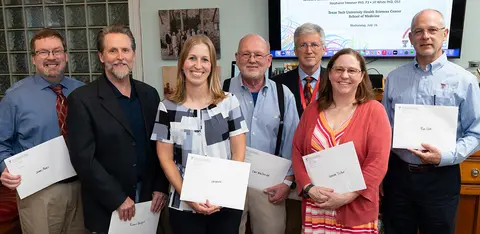
At the conclusion of each academic year, the Directors and Associate Directors of the Phase 1 blocks select one faculty member who taught in the block to receive a DOME/School of Medicine Block Teaching Award. Eligible awardees must demonstrate strong teaching within the block and have received positive evaluations from students. Moreover, the award is designed to recognize meritorious service or contributions to the teaching and learning activities within that year’s block, for example a willingness to:
- Take on new or expanded responsibilities
- Step in or volunteer to fill block needs
- Develop innovative teaching activities
- Serve as a role model or provide mentoring to other faculty
- Engage with students in addressing complex topics
Previous Awardees:
2024-2025
- Robert Bright PhD, OS1
- Ron Cook DO, OS5
- Jannette Dufour PhD, AHE
- Ebtesam Islam MD, PhD OS2
- Salvatore LoCoco MD, OS4
- Clint Macdonald PhD, GPX
- James (Trey) Morris MD, ICM
- Stephanie Stroever PhD, P3
- Jill White PhD, OS3
2023-2024
- Aliakbar Arvandi MD, OS1
- Beverly Chilton PhD, AHE
- Lekha George MD, OS2
- Dan Hardy PhD, GPX
- Gurvinder Kaur PhD, OS4
- Cassie Kruczek PhD, OS5
- Felix Morales MD, P3
- Alice Villalobos PhD, ICM & OS3
2022-2023
- Sharilyn Almodovar PhD GPX
- Keith Bishop PhD P3
- Beverly Chilton PhD OS4
- Toni Denison MS AHE
- John Griswold MD OS3
- Kelly Klein MD DOCS
- Barry Maurer MD PhD OS5
- Tom Tenner PhD GPX
- Dan Webster PhD OS2
2021-2022
- Gilbert Berdine MD, SD
- Michael Blanton PhD, MSD
- Melinda Corwin PhD, INS
- Vadivel Ganapathy PhD, GPX
- Cassie Kruczek PhD, OS2
- Chip Shaw EdD, AHE
- Amber Wright MD, OS1
- Alice Villalobos PhD, P3
- Huan Vu MD, DOCS
- Special Remembrance: Tom McGovern EdD & Clint Chambers MD
2019-2021 (2 years, delayed during Covid)
- Nancy Beck MD, SD2
- Kelly Bennett MD, DOCS
- Alex Bobulescu MD, MOS
- Luis Brandi MD, SD1
- Beverly Chilton PhD, BCT
- Lauren Cobbs MD, P3
- Jane Colmer-Hamood PhD, MSD
- Anthony Hewetson MS, COA
- Landon Hope, DOCS
- Brianna Hope, DOCS
- Min Kang PharmD, MSD
- Rial Rolfe PhD, GPI
- Zachary Sullivan DO, INS
- Tom Tenner PhD, GPI
- Alice Villalobos PhD, MOS
- Jennifer Ward MD, DOCS
- Joanna Wilson DO, SD
2018-2019
- Teresa Baker MD, SD2
- Kelly Bennett MD, P3
- Steve Berk MD, GPID
- Michael Blanton PhD, INS
- Beverly Chilton PhD, MOS
- Bernell Dalley PhD, COA
- Vadivel Ganapathy PhD, BCT
- Camilo Pena Hernandez MD, SD1
- Michael Phy DO, MSD
- Janice Stachowiak MD, DOCS
2017-2018
- Patricia Aristimuno MD, MOS
- Mirla Avila MD, INS
- Jane Colmer-Hamood PhD, GPI
- Allan Haynes MD, P3
- Gurvinder Kaur PhD, COA
- Clint MacDonald PhD, BCT
- Kim Peck MD, DOCS
- Thomas Tenner PhD, SD1
- Edward Yeomans MD, SD2
2016-2017
- Jannette Dufour PhD, COA
- David Edwards MD, DOCS
- Michaela Jansen PhD MOS
- Cassie Kruczek PhD, HD
- Richard Lampe MD, P3
- Viviane Mamlok MD, SD2
- Barry Maurer MD PhD, GPI
- Ragesh Panikkath MD, SD1
- Lisa Popp PhD, INS
- Brandt Schneider PhD, BCT
2015-2016
- Frank Babb MD, DOCS
- Gilbert Berdine MD, MOS
- Greg Brower DVM PhD, COA
- Vadivel Ganapathy PhD, BCT
- Suzanne Graham MD, GPMSD
- Abdul Hamood PhD, HD
- Jennifer Mitchell MD, P3
- Steve Sawyer PhD, INS
- Lisa Ann Smith DO, SD1
- Thomas Tenner PhD, SD2
-
P3-1 (MSCI-5120)
The P3-1 course is delivered in three 1-week blocks throughout the MS1 year before or between foundational blocks, typically in July/August, October, and March.
Key MS1 themes include Introduction to the Profession of Medicine, Patients and Populations, Social Determinants of Health, and Professional Development.
P3-2 (MSCI-6120)
The P3-2 course is delivered in two 1-week blocks throughout the MS2 year between or following foundational blocks, typically in September and February/March.
Key MS2 themes include Quality and Safety, Health Systems Science, Patients and Families, and Professional Development.
Image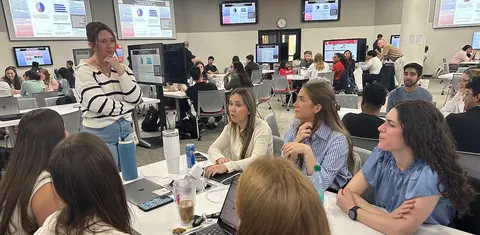
P3 Course Goals
- To prepare students to learn medicine at the bedside.
- To help students gain the knowledge and skills necessary to understand and influence factors affecting the health of their patients.
P3 Course Objectives
- Ethics and Professionalism
- Demonstrate demeanor, speech and appearance consistent with professional and community standards and bioethical principles.
- Demonstrate dedication to the highest ethical standards governing physician-patient relationships, including privacy, confidentiality, and the fiduciary role of the physician and health care system.
- Patient Factors
- Define and demonstrate sensitivity to the many factors affecting the health of patients.
- Demonstrate understanding of the various systemic, economic and societal factors impacting health status and access to health care.
- Demonstrate understanding of the physician’s role as a patient advocate.
- Interprofessional communication/Clinical Reasoning
- Demonstrate effective communication skills and clinical reasoning in interactions with patients, colleagues, and other healthcare professionals.
- Use reflective practices and feedback to assess and continuously improve skills in preparation for training in clinical settings.
- Evidence-based Medicine/Research
- Define and develop skills in evidence-based medicine, the scientific method, and ethical principles of biomedical research.
- Access and evaluate medical scholarship and literature.
- Take advantage of opportunities to participate in scholarly or research projects that use epidemiological techniques and biomedical statistics.
- Self-directed Learning
- Demonstrate skills in self-assessment of personal learning needs and independent identification, analysis and synthesis of relevant information for purposes of lifelong learning, critical assessment of the medical literature, and evidence based medical practice.
- Explore specific areas of interest related to medicine and society, such as global health, community outreach, public health, medical ethics, or health advocacy.
- Health Systems
- Outline key parameters related to quality and safety in health care including issues related to adverse events, medical error, transitions of care, and system-based analysis.
- Apply techniques for assessing error and quality improvement, as well as improving patient hand-offs, and collaborating across health care teams.
P3 Honors Project
To receive a grade of HONORS in P3, students must pass all elements of P3 and complete an Honors Project. For this 2-year activity, students work in groups of 3-6 students. They work together to identify a population of interest and an issue, problem, health need, or community challenge that impacts that population. During P3-1, students conduct a needs assessment so that they understand the scope and depth of the problem and participate in a digital poster session in the spring. During P3-2, students identify and implement outreach or education efforts to meet the needs of their population of interest and give an oral presentation to peers and faculty. Many Honors Projects are presented at TTUHSC Student Research Week and are disseminated in professional settings or the medical literature.
Honors Project Objectives:
- Identify community needs that affect health outcomes
- Perform research and data collection activities to assess the current status of community and population needs
- Gain skills working as a group
- Navigate the complexities of working with a community partner
- Present a project in a scholarly forum
P3 Block Leadership Team
We're here to help. Contact us if you have questions.
Betsy Jones, EdD
betsy.jones@ttuhsc.eduAlice Villalobos, PhD
alice.villalobos@ttuhsc.eduStephanie Stroever, PhD, MPH
stephanie.stroever@ttuhsc.eduJill White, PhD
jill.white@ttuhsc.edu -
Image
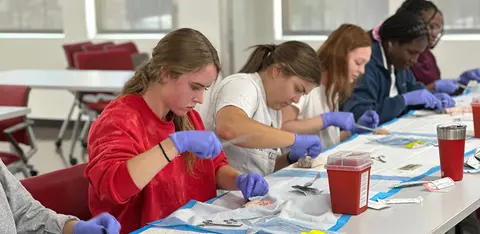
The Texas Tech School of Medicine is pleased to celebrate the Family Medicine Accelerated Track, or FMAT, an innovative 3-year accelerated medical school curriculum that culminates in the M.D. degree and prepares participants for a standard 3-year family medicine residency at one of three Texas Tech programs, in Lubbock, Amarillo, or Odessa.
Texas Tech's FMAT program was approved by the Liaison Committee on Medical Education (LCME) the accrediting body for medical education, in February 2010. The first students began training in the FMAT program in 2011; that class graduated from medical school in 2013 and from residency in 2016. As of June 2025, the FMAT program has graduated 103 students in 13 classes.
The purpose of FMAT is two-fold:
- To increase the number of medical students choosing a career in family medicine, especially in underserved areas, who will provide patient-centered care
- To prepare primary care physicians more efficiently and with less cost
The FMAT program offers students a seamless transition between their predoctoral and residency training settings and curricula as they spend two years in Lubbock, followed by at least 4 years on the campus (which may include Lubbock) where they complete both the final year of medical school and three years of family medicine residency training. FMAT modifies and accelerates the standard 4-year curriculum through three FMAT curricular experiences.
-
The first phase is a culmination of basic science courses that uses an integrated, one-pass, organ-system-based curriculum. The blocks in this phase include Clinically Oriented Anatomy, General Principles, Organ Systems 1, Organ Systems 2, Organ Systems 3, Organ Systems 4 and Organ Systems 5. Students are also required to take Introduction to clinical medicine, a patient communication, history taking and clinical skills course, as well as Patients, Physicians, and Populations (P3), an introductory interprofessional education course and an online course that covers basic medical terminology in Spanish that prepares students for interacting with patients for whom Spanish is their primary or only language.
Coordinators:
- Angel Sanchez, Unit Manager for Phase 1 Curriculum
(806) 743-3472
Joangel.Sanchez@ttuhsc.edu - Christina Zachman, Coordinator for Phase 1 Curriculum and Phase 1 Electives*
(806) 743-9078
Christina.Zachman@ttuhsc.edu - Valerie Tipton, Program Coordinator for P3 Curriculum
(806) 743-3808
valerie.tipton@ttuhsc.edu - Amanda Jeter, Coordinator for ICM Curriculum
(806) 743-4198
amanda.jeter@ttuhsc.edu
*Phase 1 Electives Email: somphase1electives@ttuhsc.edu
- Angel Sanchez, Unit Manager for Phase 1 Curriculum
FMAT 10-Year Celebration
A Decade of Impact: FMAT Program 10-Year Celebration
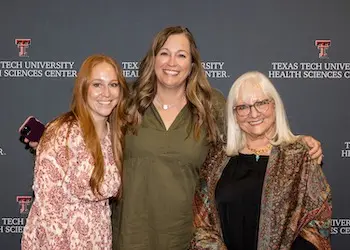
We had a great time seeing graduates and students from TTUHSC's ground-breaking Family Medicine Accelerated Track (FMAT) Program at a Reunion and Celebration Dinner on Friday, October 27, 2023 at the Merket Alumni Center on the Texas Tech campus. The event was generously hosted by the School of Medicine Office of the Dean.
-
Location
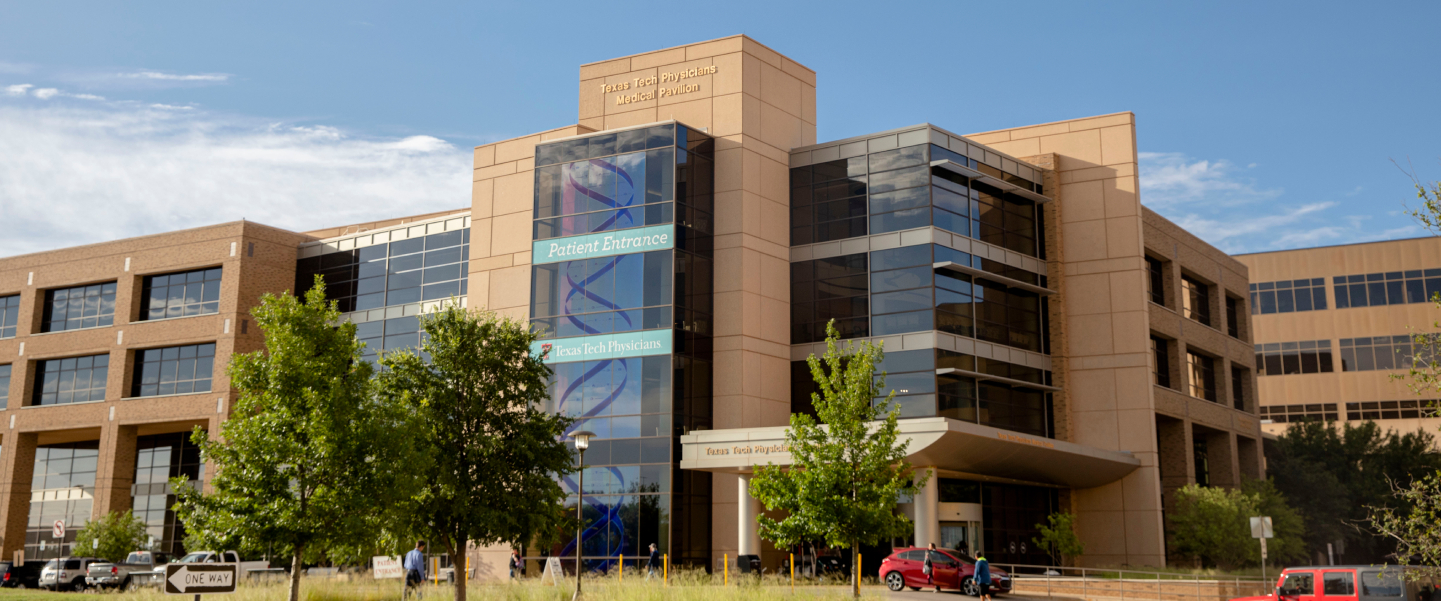
Office: 5C125A
(5th floor, Wing C - North)3601 4th Street
Lubbock, Texas 79430-6525
(Mail Stop 6525)
- Phone (806) 743-3954
- Email medical.education@ttuhsc.edu
-
Hours
8 a.m. - 5 p.m. | M - F
Fax: (806) 743-3958