


Program Overview
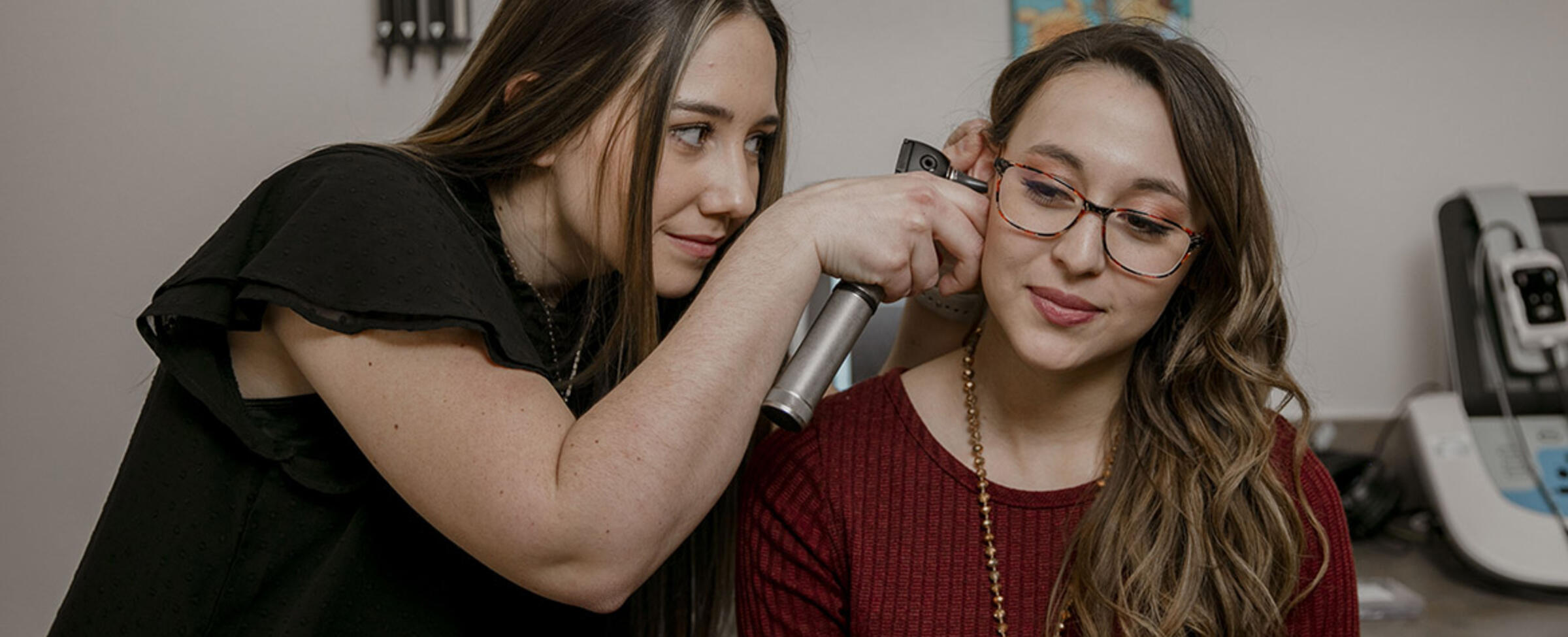
The Texas Tech University School of Health Professions Doctor of Audiology program is committed to being at the forefront of education for future audiology professionals. We keep each class size small enough so that you benefit fully from individualized mentoring by our highly experienced faculty.
Our faculty have a wide variety of research and clinical interests including psychoacoustics, balance function, cochlear implants, amplification, signal processing, educational audiology, rehabilitation and counseling, and selective auditory attention.
As a graduate student, you will have opportunities to volunteer in research labs, participate in active research, complete part-time paid employment in a lab, and/or complete clinical research project.
The department also sponsors a chapter of the Student Academy of Audiology (SAA). This national audiology student group hosts community service events throughout the year to support individuals with hearing loss and to educate the local community on hearing and balance concerns.
The Doctor of Audiology (Au.D.) education program in audiology (residential) at Texas Tech University Health Sciences Center is accredited by the Council on Academic Accreditation in Audiology and Speech-Language Pathology of the American Speech-Language-Hearing Association (ASHA).
2200 Research Boulevard #310
Rockville, Maryland 20850
800-498-2071 or 301-296-5700
For more information, please reach out to the Office of Admissions and Student Affairs at (806) 743-3220 or health.professions@ttuhsc.edu.
- 4 years estimated time to completion
- 12-14 estimated class size
Curriculum & Coursework
The program in Audiology at the Texas Tech University Health Sciences Center offers comprehensive academic, research, and clinical experience in a wide variety of settings. A unique feature of the TTUHSC program is the diversity of the clinical and research experiences available. Students obtain clinical and/or research experience at: the TTUHSC Speech and Hearing Clinic, several community-based clinics, public school programs, local private practices, and other medical, rehabilitative, and educational facilities outside the Lubbock community.
Academic coursework occurs in the first three years of the Au.D. program. During this time, students will complete a clinical research project, with comprehensive examinations taking place in the third year. Clinical experiences begin in the first year of the program. In the first three years of the Au.D. program, students obtain clinical experiences in the TTUHSC Speech-Language and Hearing Clinic, local externship placements, and facilities outside the Lubbock community. After completion of the academic portion of the program, students will complete an advanced clinical placement in their fourth year of the program. Placement for this clinical experience is made in conjunction with the clinical coordinator and program director for audiology. Considerations for the advanced placement (i.e., fourth-year externship) include student's clinical area of interest and clinical experience needs outlined in the student's clinical plan of study. This placement often takes place outside of the Lubbock community. Requirements for the academic and clinical portions of the program will be reviewed annually with students during academic and clinical plan of study meetings.
The department also sponsors a chapter of the Student Academy of Audiology (SAA). This national audiology student group hosts community service events throughout the year to support individuals with hearing loss and to educate the local community on hearing and balance concerns.
See Examples for Doctor of Audiology Curriculum Below
Note: Minimum of 101 credit hours required, which includes 10 - 11 semesters, based on individual situations.
-
First Year Fall Semester Course Designation Credit Hours
HPSH 7342 Psychoacoustics and Auditory Perception 3 hours
HPSH 7146 Diagnostic Audiology Lab 1 hour
HPSH 7346 Diagnostic Audiology 3 hours
HPSH 7440 Fundamentals of Sound and the Auditory System 4 hours
HPSH 7321 or HPSH 7392 Clinical Observation or Clinical Practicum 3 hours
HPSH 1002 Foundations for Interprofessional Collaborative Practice 0 hours
Total Hours 14 hours
Spring Semester Course Designation Credit Hours
HPSH 7350 Pediatric Audiology 3 hours
HPSH 7150 Pediatric Audiology Lab 1 hour
HPSH 7344 Clinical Amplification 3 hours
HPSH 7158 Applications of Clinical Amplification 1 hour
HPSH 7285 Audiology Practice Management 2 hours
HPSH 7393 Clinical Practicum 3 hours
Total Hours 13 hours
Summer Semester Course Designation Credit Hours
HPSH 7330 Speech-Language Development and Disorders 3 hours
HPSH 7251 Counseling 2 hours
HPSH 7015 Audiology Clinical Research I 1 hour
HPSH 7394 Clinical Practicum 3 hours
Total Hours 9 hours
Second Year Fall Semester Course Designation Credit Hours
HPSH 7370 Implantable Devices in Audiology 3 hours
HPSH 7365 Balance Function 3 hours
HPSH 7165 Balance Function Lab 1 hour
HPSH 5320 Research Principles and Application 3 hours
HPSH 7247 Aural Rehabilitation 2 hours
HPSH 7016 Audiology Clinical Research II 1 hour
HPSH 7395 Clinical Externship 3 hours
Total Hours 16 hours
Spring Semester Course Designation Credit Hours
HPSH 7215 Balance Function 2 2 hours
HPSH 7364 Auditory Electrophysiology 3 hours
HPSH 7164 Auditory Electrophysiology Lab 1 hour
HPSH 7243 Clinical Applications of Aural Rehabilitation 2 hours
HPSH 7260 Hearing Conservation and Instrumentation 2 hours
HPSH 7396 Clinical Externship 3 hours
HPSH 7017 Audiology Clinical Research III 1 hour
Total Hours 14 hours
Summer Semester Course Designation Credit Hours
HPSH 7397 Clinical Externship 3 hours
Total Hours 3 hours
Third Year Fall Semester Course Designation Credit Hours
HPSH 7348 Educational Audiology 3 hours
HPSH 7352 Clinical Disorders in Audiology 3 hours
HPSH 7286 Business Management Practices for Audiologists 2 hours
HPSH 7110 Special Topics in Audiology (Capstone) 1 hour
HPSH 7398 Clinical Practicum 3 hours
Total Hours 12 hours
Spring Semester Course Designation Credit Hours
HPSH 7225 Evidence-Based Practices in Audiology 2 hours
HPSH 7322 Auditory Processing Disorders 3 hours
HPSH 7255 Advanced Concepts in Audiology 2 hours
HPSH 7357 Amplification Systems and Special Applications 3 hours
HPSH 7399 Clinical Practicum 1-3 hours
Total Hours 11-13 hours
Summer Semester Course Designation Credit Hours
HPSH 7019 Advanced Summer Clinical Experience 6 hours
Total Hours 6 hours
Fourth Year Fall Semester Course Designation Credit Hours
HPSH 7020 Advanced Clinical Placement 5 hours
Total Hours 5 hours
Spring Semester Course Designation Credit Hours
HPSH 7021 Advanced Clinical Placement 5 hours
Total Hours 5 hours
Combined Total Hours Credit Hours
Total Hours 108-110 hours
-
First Year Fall Semester Course Designation Credit Hours
HPSH 7342 Psychoacoustics and Auditory Perception 3 hours
HPSH 7146 Diagnostic Audiology Lab 1 hour
HPSH 7346 Diagnostic Audiology 3 hours
HPSH 7440 Fundamentals of Sound and the Auditory System 4 hours
HPSH 7321 or HPSH 7392 Clinical Observation or Clinical Practicum 3 hours
HPSH 1002 Foundations for Interprofessional Collaborative Practice 0 hours
Total Hours 14 hours
Spring Semester Course Designation Credit Hours
HPSH 7350 Pediatric Audiology 3 hours
HPSH 7150 Pediatric Audiology Lab 1 hour
HPSH 7344 Clinical Amplification 3 hours
HPSH 7158 Applications of Clinical Amplification 1 hour
HPSH 7285 Audiology Practice Management 2 hours
HPSH 7393 Clinical Practicum 3 hours
Total Hours 13 hours
Summer Semester Course Designation Credit Hours
HPSH 7230 Speech-Language Development and Disorders 2 hours
HPSH 7251 Counseling 2 hours
HPSH 7015 Audiology Clinical Research I 1 hour
HPSH 7394 Clinical Practicum 3 hours
Total Hours 8 hours
Second Year Fall Semester Course Designation Credit Hours
HPSH 7370 Implantable Devices in Audiology 3 hours
HPSH 7365 Balance Function 3 hours
HPSH 7165 Balance Function Lab 1 hour
HPSH 5320 Research Principles and Application 3 hours
HPSH 7247 Aural Rehabilitation 2 hours
HPSH 7016 Audiology Clinical Research II 1 hour
HPSH 7395 Clinical Externship 3 hours
Total Hours 16 hours
Spring Semester Course Designation Credit Hours
HPSH 7215 Balance Function 2 2 hours
HPSH 7364 Auditory Electrophysiology 3 hours
HPSH 7164 Auditory Electrophysiology Lab 1 hour
HPSH 7243 Clinical Applications of Aural Rehabilitation 2 hours
HPSH 7260 Hearing Conservation and Instrumentation 2 hours
HPSH 7396 Clinical Externship 3 hours
HPSH 7017 Audiology Clinical Research III 1 hour
Total Hours 14 hours
Summer Semester Course Designation Credit Hours
HPSH 7397 Clinical Externship 3 hours
Total Hours 3 hours
Third Year Fall Semester Course Designation Credit Hours
HPSH 7348 Educational Audiology 3 hours
HPSH 7352 Clinical Disorders in Audiology 3 hours
HPSH 7286 Business Management Practices for Audiologists 2 hours
HPSH 7210 Special Topics in Audiology (Capstone) 2 hours
HPSH 7398 Clinical Practicum 3 hours
Total Hours 13 hours
Spring Semester Course Designation Credit Hours
HPSH 7225 Evidence-Based Practices in Audiology 2 hours
HPSH 7322 Auditory Processing Disorders 3 hours
HPSH 7255 Advanced Concepts in Audiology 2 hours
HPSH 7357 Amplification Systems and Special Applications 3 hours
HPSH 7399 Clinical Practicum 1-3 hours
Total Hours 11-13 hours
Summer Semester Course Designation Credit Hours
HPSH 7019 Advanced Summer Clinical Experience 6 hours
Total Hours 6 hours
Fourth Year Fall Semester Course Designation Credit Hours
HPSH 7020 Advanced Clinical Placement 5 hours
Total Hours 5 hours
Spring Semester Course Designation Credit Hours
HPSH 7021 Advanced Clinical Placement 5 hours
Total Hours 5 hours
Combined Total Hours Credit Hours
Total Hours 108-110 hours
-
HPSH 7390 Clinical Practicum may be offered in the summer prior to First Year Fall on a limited basis.
First Year Fall Semester Course Designation Credit Hours
HPSH 7342 Psychoacoustics and Auditory Perception 3 hours
HPSH 7146 Diagnostic Audiology Lab 1 hour
HPSH 7346 Diagnostic Audiology 3 hours
HPSH 7440 Fundamentals of Sound and the Auditory System 4 hours
HPSH 7321 or HPSH 7392 Clinical Observation or Clinical Practicum 3 hours
HPSH 1002 Foundations for Interprofessional Collaborative Practice 0 hours
Total Hours 14 hours
Spring Semester Course Designation Credit Hours
HPSH 7350 Pediatric Audiology 3 hours
HPSH 7150 Pediatric Audiology Lab 1 hour
HPSH 7344 Clinical Amplification 3 hours
HPSH 7158 Applications of Clinical Amplification 1 hour
HPSH 7285 Audiology Practice Management 2 hours
HPSH 7393 Clinical Practicum 3 hours
HPSH 1012 Digital Health & Telehealth 0 hours
Total Hours 13 hours
Summer Semester Course Designation Credit Hours
HPSH 7230 Speech-Language Development and Disorders 2 hours
HPSH 7240 Topics in Medical Audiology 2 hours
HPSH 7251 Counseling 2 hours
HPSH 7015 Audiology Clinical Research I 1 hour
HPSH 7394 Clinical Practicum 3 hours
Total Hours 10 hours
Second Year Fall Semester Course Designation Credit Hours
HPSH 7370 Implantable Devices in Audiology 3 hours
HPSH 7365 Balance Function 3 hours
HPSH 7165 Balance Function Lab 1 hour
HPSH 5320 Research Principles and Application 3 hours
HPSH 7247 Aural Rehabilitation 2 hours
HPSH 7016 Audiology Clinical Research II 1 hour
HPSH 7395 Clinical Externship 3 hours
Total Hours 16 hours
Spring Semester Course Designation Credit Hours
HPSH 7215 Balance Function 2 2 hours
HPSH 7364 Auditory Electrophysiology 3 hours
HPSH 7164 Auditory Electrophysiology Lab 1 hour
HPSH 7243 Clinical Applications of Aural Rehabilitation 2 hours
HPSH 7260 Hearing Conservation and Instrumentation 2 hours
HPSH 7396 Clinical Externship 3 hours
HPSH 7017 Audiology Clinical Research III 1 hour
Total Hours 14 hours
Summer Semester Course Designation Credit Hours
HPSH 7397 Clinical Externship 3 hours
Total Hours 3 hours
Third Year Fall Semester Course Designation Credit Hours
HPSH 7348 Educational Audiology 3 hours
HPSH 7352 Clinical Disorders in Audiology 3 hours
HPSH 7286 Business Management Practices for Audiologists 2 hours
HPSH 7210 Special Topics in Audiology (Capstone) 2 hours
HPSH 7398 Clinical Practicum 3 hours
Total Hours 13 hours
Spring Semester Course Designation Credit Hours
HPSH 7322 Auditory Processing Disorders 3 hours
HPSH 7255 Advanced Concepts in Audiology 2 hours
HPSH 7357 Amplification Systems and Special Applications 3 hours
HPSH 7399 Clinical Practicum 1-3 hours
Total Hours 9-11 hours
Summer Semester Course Designation Credit Hours
HPSH 7019 Advanced Summer Clinical Experience 6 hours
Total Hours 6 hours
Fourth Year Fall Semester Course Designation Credit Hours
HPSH 7020 Advanced Clinical Placement 5 hours
Total Hours 5 hours
Spring Semester Course Designation Credit Hours
HPSH 7021 Advanced Clinical Placement 5 hours
Total Hours 5 hours
Combined Total Hours Credit Hours
Total Hours 108-110 hours
How to Apply
Online Application
Applicants for the AuD program must complete both the CSDCAS application and the TTUHSC SHP online application.
You will receive an email from SHP Application Systems that will include your login information to complete the SHP supplemental application in mid-September.
Application Fee
A non-refundable $75 application fee is required and may be paid by credit card through the online application system.
If you prefer to pay by check or money order, make it payable to TTUHSC and mail it to:
Office of Admissions and Student Affairs
3601 4th Street, MS 6294
Lubbock, TX 79430
Your application will move forward in the admissions review process after your application fee has been received.
Transcripts
Email PDF Transcripts: Submit official electronic transcripts from every college or university attended directly from the institution or an approved third-party transcript service to shp.application@ttuhsc.edu.
Please note: Do not send transcripts to Texas Tech University, as TTUHSC is a separate institution and doing so will delay application processing. Official TTUHSC transcripts are not required; official Texas Tech University transcripts are required.
Transcripts from international institutions must include an official course-by-course evaluation from a recognized Foreign Transcript Evaluation Service.
Applicants are responsible for ensuring all required application materials, including updated transcripts, are received by the application deadline.
Admissions Requirements
The AuD program begins in August of each year. The application and all supporting documentation must be received by the deadline. Applicants will be informed of admissions decisions by April 15th.
Bachelor's Degree
A Bachelor's Degree is required for admission and must be complete prior to matriculation. It is recommended the Bachelor's Degree be in speech, language, and hearing sciences or a related field.
Minimum GPA
A minimum cumulative GPA of 3.0 is required; this includes all courses taken at every institution attended. A minimum major GPA of a 3.0 is also required.
Letters of Recommendation
Three letters of recommendation are required. Letters should be completed by professional personnel who: (a) have observed you during any related volunteer or paid work, (b) are previous or present instructors and/or counselors, or (c) are previous or present employers. Letters of recommendation are submitted online through the CSDCAS application.
Essay/Letter of Intent/Resume
The AuD program does not require an essay, letter of intent or resume.
International Applicants
All foreign coursework must be evaluated by a Foreign Credential Service. We also require TOEFL/IELTS Scores for any applicant for whom English is their second language (scores are considered on a case by case basis). Please refer to our International Applicants webpage for more information and TOEFL/IELTS exemptions.
Technical Standards
The AuD program has established a document of technical standards that reflects the functions that are considered essential to the profession of audiology. Ability to meet these technical standards is required for admission. You may access the Technical Standards - TTUHSC AuD Program document here.
Application Process
Applications are considered on a rolling basis for acceptance into the professional program. Individual applications are reviewed once materials have been received; therefore, it is in the applicant's best interest to complete their application, including submission of required documentation, as early as possible. Fulfillment of the basic requirements does not guarantee admission.
Applicants who meet the above listed requirements and are deemed competitive candidates for admission will be invited to TTUHSC for an interview. The admissions committee selects the most qualified applicants for admission by considering the following: cumulative GPA, prerequisite science GPA, interview scores, student essay, and other factors.
Interviews
Admission interviews are granted by the AuD admissions committee by invitation only. Applicants are selected for interviews based on a holistic evaluation of their application and supporting documents.
Application Submission Checklist
- Online CSDCAS Application
- Online TTUHSC SHP Application
- Application Fee
- Letters of Recommendation (3)
Questions regarding the application process should be directed to the Office of Admissions and Student Affairs. Please contact our office by phone at 806-743-3220 or email at health.professions@ttuhsc.edu.
Cost & Aid
Access information about tuition and fees, along with scholarships and financial aid resources, to help you plan and finance your education at TTUHSC.
Tuition & Fees
The following information is not intended to be comprehensive and is subject to change. Tuition, fees, and charges are subject to change by administrative, legislative, or regent action, and changes become effective on the date enacted. The following tuition information should be used only as a guideline for estimating charges.
Scholarships & Financial Aid
Our goal is to make obtaining a college degree within reach by supporting you with financial aid and scholarships programs. TTUHSC relies on a variety of financial aid sources to increase the university's affordability. This may include scholarships, grants, student loans, and waivers. As a student, please know that you and your family have a dedicated financial aid advisor who can assist you with this process.
Student Outcome Data
Doctor of Audiology Certification
As a graduate of the program, you will be eligible to sit for the Praxis Examination in Audiology , a key component of the American Speech Language-Hearing Association (ASHA) certification standards.
- For the past three years, TTUHSC students in the Doctor of Audiology program had an average graduation rate of 94%.
- By graduation, 100% of graduates have passed the national exam over the last three years.
Student Outcome Data
Presently, we have approximately 45-50 students enrolled in our doctoral program. The history of our program is to keep the size of each class small enough so that students benefit from individualized mentoring from faculty. At the same time, our students enjoy clinical experiences all across the United States in local school districts, major medical centers, in conjunction with physician practices, in independent private practices and industrial settings.
Our faculty have a wide variety of research and clinical interests: noise-induced hearing loss, balance function, auditory processing disorders, educational audiology, rehabilitation and counseling audiology, and listening effort. This diversity offers unique perspectives in the field of audiology and access to a wealth of information and clinical/applied practice for our students.
We invite you to come visit us at Texas Tech University Health Sciences Center. Meet our faculty. Talk with our students. See why we're committed to being at the forefront of audiology education.
| Reporting Period |
# Completed within Expected Time Frame |
% Completed within Expected Time Frame |
|---|---|---|
| 2025-2026 |
11 |
100 |
| 2024-2025 |
10 |
91.7 |
| 2023-2024 |
11 |
100 |
Note: Includes students completing within published time frame and students completing longer than the published time frame.
| Reporting Period |
# Taking the Exam |
# Passed Exam |
% Passed Exam Rate |
|---|---|---|---|
| 2025-2026 |
13 |
13 |
100 |
| 2024-2025 |
12 |
12 |
100 |
| 2023-2024 |
14 |
13 |
93 |
The Doctor of Audiology (Au.D.) education program in audiology (residential) at Texas Tech University Health Sciences Center is accredited by the Council on Academic Accreditation in Audiology and Speech-Language Pathology of the American Speech-Language-Hearing Association, 2200 Research Boulevard #310, Rockville, Maryland 20850, 800-498-2071 or 301-296-5700.
Quick Link:



-
Career opportunities include diagnosing and treating individuals with hearing or balance problems and working in prevention and field research. Professional work environments are varied, including hospitals, schools, private practices, industry, medical offices, and universities. In these environments, audiologists work with patients from birth throughout adulthood.
Our graduates work in clinical experiences all across the United States in local school districts, major medical centers, in conjunction with physician practices, in independent private practices, and in industrial settings.
- With the demographic shifts of an aging population and the hearing-related issues that often brings, the need for trained, licensed audiologists is increasing. The Bureau of Labor Statistics (BLS) Occupational Outlook Handbook projects that employment of audiologists will grow 21% from 2016 to 2026, much faster than the average for all occupations.
- Although specific licensing requirements vary by state, you must have a doctoral degree and be licensed to practice as an audiologist.
- For more information about a career as an audiologist visit the ASHA website.
-
Application/Admissions Process
What are the admission requirements for the TTUHSC Doctor of Audiology (Au.D.) program?
Class enrollment is limited each year. Minimum admission requirements include:- An earned baccalaureate degree in the area of speech, language, and hearing sciences or a related field from an accredited institution
- A cumulative and major GPA of 3.0 on a 4.0 scale
- Three letters of recommendation
- Demonstration of superior oral and written communication skills
- Completion of the online application
- Completion of an interview with the Admissions Committee (if eligible)
- Proof of appropriate immunizations against infectious diseases
- TOEFL or IELTS scores, if English is the second language
When are the deadlines for applying to the TTUHSC Doctor of Audiology Program?
Deadline dates OPEN APPLICATION DATE EARLY ADMISSON
TRADITIONAL ADMISSION
Application is available
starting:
September 1Apply by:
November 1Apply by:
February 1Do I need to write a personal statement or turn in a resume?
No. A personal statement is not required.Is a bachelor’s degree in speech, language, and hearing sciences (SLHS) absolutely required for admission?
A bachelor’s degree is required. The bachelor’s degree can be in speech, language, and hearing sciences or a related field.Does observation or work experience increase my chances of admission?
The TTUHSC Department of SLHS does not endorse or require student volunteer hours at particular facilities prior to admission into graduate school. Thus, no paperwork/formal documentation is required. However, we strongly encourage students to independently seek volunteer opportunities that will expose them to the professions of speech-language pathology, audiology, and related health care or educational disciplines.Is every applicant required to have an interview?
All applicants who are ultimately admitted into the program will have an interview. Some applicants do not have GPAs that are sufficiently competitive with the applicant pool to qualify for an interview. Applicants who do qualify will be notified via email or telephone to schedule their interview. Interviews are via video conferencing.Are GRE scores required for admission?
No, GRE scores are not required.What GPA is expected in order to be competitive for admission to the TTUHSC Doctor of Audiology program?
For competitive admission, GPA should be above average. The chart below shows the average and range of GPAs of students recently admitted into the program:Average and range of GPAs of students recently admitted into the program Cumulative GPA
Major GPA
Average 3.72
3.87
Range 3.03-4.00
3.50 - 4.00
If offered admission to the TTUHSC Doctor of Audiology program, can I defer my acceptance to the next year?
No, the offer of admission is only good for the year in which you applied. If you are unable to attend that year, you must repeat the application process and be considered with another year’s applicant pool.About the Program
What size is the TTUHSC Doctor of Audiology program?
We admit 12-14 students per year.Do you offer a part-time or distance learning graduate program?
No. Our program is lock-step, meaning you are required to take a predetermined set of courses each semester as a full-time student.Is the Au.D. program offered on all TTUHSC campuses?
The Au.D. Program is only offered on the Lubbock campus.How long is the TTUHSC Au.D. Program?
The Doctor of Audiology degree is four years (10-11 semesters) of graduate work. Three years are in didactic, laboratory, and clinical experience, with one clinical externship year.Are graduate assistantships available in the SLHS department?
Once accepted to the program, graduate students are given the opportunity to apply for a graduate assistantship. A limited number of assistantships are available. Graduate assistants work approximately 10 hours per week in the SLHS Department. Additional information about financial aid can be found here.When do I need to be in compliance with all of my immunizations?
Your immunization records must be in compliance 10 days prior to the first day of class each semester. Information regarding immunization requirements will be sent electronically to students who are accepted into the program. If you have any questions about immunization requirements or the status of your immunizations, please contact the Office of Institutional Health at 806-743-3019.What does an average day in the program look like?
The schedule varies by semester. Graduate students typically attend class 2 days a week and have clinic 1-2 days a week in the first three years of the program. The fourth year consists of a full-time externship experience.Are all courses offered during the normal workday, or are some scheduled in the evening?
Classes typically are scheduled between 8 a.m. and 6 p.m., Monday through Friday, although evening classes may be scheduled some semesters.Are course electives available? Is the curriculum organized into different “tracks”?
There are no course electives available to specialize in a particular area or track. Our program is lock-step, meaning that you are required to take a predetermined set of courses each semester. The opportunity to pursue a particular area of interest comes with a choice of placement for clinical practicum experiences.Is it possible to be involved in an extracurricular activity (e.g., track, band) or work while I am enrolled in the TTUHSC Doctor of Audiology program?
The workload of classes and clinical practicum is comparable to a full-time job. Based on graduate student experience, 10-15 hours a week of work and/or extracurricular activities is all that can be handled. Although it will depend on the requirements of the job or activity, it is possible to be involved in extracurricular activities if you are a good time manager.May I tour the TTUHSC to see where the department and clinic are and where my classes will be held?
On mandatory orientation day (typically held the day before class begins), you will receive a tour of the entire TTUSHC building. Appointments may also be set up through the School of Health Professions Office of Admissions if you would like to tour the campus prior to August.How does clinical practicum work in your graduate program?
Students take part in clinic within the on-campus clinic in the first year. The second year of the program consists of local externships, with summer of the second year being outside of Lubbock in a full-time summer externship. The third year clinic consists of either on-campus clinic or travel to surrounding areas. The fourth year clinic is a full-time externship experience, typically outside of Lubbock.What kind of dress is expected?
You may wear casual clothes to class. When you observe or participate in clinic, you are expected to wear business casual attire that is both comfortable and modest or clinical scrubs as allowed by the program.Is a thesis required?
A clinical research project is required.Are comprehensive exams required at the end of graduate school, and what form do they take?
Yes, each student will be required to pass comprehensive examinations. Comprehensive exams are usually in January of your third year of the program.Are faculty members actively engaged in research? Is it possible for a graduate student to gain research experience, assist in a lab, etc.?
Our department currently houses the following research labs:- Auditory Processes (Gustafson)
- Noise Exposure and Hearing Conservation (Reel)
- Auditory Perception (Donai)
- Pediatric Audiometric Science (Hicks)
- Vestibular/Auditory Integrated Biomedical Lab (Zupancic)
- Social Media and Auditory Rehab Technology (SMART) (Choudhury)
- Speech Production (Yi)
- Voice and Swallowing (Van Sickle)
- Adult Neurogenic Language Disorders (Corwin)
- Cognitive/Behavioral Linguistics (Kroll)
- Pediatric Speech Sound Disorders (Lee)
Graduate students in good standing will have opportunities to volunteer in research labs, participate in active research, complete part-time paid employment in a lab, and/or complete clinical research project. For more information, see the Center for Speech, Language, and Hearing Research (CSLHR) website.
How can I get involved in the field of speech and hearing during graduate school?
Upon entering graduate school, you will have the opportunity to join the Student Academy of Audiology (SAA). There are opportunities to volunteer and attend events hosted by SAA throughout the year. -
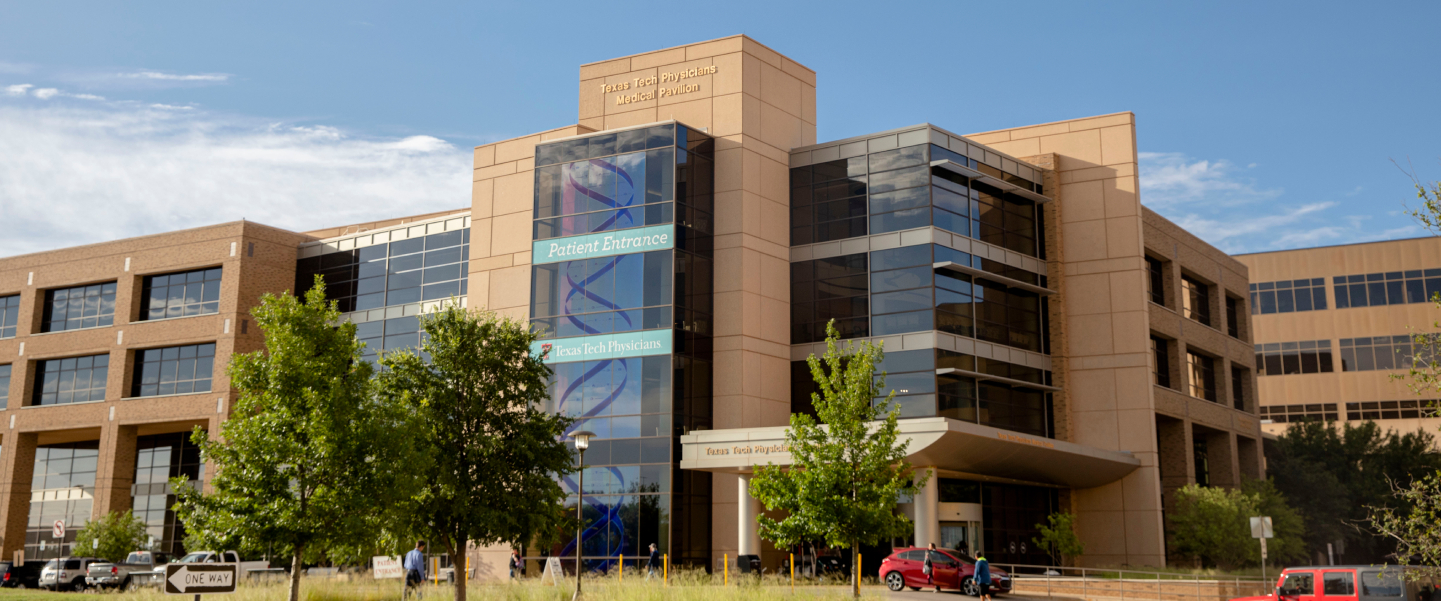
The Texas Tech University Health Sciences Center (TTUHSC) Speech, Language, and Hearing Clinic serves the general population of West Texas and Eastern New Mexico. The Clinic is a primary training site for graduate students in the Department of Speech, Language, and Hearing Sciences. Graduate students provide comprehensive diagnostic and treatment services to individuals with speech, language, and hearing disorders under the direct supervision of faculty who are certified by the American Speech-Language-Hearing Association and licensed by the State of Texas as speech-language pathologists and audiologists.
-
Program Director: Jeremy J. Donai, AuD., Ph.D.
Request Information
Meet Our Faculty

Professor, Program Director

Assistant Professor of Practice

Associate Professor

Associate Professor

Professor

Associate Professor

Instructor
Assistant Professor

Assistant Professor of Practice

Associate Professor
Contact Us
Office of Admissions and Student Affairs
School of Health Professions - Office of Admissions and Student Affairs
-
Address
3601 4th Street Lubbock
Lubbock, TX 79430
United States
- Phone (806) 743-3220
- Email health.professions@ttuhsc.edu
-
Hours
Mon. - Fri.
8 a.m. - 5 p.m.