


It Takes a Village: Students, Professionals and Oncology Experts Unite to Elevate Cancer Care in West Texas
The wide-open spaces of West Texas can provide many opportunities, including peace and privacy. But the same freedom that draws people to rural living can also limit healthcare options.
Those faced with a cancer diagnosis often must travel for hours to receive treatment. Accessing clinical trials to receive the most innovative therapies means even more time away from home. The closest National Cancer Institute-Designated Cancer Centers to West Texas are in Dallas, Houston and Albuquerque, New Mexico. Those are five-to eight-hour drives, one way.
The Rural Cancer Collaborative established by Texas Tech University Health Sciences Center (TTUHSC) is committed to elevating cancer care in the region. Funded by the Texas Legislature in 2025, the Rural Cancer Collaborative aims to expand prevention, care and research programs across West Texas, so patients don’t have to travel far for expert, comprehensive care.
Recently, TTUHSC hosted researchers, clinicians, community partners and leaders from across the state for the inaugural Rural Oncology Care Symposium, an initiative of the Rural Cancer Collaborative.
“I wanted people to interact with other disciplines and see what’s happening in the field of oncology in rural Texas,” Mohamad Al-Rahawan, M.D., executive director of the Rural Cancer Collaborative, said. “Many times, people are doing good work, but they’re not aware of it happening across the hallway. Our hope is that the Rural Oncology Care Symposium opens the door for communication, collaboration and networking.”
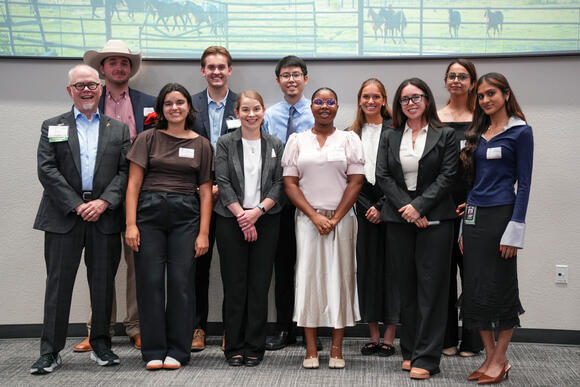
Throughout the day-long event, experts discussed challenges associated with conducting clinical trials in rural areas and spoke about advances in surgical oncology, cancer prevention and early detection. Participants also learned about opportunities to strengthen research, care and collaboration in rural communities.
“The two main barriers that we see in caring for patients are access to care, but also awareness of what kinds of care they can receive right here in West Texas,” Tyler Mouw, M.D., TTUHSC division chief of Surgical Oncology, said. “The symposium was designed to help address that particular concern, primarily by bringing awareness of modern cancer care techniques and networking opportunities with rural providers and our specialists here in Lubbock.”
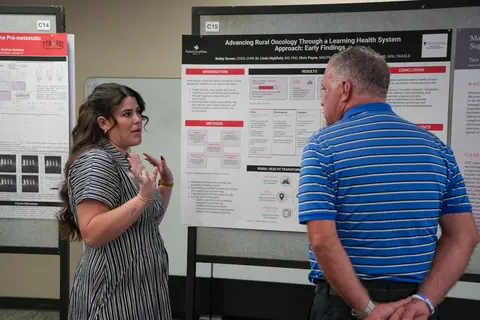
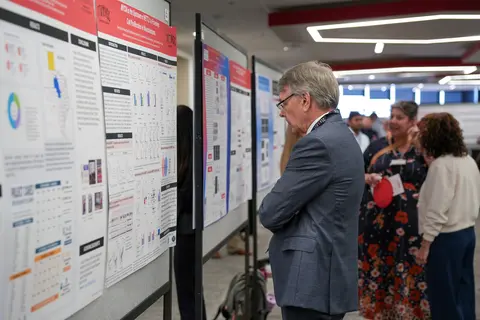
The symposium also highlighted innovative research happening across the institution. Nearly 80 students, residents, fellows, faculty, staff and trainees shared their work during a poster session showcasing basic, translational, clinical, population health, community engagement, quality improvement, clinical trial and early-stage concept development activities.
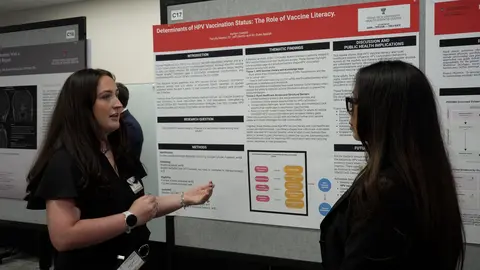
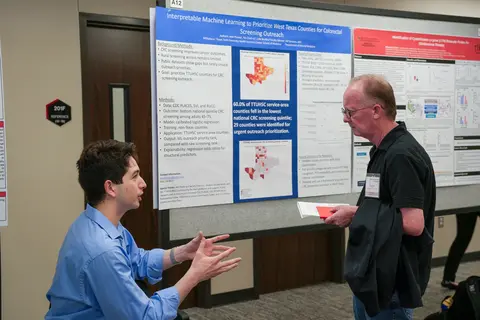
“I’m doing vaccine literacy, specifically with [human papillomavirus] HPV,” Ashlyn Caddell, an MPH candidate in the Julia Jones Matthews School of Population and Public Health, said. “I looked at rural adults. A lot of people focus on children, but you can still get your HPV vaccine from age 27 to 45.”
Caddell explained that vaccine literacy can be considered a form of prevention. HPV vaccination can prevent more than 90% of cancers caused by HPV, according to the CDC.
“There’s a lot of stigma with HPV,” Caddell said. “Hopefully within the community we can push for better education.”
Charles Zhu, an M.D./Ph. D. candidate in the Graduate School of Biomedical Sciences presented his research on triple-negative breast cancer.
“The reason why it’s so difficult to treat is because there’s a lack of targetable receptors,” Zhu said. “We focus on a telomeres independent mechanism that affects around 10 to 15% of all cancers known as alternative lengthening telomeres or ALT.”
Zhu was one of 10 students and residents invited to present during the symposium.
“It’s really exciting,” Zhu said. “This is my first conference and first presentation that I’m giving. I’m only a second-year Ph.D. student, and I’m just really grateful to have this opportunity to practice and network with so many people.”
The symposium built on the progress that the Rural Cancer Collaborative has made in its first year.
“The Rural Cancer Collaborative allows us to travel across all of West Texas to work with our hospital partners,” Lori Rice-Spearman, Ph.D., TTUHSC president, said. “Our goal was to find out where our points of contact were and how we could really grow access to care quickly and make sure that the folks out here in West Texas are getting access to cutting edge surgical care, as well as cutting edge clinical trials. The progress that has been made in the last 12 months is just phenomenal.”
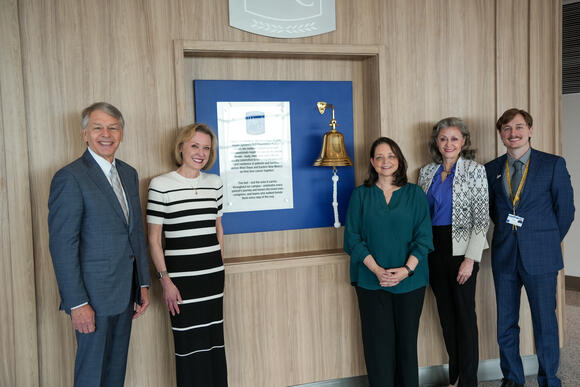
The symposium coincided with a visit from leadership of the Cancer Prevention and Research Institute of Texas (CPRIT). Members hosted a cancer prevention roundtable, providing a unique opportunity to share ideas and perspectives on addressing needs in rural Texas.
“A lot of what we’re talking about during the Rural Oncology Care Symposium is that issue that we confront in Texas of rural access,” CPRIT CEO Kristen Doyle said. “Making the mammograms available, the colonoscopies and even just the education services and navigation.”
“Also, the scientific discoveries,” Doyle continued. “How do we make sure that all Texans, if they do get a diagnosis of cancer, that they have the option of participating in a clinical trial where the most innovative treatments are possible?”
To see the latest care options available to West Texans, CPRIT leadership toured the UMC TLC² Foundation Cancer Center.
“Moving forward, we have a big, bold goal for this cancer center to be NCI designated, which is National Cancer Institute designated,” Rice-Spearman said. “It would be one of the few rural programs in the whole United States to have NCI designation, and it’s something that we’ve got our sleeves rolled up and we’re working towards.”
Another unique aspect of the symposium is that it took place during the same weekend as the Best of ASCO® West Texas conference.
“We positioned it right in front of the Best of ASCO® conference, which is really geared more toward cancer sub-specialists,” Mouw said. “The Rural Oncology Care Symposium is geared towards non-cancer specialists who interface with cancer patients to equip them to better care for cancer patients in their own practice settings.”
“We had the opportunity to blend those groups of providers together in order to generate conversation, collaboration, help them work together to take care of patients in West Texas,” Mouw continued.
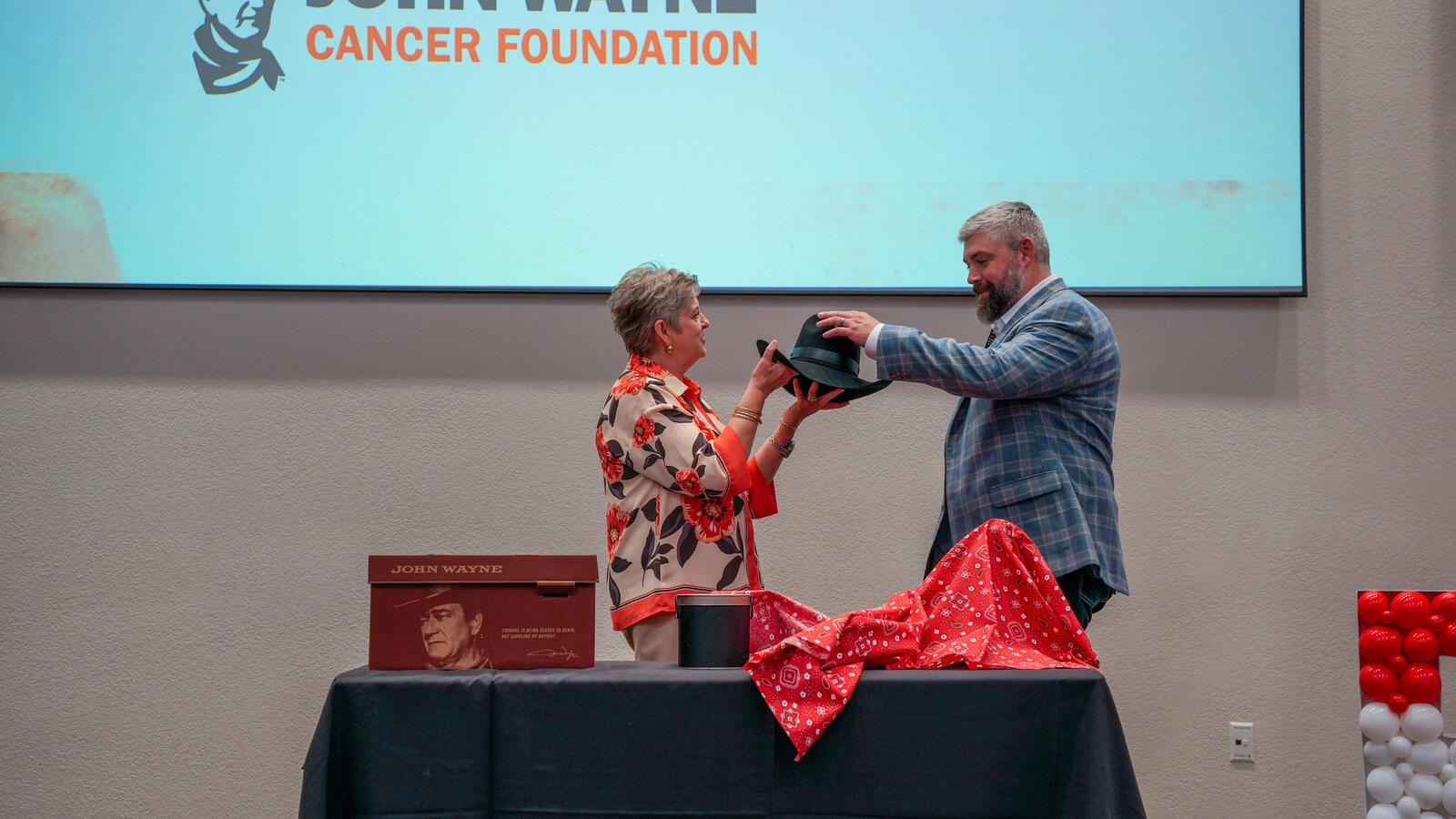
The symposium closed with a special presentation recognizing Mouw as the inaugural director of the John Wayne Cancer Foundation Surgical Oncology Fellowship program at TTUHSC. Rice-Spearman presented him with a cowboy hat and hatband.
Mouw then introduced his mentor, Charles Scoggins, M.D., professor at the University of Louisville School of Medicine, as the first speaker in the John Wayne Cancer Center Foundation Endowed Lectureship.
“It takes a village to work through the layers of caring for a patient with cancer,” Al-Rahawan said. “We have learners learning this line of work. We have professionals that are doing this kind of work. We have experts coming to us from within the System, from outside the System, and this will be a recurring event where we bring people together again and again, and we want to take this opportunity to thank all the people who made this possible.”