


One Health Collaboration Leads to New Discoveries in Leishmaniasis Research
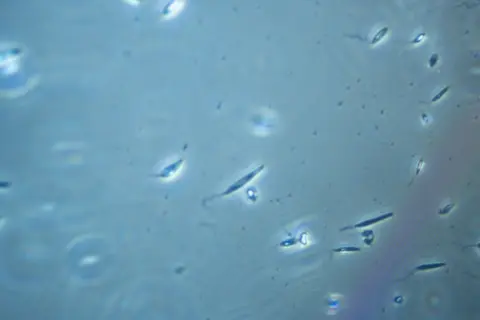
Leishmania parasites cause leishmaniasis. The disease is spread through the bite of an infected sand fly. While in the bloodstream, parasites invade host cells where they live and multiply.
According to the Pan American Health Organization, leishmaniasis is among the top 10 neglected tropical diseases, affecting an estimated 12 million people worldwide. There are three main types of leishmaniases: visceral (affecting internal organs and almost always lethal without treatment), cutaneous (causing skin ulcers) and mucocutaneous (affecting the mouth, nose and throat). Cutaneous leishmaniasis is the most common form of the disease. Visceral leishmaniasis is the most life-threatening, ranking second to only malaria as the most fatal of parasitic infections.
In the United States, the number of new leishmaniasis cases is rising. The Centers for Disease Control and Prevention reported that most human cases occur in Texas. Driving factors behind the increase include climate changes, which expand the sand fly’s habitat, plus population growth and more international travel, which increase the chance of people encountering the fly.
There are currently no licensed or approved vaccines to prevent human leishmaniasis. Treatment is limited, and the drugs used carry a high risk of toxicity. Medication also fails frequently due to drug resistance and persistence. The National Institutes of Health (NIH) reported that finding new ways to treat leishmaniasis has been difficult.
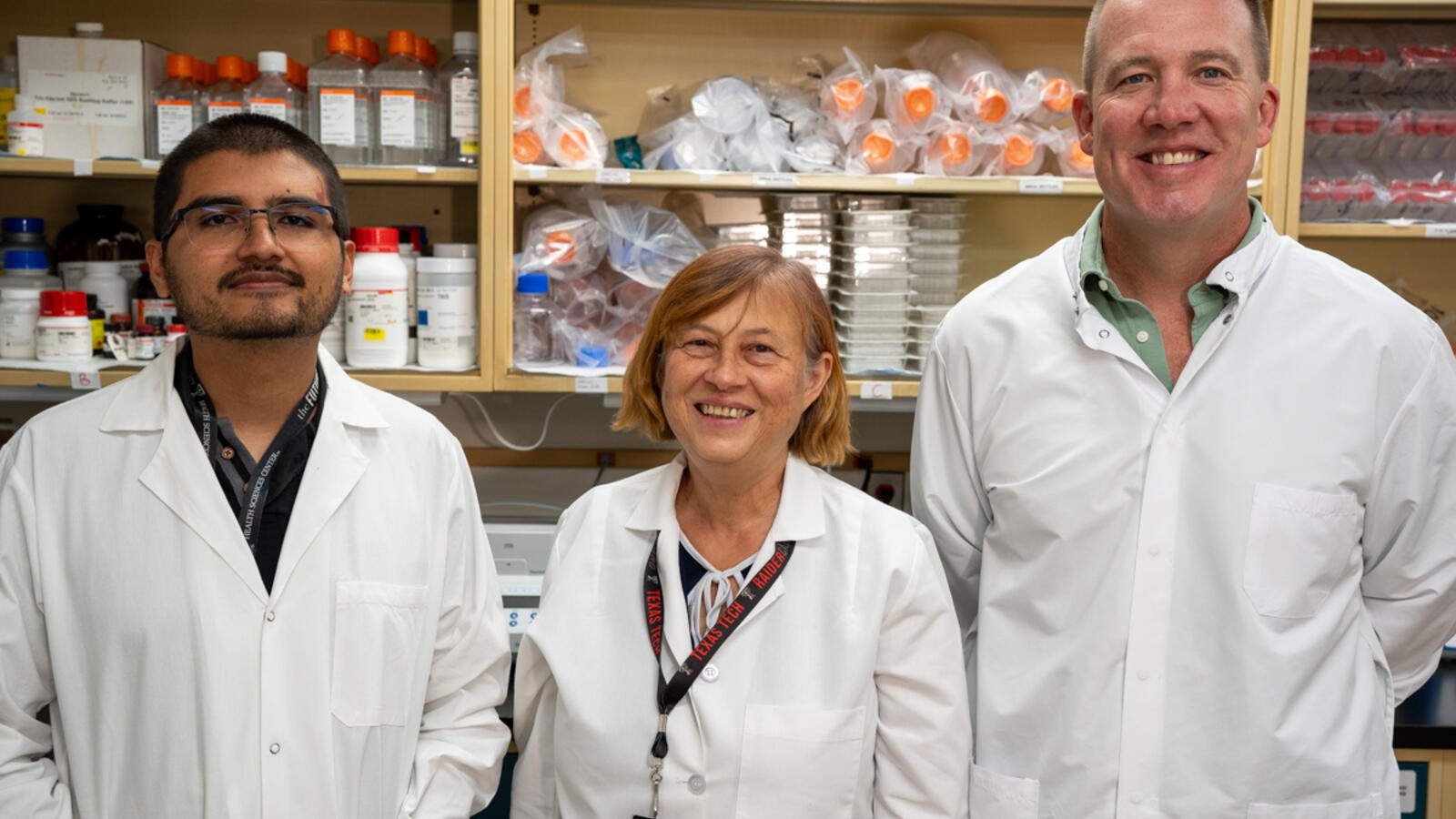
Zemfira Karamysheva, Ph.D., associate professor at the Texas Tech University Health Sciences Center (TTUHSC) School of Medicine Department of Cell Biology and Biochemistry and faculty member in the Graduate School of Biomedical Sciences, has been researching the Leishmania parasite for years. Along with people, many animals such as horses, dogs, cats, rodents, opossums and armadillos serve as reservoir hosts of leishmaniasis. Karamysheva said the spread of this zoonotic disease — one that impacts people and animals — is of great concern in Texas and other states.
Studying leishmaniasis aligns with the mission of the Institute for One Health Innovation (IOHI), a collaboration among Texas Tech University System institutions. One Health is a term used to recognize that human, animal and environmental health can be linked. It promotes cross-disciplinary teamwork among experts in human, animal and environmental health plus other relevant disciplines to solve complex health issues, such as zoonotic diseases.
Karamysheva teamed up with Caleb Phillips, Ph.D., an associate professor with Texas Tech University’s (TTU) Department of Biological Sciences. Phillips’ research includes studying how microbiomes relate to health in wildlife and people. Together, they received one of the first seed grants through the IOHI to study the mechanisms of persistence in Leishmania, which frequently lead to infection relapses.
“He’s a great partner; I’m really happy,” Karamysheva said. “He has two Ph.D. students who helped to perform bioinformatics analysis.”
Bioinformatics analysis combines computer science with biology to better understand large sets of biological data and pathways involved on a whole-genome scale.
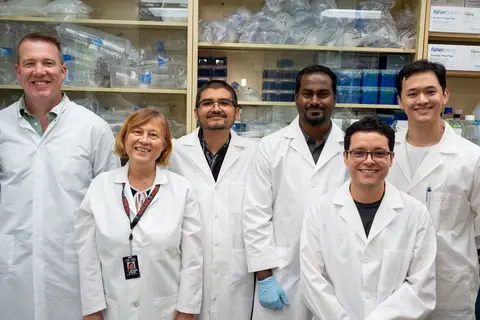
“In my lab, we have Ph.D. students who can perform bioinformatics analysis, but the Dr. Phillips lab specializes in it,” Karamysheva said. “Students from my lab learned a great deal from the Phillips lab students about advanced bioinformatics tools, making it a truly valuable collaboration.”
Phillips agreed. He said the project built a strong sense of teamwork.
“This not only helped build a scientific collaboration between faculty, but also among the students in respective labs,” Phillips said. “This led to technical training that would otherwise not have occurred.”
The team used bioinformatics to analyze differences between drug-sensitive Leishmania parasites and those considered persisters. Persisters are a small subpopulation of dormant, slow-growing cells that survive high drug concentrations or environmental stress without exhibiting genetic resistance. The team discovered that persisters exhibit distinct drug response profiles compared to parental parasites by rapidly implementing a highly conserved, coordinated survival reprogramming.
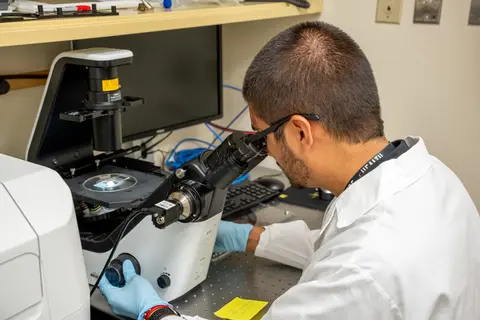
“Among many unique changes present in persisters, we found six very interesting genes that could contribute to increased drug tolerance,” Karamysheva said. “Three genes are turned down to block drug entry, and three are turned up to pump the drug out.”
The discovery is an important step in understanding persistence.
“What distinguishes persistence from drug resistance is that persistence is a temporary state,” Karamysheva said. “Once a drug is gone, cells become susceptible again and multiply, which causes infections to return.”
Karamysheva explained that persistence can lead to full drug resistance.
“Resistance is a permanent change caused by acquiring gene mutations,” Karamysheva said. “Persistence serves as a stepping stone for the establishment of drug resistance.”
Targeting persistence could avoid the development of drug resistance. However, while much is known about drug resistance, Karamysheva said persistence is poorly investigated. She explained that persistence exists in many diseases, including cancer.
“Persisters are so understudied, because it’s really difficult to isolate them,” Karamysheva said. “This grant [IOHI seed grant] allowed us to establish a new model to study persistence.”
Published in the October issue of PLOS Pathogens, the team’s article “Active transcriptome remodeling underlies antimony-induced drug tolerance in persister-like Leishmania parasites” detailed how the parasites form persisters to survive drug treatment. Lead author Eyson Quiceno, a medical technician in Karamysheva’s lab at the time, stated, “By establishing the model to study persistence in this protozoan parasite, we could define the survival mechanism of Leishmania when facing drug pressure, while also highlighting novel molecular vulnerabilities within the persister population, offering promising therapeutic targets to intercept the transition to resistance and ultimately prevent clinical relapse.”
“It is possible that this research, which is based on Dr. Karamysheva’s ideas, will lead to new and effective treatments,” Phillips said. “This research would likely not have occurred without IOHI support. Seed funding is important to provide new opportunities for collaboration and time to think about new questions.”
Karamysheva invited Phillips and Klementina Fon Tacer, DVM, Ph.D., assistant professor in the TTU School of Veterinary Medicine, to collaborate on a new grant proposal to NIH to further advance persistence research.
“This is a very important scientific problem to address,” Karamysheva said. “I am very happy that we have established this great collaboration, and it’s really inspiring to work on this project.”