


Planning Life Around Pain
Chronic pain is a part of life for millions of people in the United States. According to the U.S. Pain Foundation, almost 21% of the U.S. population, 51.6 million adults, live with chronic pain. Pain comes and goes at varying levels of severity. Some people seek treatment. Many do not. There are several reasons why people choose not to disclose their pain to a doctor. For women, one reason can be fear of a dismissive response.
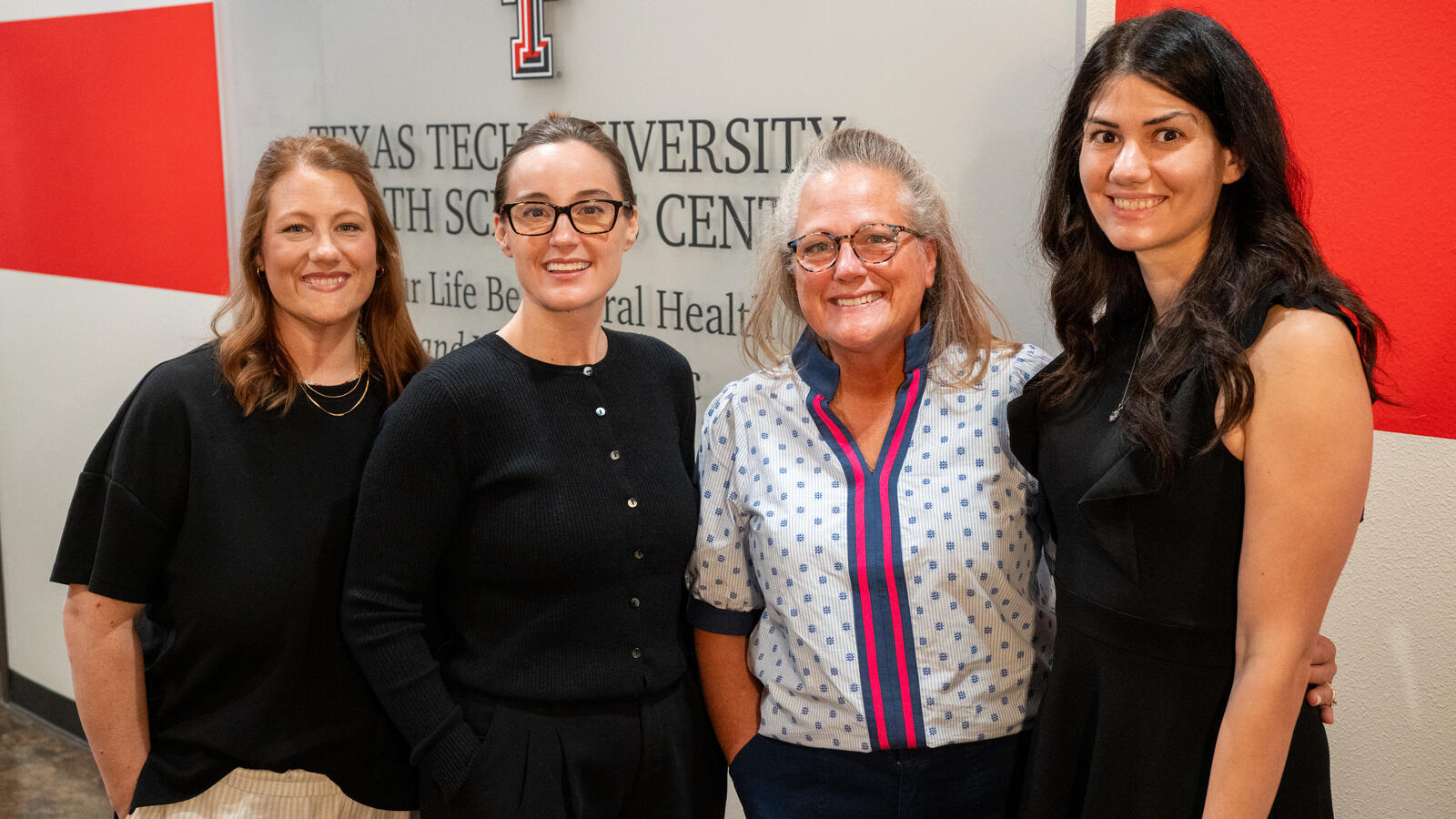
On average, many women suffer with chronic pain for over six years before discovering they have endometriosis. It’s this unfamiliarity with the disease that brought a team from the Texas Tech University Health Sciences Center (TTUHSC) School of Health Professions together.
These TTUHSC experts said women have been told that pelvic pain is part of being female. They experience pain caused by menstrual cycles, childbirth and menopause. Endometriosis is often misdiagnosed and chalked up to women’s “normal discomfort,” which can lead to serious consequences.
“This is a chronic condition that impacts 10% of the female population,” Nicole Noble, Ph.D., an associate professor in the Department of Clinical Counseling and Mental Health at TTUHSC, said. “That’s a huge number of people that are living with this, yet it doesn’t have the funding, the research, the support to recognize all that women are navigating with it.”
Endometriosis is a condition in which tissue similar to the lining of the uterus grows on other parts of the body. When this tissue grows in the wrong places, it can cause severe pain, heavy periods and fertility issues. A surgical procedure called laparoscopy has traditionally been required for a definitive diagnosis.
“It’s really quite shocking and disappointing to hear how long women have to suffer before it’s actually diagnosed,” Lynn Jennings, Ph.D., an assistant professor and assistant program director in Clinical Mental Health Counseling at TTUHSC, said. “It’s easier to say, ‘Pain with girl parts is normal.’ But the level of pain that this rises to is so much more intense. And a lot of women, because of the rejection, they tend to mask it.”
The impacts of endometriosis are not only physical. Symptoms can be cyclical or random, causing issues that disrupt relationships, careers and overall quality of life.
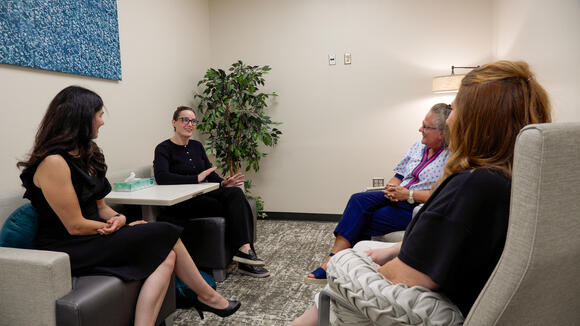
“It can exacerbate conditions like anxiety, depression and hopelessness,” Logan Winkelman, Ph.D., an associate professor and program director in Clinical Mental Health Counseling at TTUHSC, said. “It doesn’t just affect her; it affects those around her. This could be a significant other, a spouse or family members who are wanting to care for that person and not knowing what to do.”
Noble, Jennings, Winkelman and Sara Grady, a counselor-in-training at West Texas A&M University, conducted a study to investigate the experiences of women living with endometriosis. They recruited participants who volunteered to answer semi-structured questions about living with the disease. The group analyzed the data and co-authored a study published in The Family Journal.
“It’s so important to understand how endometriosis, infertility, polyendocrine metabolic ovarian syndrome (PMOS), perimenopause, all of these things affect us not only physically, but mentally,” Grady said. “And how sometimes that goes unnoticed by so many others.”
The study is part of a larger research project comprising three components. These include how endometriosis affects personal relationships, self-identity and worldviews, as well as how the medical community shapes patient experiences and advocacy goals.
“We want to make sure that the women who are experiencing this don’t go unheard,” Winkelman said. “That they don’t lose trust in their healthcare system, that they have an advocate in their healthcare providers who will ask questions, and if they don’t know, they’ll help that patient seek out additional resources.”
It’s that type of assistance that Grady said she looked for after being diagnosed with PMOS.
“Google is great, but it’s not scholarly,” Grady said. “I feel that a study like this and the studies that we’re doing provide real information. And not just information about symptoms and how to be treated, but it provides information on how to gain support and how to advocate for yourself.”
Advocacy is also personal for Noble. She’s been diagnosed with endometriosis herself.
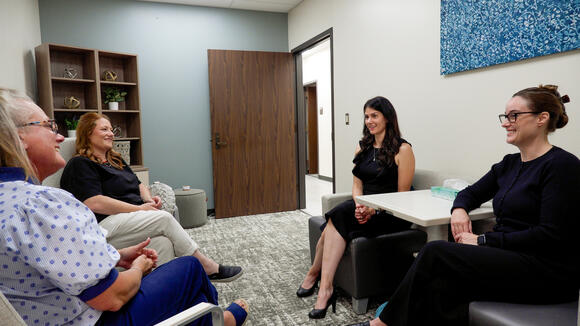
“I’ve suffered in pain; why not share that so that others can stop?” Noble asked. “The more that we keep shedding light on it, the more voices we’ll hear, and the more people will get diagnosed sooner and hopefully stop some of the suffering.”
“They won’t lose their jobs and their relationships and their ability to have children and hopefully change their lives for the better,” Noble continued.
For Jennings, these personal stories also hit close to home. Grady is her daughter and Noble has been her friend for 15 years.
“I feel like Logan [Winkelman] and I just love learning from the two of them,” Jennings said. “We call it the Dream Team, because we really care deeply about one another. We care deeply about this topic. We care deeply about making the world a better place than we found it. Working with them, with the support of TTUHSC, has been amazing.”
Winkelman says it makes her proud to be part of a research team that is willing to investigate topics others may not.
“To be supported in this type of research so that we can make an impact, that’s what we love to do, no matter the field we’re in,” Winkelman said. “We want to make an impact, and this is one way we can do that.”
As their work expands into additional women’s health topics, Noble said awareness will remain a focus.
“If someone is hearing any of themselves in any of the symptoms, the pain, the excessive bleeding, the planning their life around their menstrual cycle, they should consider that it might be a diagnosable condition,” Noble said. “It’s not normal to be in a level of pain that you plan your life around. If their provider is saying it’s normal, keep seeking medical treatment. Keep trying to figure out the root cause, so they can change their life.”