
Education

Understanding Memory and Alzheimer’s Disease
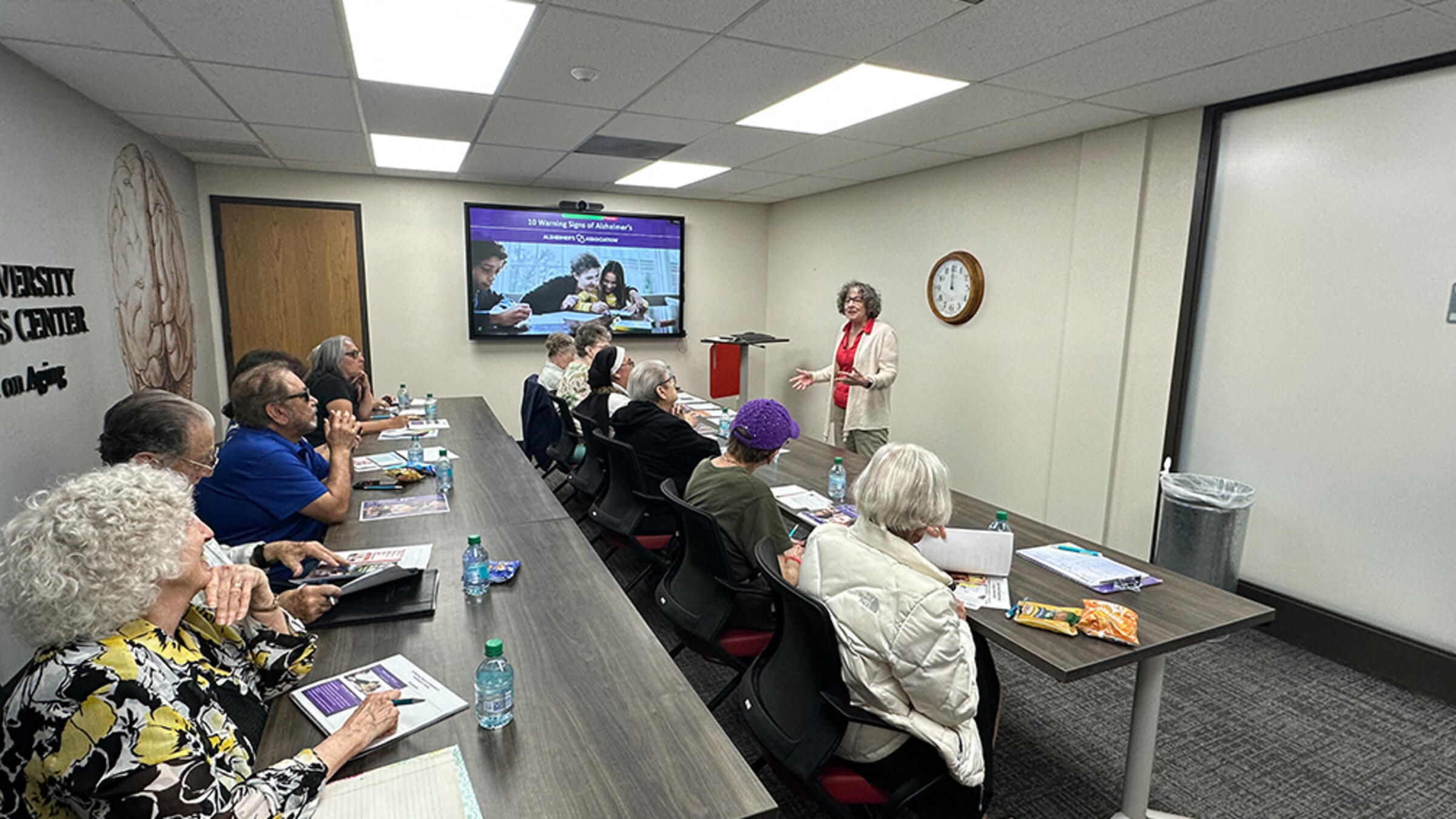
We are committed to empowering the public, individuals living with dementia, and their families through compassionate, evidence-based education. Our programs provide clear, practical information about the different types of dementia, including Alzheimer's disease, helping people understand symptoms, progression, and available treatments. Through community workshops, caregiver training sessions, family meetings, support groups, and accessible online resources, we break down complex medical information into guidance that is easy to understand and apply. We focus not only on clinical knowledge but also on communication strategies, daily care techniques, safety planning, and emotional support, ensuring families feel confident, informed, and supported at every stage of the journey.
The Following Are the Conditions We Manage:
Alzheimer’s disease is the most common type of dementia, causing changes in memory, thinking and behavior. Symptoms typically develop slowly and gradually worsen over time, eventually interfering with activities in one’s daily life.
Dementia is a broad term used to describe a decline in thinking, memory, or behavior affecting one’s ability to live and function independently.
Neurodegenerative conditions in which cognitive and/or behavioral decline is related to changes in the brain’s frontal and/or temporal regions.
Lewy Body Dementia is a neurodegenerative conditions in which cognitive and/or behavioral decline is related to changes in the brain’s frontal and/or temporal regions.
Vascular Dementia is cognitive decline due to impaired blood flow to the brain.
Mild Cognitive Impairment (MCI) is a clinical diagnosis used to describe individuals to have more problems with cognition (i.e., memory and other thinking abilities) than would be expected for their age. Although these changes may adversely impact one’s daily life, individuals with MCI are still able to care for themselves and live independently.
Mixed dementia is the combination of more than one type of dementia (e.g., Vascular and Alzheimer’s Disease) that is happening at the same time.
Posterior cortical atrophy is a rare form of dementia which is considered a visual variant or an atypical variant of Alzheimer's disease. The disease causes atrophy of the posterior part of the cerebral cortex, resulting in the progressive disruption of complex visual processing.
Primary Progressive Aphasia is a neurodegenerative disorder that predominantly affects speech and language abilities during the initial stages.
How We Can Help You or Your Caretaker
Caring for someone living with dementia can be both deeply meaningful and incredibly demanding, which is why we are dedicated to supporting caregivers every step of the way. Through educational workshops and practical training, we equip caregivers and family members with the skills and confidence they need to navigate daily challenges, manage behavioral changes, and plan for the future. Our support groups provide a safe, understanding space to share experiences, learn from others, and reduce feelings of isolation. We also offer respite programs that offer temporary relief, allowing caregivers time to rest, recharge, and care for their own well-being. By combining education, emotional support, and access to resources, we help caregivers feel empowered, valued, and never alone.
Got Questions?
We're here to help. Contact us if you have questions.
Memory Clinic
Garrison Institute on Aging
Phone: 806.743.9401
Fax: 806.743.3331
Email: giamc@ttuhsc.edu
