


Program Overview
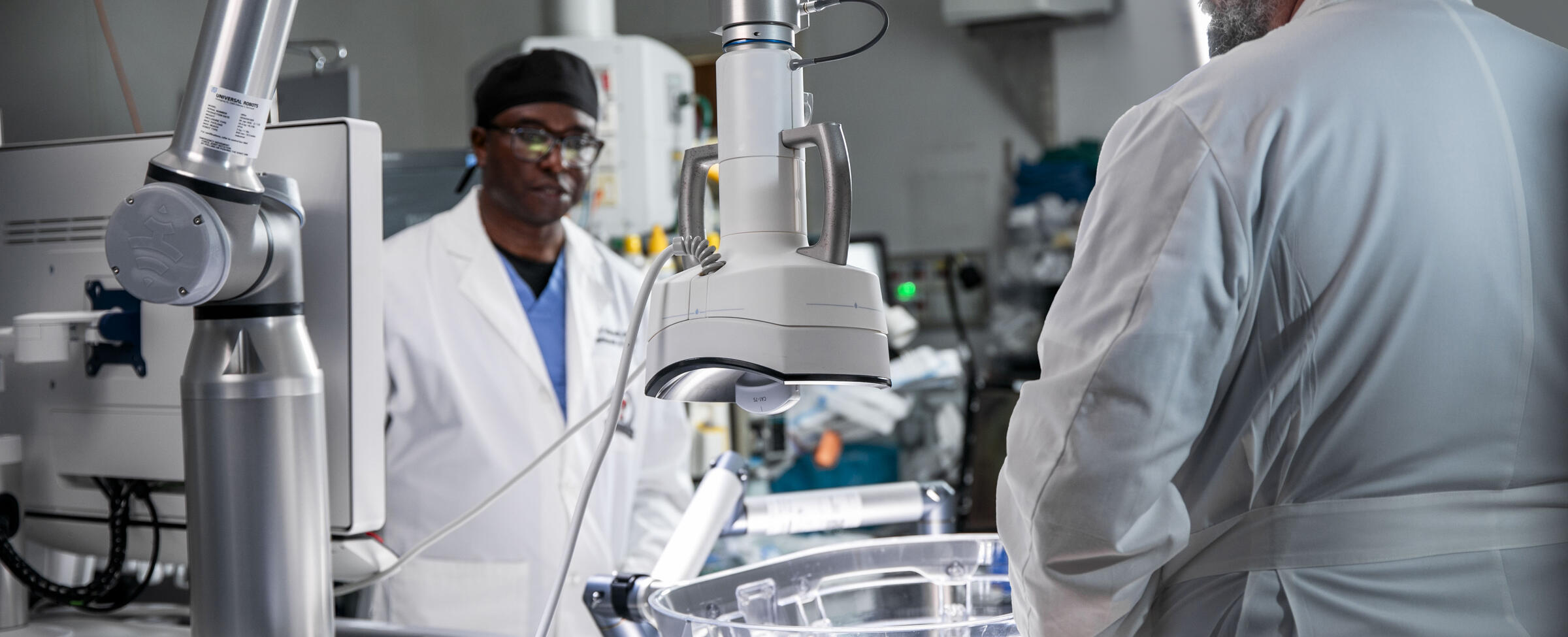
Our SCC Fellowship program, located in West Texas, provides an outstanding exposure to complex surgical critical care at an American College of Surgeons verified Level 1 Trauma Center and American Burn Association verified Level 1 Burn Center. Fellows shall also develop the administrative skills necessary for a leadership role in Surgical Critical Care through attending Morbidity and Mortality (M&M) conference, Peer Review, and all Performance Improvement and Patient Safety (PIPS) related meetings. TTUHSC and University Medical center sees over 4,500 trauma patients per year, and have a catchment area of nearly 250,000 square miles, making it the nation’s Level 1 Trauma Center that is farthest from an adjacent Level 1 Trauma Center.
The ACGME has approved a complement increase for our fellowship program to a total of THREE AVAILABLE POSITIONS.
There are now two (2) TRAUMA-FOCUSED positions, and one (1) BURN-FOCUSED position.
All three fellows shall be eligible to sit for the Surgical Critical Care Boards through the American Board of Surgery.
The Burn-Focused Fellowship training takes place at the UMC Timothy J. Harnar Regional Burn Center, one of only four American Burn Association (ABA) verified burn centers in Texas, and the SOLE DEDICATED BURN CENTER IN THE VAST REGION BETWEEN PHOENIX AND DALLAS (the 3rd largest geographic coverage area in the U.S.). This 14-bed specialized burn unit is recognized as a Burn Center of Research Excellence (BCORE), caring for more than one thousand patients per year.
While primarily designed as a clinical burn fellowship, Burn-Focused Critical Care Fellows will rotate in the Burn ICU, Trauma/Surgical ICU, and will satisfy all requirements to sit for the Surgical Critical Care certification exam by the American Board of Surgery. Burn-Focused Surgical Critical Care Fellows are mentored by our Texas Tech University Burn Surgeons, who are double-board certified in both general surgery and surgical critical care, as well as additional double-board certified faculty in the Division of Trauma & Acute Care Surgery. Additionally, the burn faculty also includes a board-certified plastic surgeon.
Burn-Focused Critical Care Fellows shall manage acutely burned patients and contribute to the surgical plan. Additionally, Burn-Focused Fellows shall gain valuable experience in scar management and burn reconstruction, and outpatient clinic experience. Texas Tech University HSC in Lubbock also has an evolved telemedicine program which adds to care of these patients from such a large catchment area.
Curriculum & Coursework
How to Apply
Online Application
Apply using the SAFAS link.
Register and participate in the National Resident Matching Program (NRMP).
Admissions Requirements
View our SOM House Staff Policies and Procedures, SOM Administrative Policies, as well as a sample contract.
All required clinical education for entry into ACGME-accredited fellowship programs must be completed in an ACGME-accredited residency program, an AOA-approved residency program, a program with ACGME International (ACGME-I) Advanced Specialty Accreditation, or a Royal College of Physicians and Surgeons of Canada (RCPSC)-accredited or College of Family Physicians of Canada (CFPC)-accredited residency program located in Canada.
Prior to appointment in the program, fellows must have completed at least three clinical years in a residency program that satisfies the requirements above in general surgery.
All applicants are required to apply through the SAFAS, to participate in our interview process, as well as to participate in the National Resident Matching Program (NRMP). All documents must be received by the program via SAFAS by the SAFAS deadline each year. However, earlier application is encouraged, as we will review applications after completion, and interviews will be offered on a rolling basis. Thus, our available interview slots may fill and limit availability for later applicants.
Fellowship interviews shall be conducted virtually. An interview is an essential part of our selection process. Upon completion of the SAFAS application, all materials are reviewed carefully, and interview invitations are extended to selected candidates. Exact dates and additional details shall be conferred when candidate is selected for an interview.
Salaries
| Salaries for 2026-2027 (These amounts are for the Lubbock Campus only) | |||||||
|---|---|---|---|---|---|---|---|
| PGY-1 | PGY-2 | PGY-3 | PGY-4 | PGY-5 | PGY-6 | PGY-7 | PGY-8 |
| $67,474 | $68,999 | $71,178 | $74,419 | $76,628 | $78,840 | $81,052 | $83,483 |
| Previous Years' Salaries | |||||||
|---|---|---|---|---|---|---|---|
| Year | PGY-1 | PGY-2 | PGY-3 | PGY-4 | PGY-5 | PGY-6 | PGY-7 |
| 2025-2026 | $65,764.23 | $67,250.96 | $69,374.62 | $72,532.92 | $74,685.79 | $76,841.81 | $78,997.84 |
| 2024-2025 | $63,725.03 | $65,165.66 | $67,223.47 | $70,283.84 | $72,369.95 | $74,459.12 | $76,548.30 |
| 2023-2024 | $61,570.07 | $62,961.99 | $64,950.21 | $66,936.99 | $68,923.76 | $70,913.45 | $72,903.14 |
| 2022-2023 | $58,918.73 | $60,250.71 | $62,153.31 | $64,054.53 | $65,955.76 | $67,859.76 | $69,763.77 |
| 2021-2022 | $57,202.65 | $58,495.83 | $60,343.02 | $62,188.87 | $64,034.71 | $65,883.26 | $67,731.82 |
| 2020-2021 | $55,536.56 | $56,792.07 | $58,585.46 | $60,377.54 | $62,169.63 | $63,964.33 | $65,759.05 |
Benefits
Malpractice Insurance
Aggregates are $100,000 per incident and $300,000 annual aggregate. Professional Liability Division website or call (806) 743-9921
Health Insurance
Group Health/Dental/Vision insurance for residents and eligible dependents.
Workers' Compensation
Workers' Compensation website
Vacation
Vacation is approved for not more than 15 working days for PGY 1 and 2 and not more than 20 working days for PGY-3 and above. Leave policies vary by program and may not apply to all programs. Program-specific leave details, including the number of days available, may be listed below.*
Leave Policies
Leave policies vary by program and may not apply to all programs. Program-specific leave details, including the number of days available, may be listed below.
- Sick leave for up to 12 working days per year. Leave policies vary by program and may not apply to all programs. Program-specific leave details, including the number of days available, may be listed below.*
- Family and parental leaves of absence (see also US Department of Labor Employment Standards Administrative - FMLA)
- Educational leave
- Military leave not to exceed 15 work days per year.
Retirement & Savings
Residents and fellows are not eligible for TTU System's 401K plan but can participate in the Optional Retirement Program (ORP) or the Tax-Deferred Account Program (TDA). More information will be provided upon starting your program.
For GME Salary and Benefits questions, please contact:
Lubbock Graduate Medical Education
Phone: (806) 743-2978
Fax: (806) 743-1599
Email: LubbockGME@ttuhsc.edu
*Each program sets their own vacation and sick guidelines, not to exceed the maximum.
Military/Veteran
Explore financial resources, benefits and support available to military members and veterans.
Additional Resources
-
Tell me about Lubbock, TX?
Lubbock, with a population of approximately 300,000, is the 10th most populous city in Texas. Located in Northwest Texas in an area historically and geographically known as Llano Estacado, Lubbock is home to Texas Tech University Health Sciences Center which opened as Texas Tech University School of Medicine in 1969. For more info click following link about TTUHSC Lubbock.How busy is the Trauma and Acute Care Surgery service?
University Medical Center sees over 4,500 trauma patients per year and has a catchment area of nearly 250,000 square miles, making it the nation’s trauma center that is farthest from an adjacent Level 1 Trauma Center.The Burn Center sees over 1,000 burn patients per year and holds one of only four American Burn Association (ABA) Level 1 verifications in Texas.
Emergency General Surgery (EGS) patients are also transferred from the catchment area described above, adding complex, high-acuity patients to the SCC Fellow’s experience.
How much operating will I be able to do as a fellow?
Our program adheres to all ACGME requirements with respect to emphasis on surgical critical care. That said, there are perpetual opportunities to improve operative skills - TSICU and BICU attending critical care surgeons are responsible for cases in their unit. These include tracheostomy (percutaneous and open), PEG or open gastrostomy placement, and a myriad of challenging open abdomen cases for both trauma and EGS.What is the SCC Fellow’s schedule like? How much call?
Our program follows an ACS shift model at the resident, fellow, and attending surgeon levels. The fellow can expect to have two “golden weekends” per month (leave Friday and not return until Monday’s shift). The shifts are 12hrs duration, and the majority of the fellow’s shifts are day shifts for the benefits of rounding with the multidisciplinary team. There are some opportunities to do night shifts for exposure to the types of patients that present during that period.At how many hospitals do the fellows rotate?
All rotations occur at University Medical Center Hospital in Lubbock, an American College of Surgeons verified Level 1 Trauma Center, and ABA verified Level 1 Burn Center. .Is the fellow eligible to sit for the Surgical Critical Care board certification exam?
Yes. The program is ACGME accredited, and upon successful completion of the fellowship the SCC Fellow may sit for the yearly certification exam in September.Which conferences might the SCC Fellow attend?
Fellows are encouraged to attend the annual Society of Critical Care Medicine (SCCM) conference, and attendance at other trauma conferences are approved based upon acceptance of research for podium talks or presentations.How does your program prepare fellows for successful passage of the Surgical Critical Care board exam?
In addition to bedside ICU rounds, education is supplemented with monthly critical care journal club, use of SCORE for foundational knowledge and test questions, MCCKAP review book and exam in Spring.
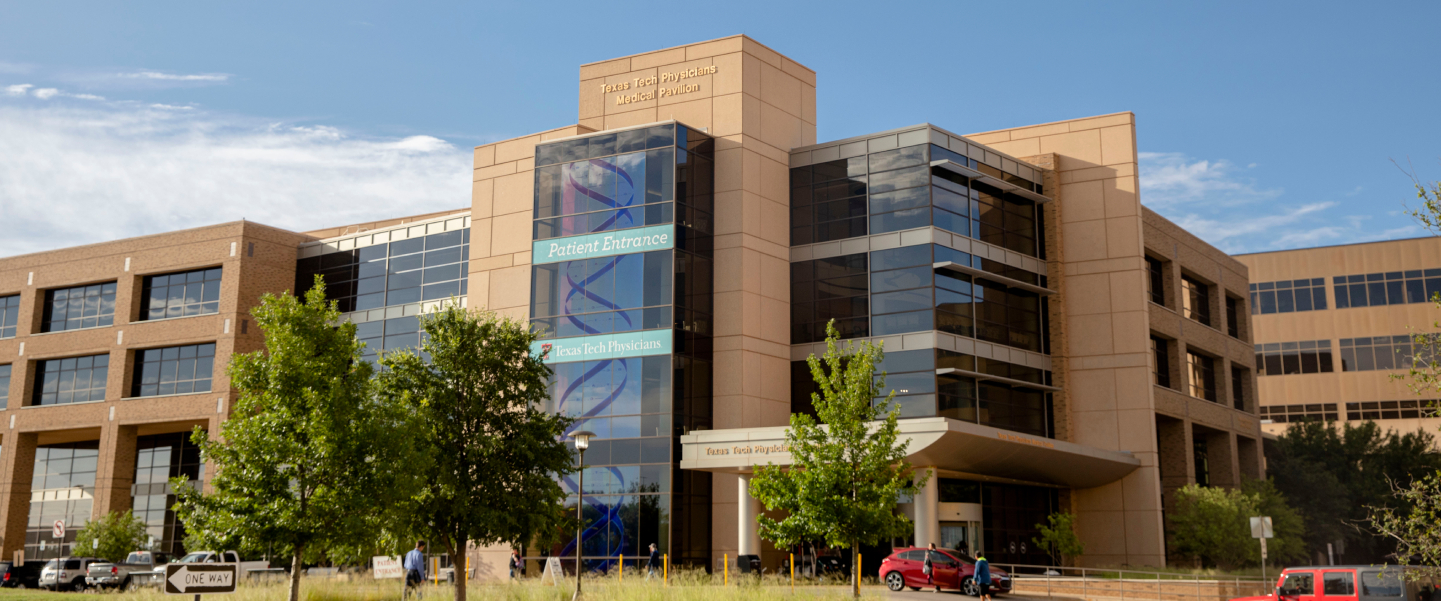
Contact Us
Kennedy Hanson, Program Coordinator
We're here to help. Contact us if you have questions.
-
Address
3601 4th Street, MS8312
Lubbock, TX 79430
United States
- Phone (806) 743-7617
- Email kennedy.hanson@ttuhsc.edu
-
Hours
8 a.m. - 5 p.m. Monday to Friday